Cheboygan · Cheboygan County · Northeast Michigan
Cheboygan, a river town with stories behind the facades.
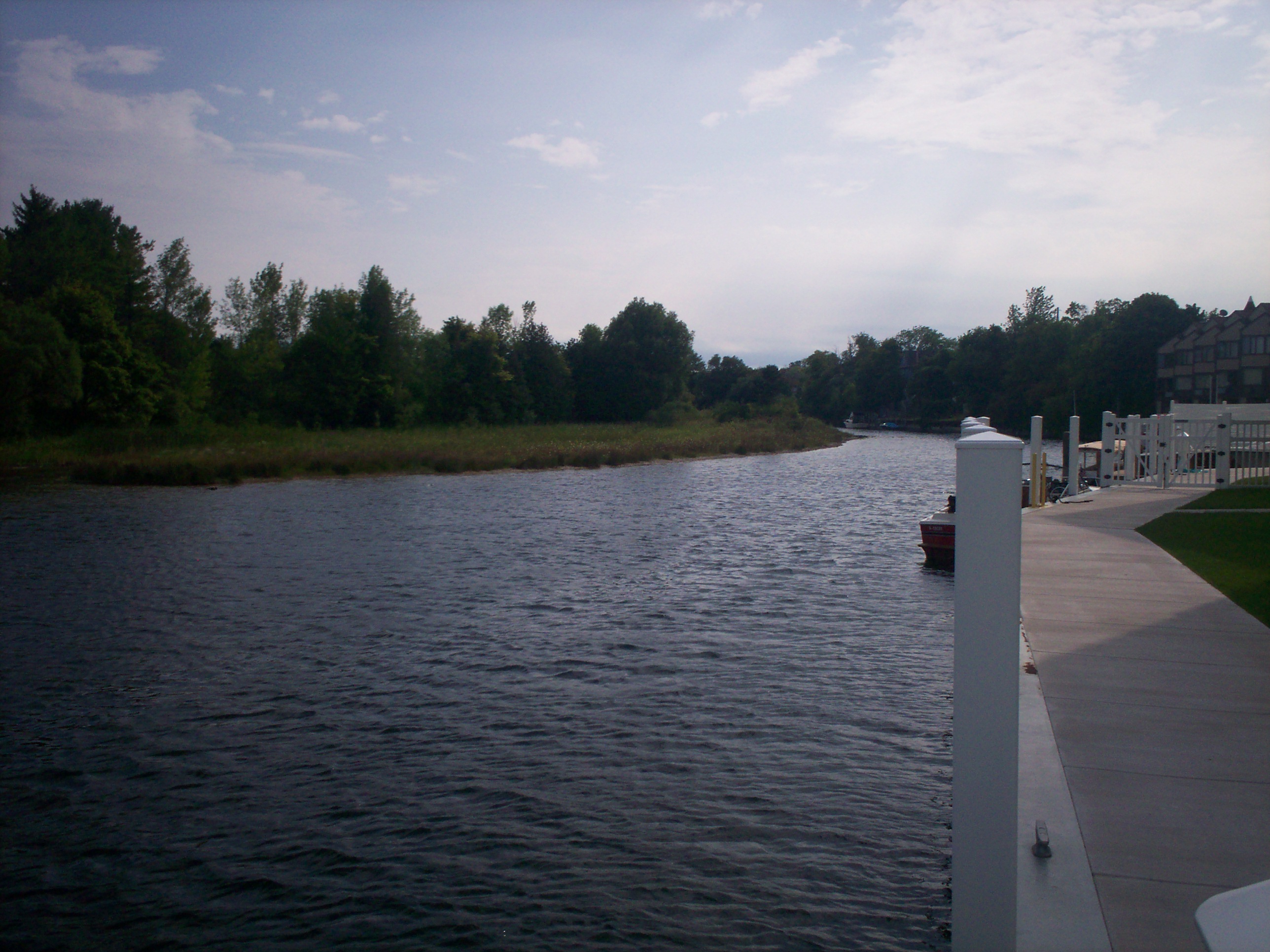
The Cheboygan River offers a way to connect the inland lakes with the wider Great Lakes world. Around it, a theater, former jail and museum collections preserve different parts of community life. Follow those connections rather than treating downtown as a collection of isolated landmarks. Each building becomes more meaningful when its work, occupants and later changes enter the story.
The story of the place
Water routes, public buildings and remembered lives.
A busy river carried more than visitors.
The Inland Water Route Historical Society describes Cheboygan’s lumbering, fishing and shipping industries, together with a large riverside tannery. Passenger steamers shared the channel with logs and booms, which could slow their passage. The river was simultaneously an industrial corridor and a visitor route. Reading historic photographs with that overlap in mind helps explain why docks, work yards and places of leisure could stand close together.
Source: Inland Water Route Historical Society: Cheboygan
The Opera House joins culture and civic life.
Cheboygan’s first Opera House was constructed in 1877 during the lumbering era. Fires led to rebuilding, and the complex combined the theater with City Hall, police and fire functions. After roughly two decades of closure, the restored theater reopened in 1984. The building’s history challenges the idea that entertainment was separate from civic life: performance, administration and public service occupied the same complex.
Source: Cheboygan Opera House: history
A sheriff’s workplace was also a family home.
Construction of the sheriff’s residence and jail began in 1880. The History Center records ten sheriffs and their families living and working there over 89 years, before closure in 1969. Poor conditions and overcrowding led to a new jail addition in 1912. The residence’s period rooms and the jail invite different questions about domestic work, public authority and confinement, even though they belong to one historic site.
Source: History Center: sheriff’s residence and jail
A relocated cabin carries a difficult history.
The History Center’s Native American log cabin came from the Burt Lake community and survived the destruction of other homes in October 1900. It was removed from its original location in 1923 and later donated to the museum, where it was restored in 1976. Its present setting should not obscure that earlier displacement. Read the museum’s account carefully and seek Native perspectives when following the wider history of the Burt Lake community.
Places and people
Three places to begin.
Downtown and the river
Begin with a public riverfront view, then compare the water’s edge with nearby commercial streets. The historical society’s account of steamers and industrial activity provides context for what may no longer be visible. Use dated photographs to locate earlier docks rather than assuming today’s waterfront repeats the historic arrangement.
Cheboygan Opera House
At 403 North Huron Street, consult the venue’s current program and visitor information. A performance offers a chance to experience the theater’s acoustics and auditorium as working spaces. Check access arrangements directly; the civic complex and the performance venue do not necessarily share the same opening hours.
History Center of Cheboygan County
At 427 Court Street, the museum complex brings together the sheriff’s residence, jail, Spies Heritage Hall and relocated cabin. Its collections include artifacts and photographs documenting county life. Confirm current seasonal access with the museum, and allow time to read the interpretation rather than simply count buildings.
Explore with context
Follow the river into the records.
Use photographs as dated evidence
Choose a photograph with a known date and identify fixed reference points before matching it to today’s streets. A caption, photographer’s viewpoint and later crop all affect what an image can tell you. Record uncertain identifications rather than turning them into confident claims.
Keep a building’s movements visible
A museum building may have been relocated or restored. Note its original location, date of transfer and later alterations alongside its construction history. For the Burt Lake cabin especially, preserving that sequence keeps a story of community and displacement from becoming only an architectural description.
Connect local and regional sources
Use the History Center for county collections and the Inland Water Route Historical Society for waterway context. A business or family may appear in several communities’ records. Track the same names across sources, and distinguish an advertised service from proof that a particular journey actually occurred.
Continue the story
Make time for a closer look.
Use the local resources to plan a visit, explore the records and follow the people behind the place.
Keep exploring Michigan.
Sources & local resources
- Inland Water Route Historical Society: Cheboygan
- Cheboygan Opera House: history
- History Center: sheriff’s residence and jail
- History Center: Native American log cabin
- History Center: collections and visiting
Research checked October 5, 2026. Follow the source institutions for current access and visiting information.