Coldwater · Branch County · West & Southwest Michigan
Coldwater, where the theater and the house tell different stories.
Coldwater offers two contrasting routes into nineteenth-century life: a building made for public performance and a house made for a household. Bring them together with newspapers, oral histories and family records. Their survival also raises questions about the later people who repaired, interpreted and kept them useful. Begin with a visit, then follow the evidence beyond the most familiar facade.
The story of the place
Performance, domestic life and the work of preservation.
An opera house becomes a community landmark.
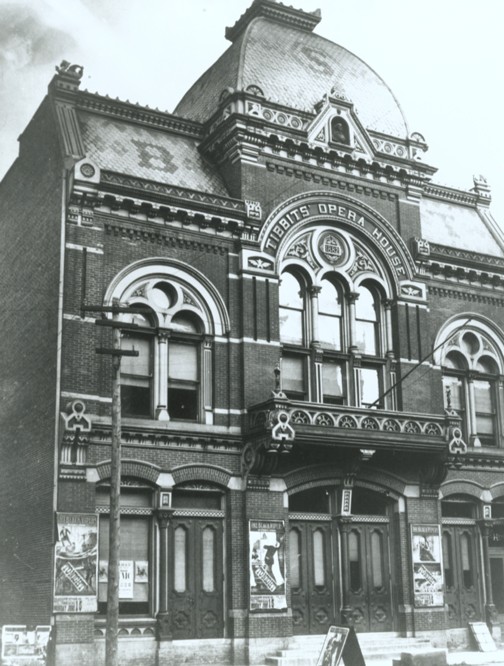
Tibbits Opera House was built in 1882 to a design by Detroit architect Mortimer Smith. The theater’s history identifies its French Second Empire facade as a defining feature. In the 1930s, a conversion to cinema changed both the decoration and exterior. By the 1950s it had closed and faced demolition. The familiar building therefore carries several distinct periods of entertainment and architectural change.
Source: Tibbits Opera Foundation: building, cinema and restoration history
Saving a theater is a continuing process.
Community groups rallied around Tibbits, and a foundation formed in 1962 purchased it. Later restoration proceeded in stages: accessibility work was completed in 2005 and the historic facade restoration in 2013. These dates describe different kinds of investment. Looking at the building today, ask how preservation of appearance, continued performance and access for visitors were addressed together.
Source: Tibbits Opera Foundation: building, cinema and restoration history
The Wing House connects architecture with a household.
The Branch County Historical Society dates the Wing House to 1875, when the Chandler family built it. The Wing family purchased it in 1882. In 1974, granddaughter Adaline Wing Kershaw sold the house with furnishings and artifacts to the historical society. Those objects give a visitor more to investigate than the exterior alone: ownership, domestic labor and the decisions behind a museum collection belong alongside architectural style.
Source: Branch County Historical Society: Wing House history and visiting
A public archive broadens the story.
Branch District Library’s online local-history collection includes yearbooks and oral histories. Use them to move from a landmark toward a person, workplace or school community. A photograph caption can be a lead rather than a final identification. An interview can preserve an experience without establishing every remembered date. Comparing these materials allows several viewpoints to sit beside the institutional account of a building.
Source: Branch District Library: online local-history archive
Places and people
Three places to begin.
Tibbits Opera House
At 14 South Hanchett Street, consult the theater’s current program and access information. Experience a performance if it suits your visit, then compare the facade with the historic photograph. The image records an earlier appearance; it does not document every feature or condition of the present building.
Wing House Museum
At 27 South Jefferson Street, plan a visit through the Branch County Historical Society. Ask how the rooms and objects are interpreted and which furnishings have a documented family association. Confirm current opening arrangements before traveling; do not assume the museum is open whenever its exterior is visible.
Branch District Library collections
Begin online with the library’s local-history archive. Choose an interview, yearbook or other item related to a person you want to investigate. Note the collection and item details, then ask library staff about access to further records. A manageable question makes a library visit more productive.
Explore with context
Read the preserved building and the missing evidence.
Compare appearances by date
Put two dated photographs beside one another and list only the changes you can actually see. Seek records before assigning a cause or exact year to an alteration. The photograph’s capture date, publication date and later scanning date may differ; retain those distinctions in your notes.
Ask how a museum room was assembled
Find out whether an object remained with a household, was donated later or was chosen to interpret a period. Each can be valuable, but they support different claims. Avoid treating every displayed furnishing as evidence of how a room looked at one precise moment.
Include the work behind the venue
Follow a question about performers, staff, craftspeople or volunteers as well as owners and architects. Programs, newspapers and oral histories may reveal roles that a facade cannot. Keep a clear source trail and avoid assuming that the most celebrated name explains all of the labor behind a surviving place.
Continue the story
Make time for a closer look.
Use the local resources to plan a visit, explore the records and follow the people behind the place.
Keep exploring Michigan.
Sources & local resources
- Tibbits Opera Foundation: building, cinema and restoration history
- Branch County Historical Society: Wing House history and visiting
- Branch District Library: online local-history archive
- Tibbits Opera House: current programs and visitor information
Research checked October 5, 2026. Follow the source institutions for current access and visiting information.