Hillsdale · Hillsdale County · Central Michigan
Hillsdale, where a preserved house asks difficult questions.
A cobblestone house offers a route into Hillsdale that reaches beyond a picturesque streetscape. Its history connects family life, public responsibility, poverty and the later decision to preserve a difficult past. Read the building alongside the people who lived there and the writers who remembered them. Then widen the inquiry through local collections, keeping the city and the surrounding county in view without confusing their histories.
The story of the place
A household, a public institution and a later memorial.
An existing house takes on a public purpose.
The historical society’s account describes Isaac and Sarah VanDenBergh moving into their cobblestone house in 1853. In 1854, an arrangement with county supervisors transferred the property for use as a poorhouse. The same building therefore served very different needs within a short period. Ask how that change altered rooms, work and the relationship between residents and local government.
Source: Hillsdale County Historical Society: house, county care and masonry history
Craftsmanship and conditions must be read together.
The society identifies mason George Wheaton with the house’s construction and explains the carefully sorted stones and substantial walls. Its history also cites supervisors’ concerns about cleanliness and residents’ care in 1855. Admiring the masonry should not displace those questions. A building can be evidence of skilled work and of an institution whose occupants had limited control over their circumstances.
Source: Hillsdale County Historical Society: house, county care and masonry history
Will Carleton becomes part of the site’s memory.
The society connects poet Will Carleton’s visits and conversations with poorhouse residents to his poem Over the Hill to the Poorhouse. It also records the later naming of the preserved site in his honor. Keep those layers distinct: residents’ lives, a writer’s interpretation and a twentieth-century commemorative decision are related stories. A poem is a valuable literary source, but it does not substitute for an individual resident’s documented biography.
Source: Hillsdale County Historical Society: Will Carleton and later commemoration
Preservation creates another public role.
The society’s organizational history records acquisition of the property in 1987 and opening of the restored lower floor in 1989. Donations and physical work helped make that reuse possible. A visit now encounters both an earlier institution and a later interpretation of it. Ask what evidence supports the room presentation, which parts have been restored and what remains uncertain. Interpretation gains strength when it makes those distinctions visible.
Source: Hillsdale County Historical Society: acquisition and restoration
Places and people
Three places to begin.
Will Carleton Poorhouse
The historical society lists the site at 180 North Wolcott Drive and offers special-event access and arranged tours. Contact it before planning an interior visit. During a tour, consider how the house’s physical arrangement relates to its different uses and ask about the evidence behind the furnishings and interpretation.
Mitchell Research Center
The society recommends the Mitchell Research Center as a starting point for family information. Begin with a name, approximate dates and a focused question, then establish what records are available. Confirm access arrangements directly. Follow each finding back to its underlying source rather than relying on an index alone.
A downtown observation walk
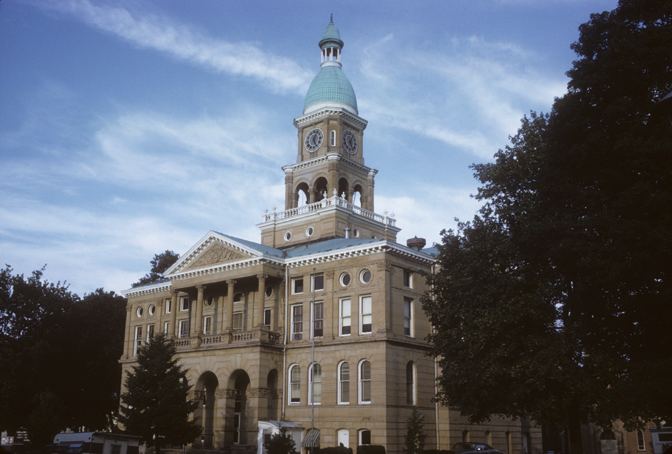
Observe public buildings and commercial streets from public sidewalks, using dated photographs to establish changes. The courthouse image accompanying this guide is an October 1970 view. Treat it as evidence of that recorded moment, and compare it with current observations before describing what has survived or changed.
Explore with context
Restore people to the institutional record.
Read historical terminology carefully
Older records may classify people using language that is stigmatizing today. Preserve the original wording when necessary for accurate citation, explain its context, and use respectful language in your own account. Do not infer a person’s diagnosis, experience or identity from an administrative label alone.
Compare records with literary memory
Record when a poem or recollection was written and what it claims to describe. Seek census entries, institutional records and newspapers for a named person. A literary account can reveal attitudes and public feeling while leaving chronology or individual circumstances unresolved.
Distinguish a restoration from an original feature
Ask which materials remain from an earlier period and which were repaired, replaced or introduced for interpretation. Photographs and restoration records can document both. A later addition does not erase a building’s history; identifying it helps explain how successive generations cared for and understood the place.
Continue the story
Make time for a closer look.
Use the local resources to plan a visit, explore the records and follow the people behind the place.
Keep exploring Michigan.
Sources & local resources
- Hillsdale County Historical Society: house, county care and masonry history
- Hillsdale County Historical Society: Will Carleton and later commemoration
- Hillsdale County Historical Society: acquisition and restoration
- Hillsdale County Historical Society: tours and research contacts
Research checked October 5, 2026. Follow the source institutions for current access and visiting information.