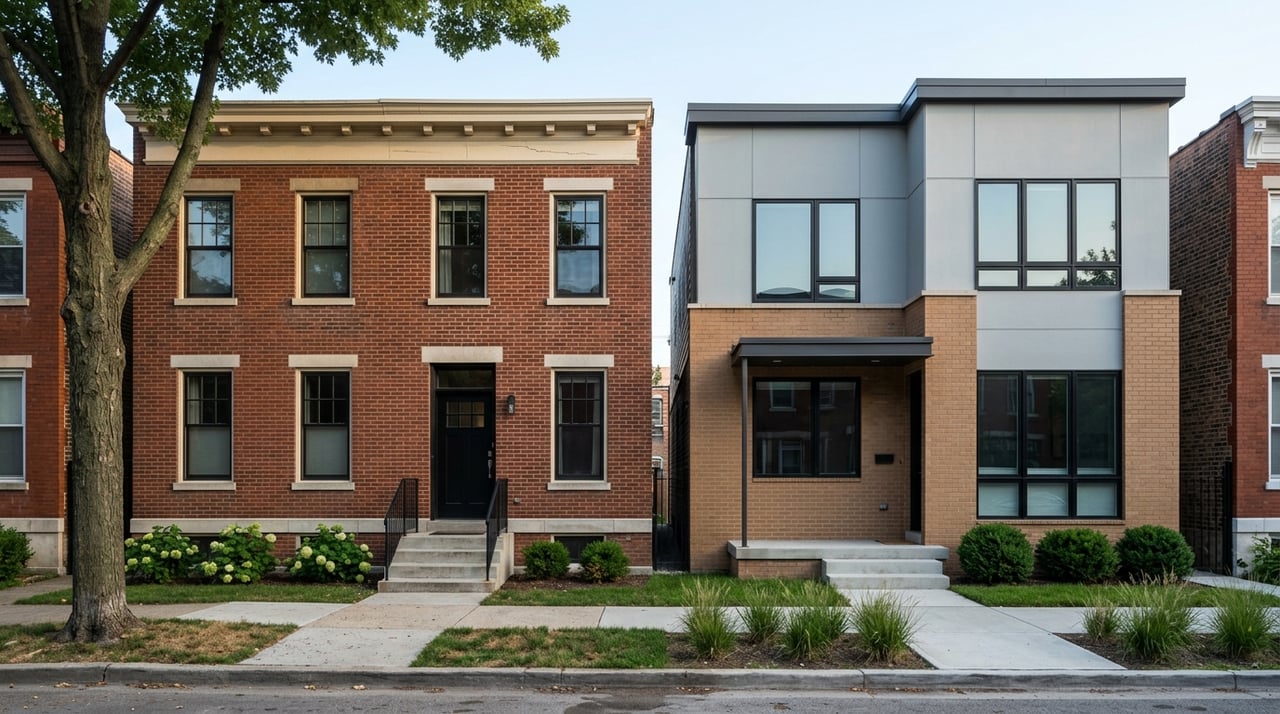
Trying to choose between a sleek new townhome and a restored mansion condo in Brush Park? You are not alone. This Detroit neighborhood gives you a rare chance to compare both side by side, which is exciting, but it also means your decision needs to go beyond finishes and floor plans. In this guide, you will learn how new builds and historic conversions differ in layout, upkeep, ownership structure, financing, and day-to-day fit so you can decide with more confidence. Let’s dive in.
Why Brush Park Offers Both
Brush Park is one of Detroit’s oldest neighborhoods, established in 1860. The Brush Park Historic District is a City of Detroit local historic district generally bounded by Mack Avenue, Woodward Avenue, Beaubien Street, and the Fisher Freeway.
What makes Brush Park especially interesting is that growth here is not about choosing history or new development. The area’s form-based code, adopted in 2020 and amended in 2023, was designed to support a predictable built environment, encourage walkability, and allow medium-density housing that fits the historic context.
That planning approach helps explain why restored mansions and newer residential projects exist together. Brush Park sits between Downtown Detroit and Midtown, and recent development has intentionally mixed preservation with new construction rather than separating them.
One of the clearest examples is City Modern. As of July 2025, the project includes 20 newly constructed buildings and the rehabilitation of three historic mansions into five homes, totaling 450 residences and 31,000 square feet of retail.
What New Builds Usually Feel Like
If you are drawn to convenience, cleaner lines, and more predictable layouts, new construction in Brush Park may feel like the easier fit. In City Modern, for-sale townhomes include two- to four-bedroom floor plans, private second-floor terraces, rooftop decks, two-car garages, and floor-to-ceiling windows.
These features point to a more contemporary way of living. You will often find easier circulation, more standardized finishes, and spaces designed around current buyer expectations.
Carriage Homes in the project add another option. These duplex-style homes are arranged with shared courtyards and pedestrian alleyways, which can create a more connected residential setting while still keeping a newer-home feel.
For many buyers, new build appeal comes down to predictability. You are more likely to know what you are getting in terms of finishes, common elements, and layout logic, especially compared with a one-of-a-kind historic conversion.
What Historic Conversions Usually Feel Like
If character matters most to you, Brush Park’s historic conversions can offer something new construction usually cannot replicate. Historic Detroit documents examples such as the Henry Glover House, restored into five luxury condominium units, and the William A. Butler House, an 8,400-square-foot mansion restored into four luxury condominiums with high ceilings, exposed brick, and original architectural details.
That kind of home tends to feel less uniform from room to room. Preservation standards emphasize keeping a building’s existing form, features, materials, and craftsmanship, which often leads to more unique room shapes, ceiling heights, stair runs, and transitions.
In practical terms, that means a historic unit may feel more tailored and memorable, but also less standardized. You may love the texture and story of the home, yet need to be comfortable with a floor plan that reflects the original structure rather than a modern template.
For many buyers, historic conversions are about living with provenance. You are not just buying square footage. You are buying into the preservation of an older Detroit building with details that may be hard to duplicate today.
Ownership and Condo Structure Differences
One of the most overlooked differences between these two product types is scale. City Modern is a 20-building, 450-residence development, while some Brush Park mansion conversions are four- or five-unit condo buildings.
That matters because condo ownership includes shared financial obligations. In larger projects, owners may share responsibility for building systems, exteriors, parking, and amenities across a broader and sometimes more layered association structure.
In a smaller historic conversion, the condo association may be more building-specific and simpler in size. At the same time, fewer units can mean fewer owners sharing the cost of repairs or capital projects.
Before you buy either type, review the association carefully. Pay close attention to reserves, current budgets, and any history of special assessments, since shared repairs can be funded that way.
Exterior Changes and Historic Review
If you are considering a historic conversion, it is important to understand that exterior changes may involve more oversight. Under Michigan’s Historic District Act, owners of structures in a historic district must request permission from the local Historic District Commission to modify the exterior.
For a Brush Park buyer, this can affect visible items such as windows, masonry, porches, additions, and other exterior features. That does not mean updates are impossible, but it does mean the review process can be more involved.
A newer condo or townhome may still have association rules, but a historic unit in the district can bring another layer of review for exterior work. If flexibility is a top priority for you, this is a key question to discuss before making an offer.
Maintenance Expectations Matter
Maintenance is another major point of contrast. Preservation guidance emphasizes ongoing maintenance and repair of historic materials, and when replacement is necessary, the new material should match the old in composition, design, color, and texture.
That approach can shape both cost and timing. Historic homes may require more specialized labor, closer material matching, and a longer-term maintenance mindset than a newly built property.
A new build may still have routine upkeep and condo obligations, of course. But if your goal is to minimize immediate repair complexity, newer construction will often feel more straightforward.
If you love historic architecture, the tradeoff may be well worth it. The key is to go in with clear expectations rather than assuming old and new ownership will feel the same after closing.
Financing Can Look Different
Financing is not always identical from one condo to the next. Fannie Mae notes that condo project eligibility can depend on financial stability, condition and marketability, owner control and use of amenities and common elements, litigation, insurance, and critical repairs.
For newer or newly converted condo projects, a Full Review is required through Condo Project Manager or PERS. Established attached condo units may sometimes qualify for a Limited Review depending on loan-to-value ratio, occupancy, and other factors.
For you as a buyer, that means the property itself is only part of the lending picture. The project’s structure, finances, and condition can also affect how smooth the mortgage process feels.
This is one reason it helps to compare not just the unit, but the project behind it. In Brush Park, where many options involve condominium ownership, that extra layer matters.
Appraisals May Be Easier in Some Cases
Appraisals can also vary between product types. Fannie Mae says sales from the same neighborhood are the best indicator of value, and that new or recently converted condo projects should be compared to properties within the subject project and the same market area when possible.
The guide also requires at least three closed comparable sales in the sales comparison approach. If there are no settled sales in a new project, the appraiser may use sales from competing projects.
In practice, new Brush Park projects may become easier to value as more resales build up. Historic conversions can be trickier because the units are often fewer in number and more unique, which may require more explanation and adjustment during the appraisal process.
That does not make one better than the other. It simply means that uniqueness, while attractive, can sometimes create more valuation complexity.
Which Option Fits You Best
The right choice usually comes down to how you want to live. Neither path is automatically better. They just serve different priorities.
New Builds May Fit You If
- You want a contemporary layout
- You prefer more standardized finishes
- You like features such as rooftop decks, terraces, garages, and large windows
- You want less immediate repair work
- You are comfortable with a larger shared community structure
Historic Conversions May Fit You If
- You value original character and preserved materials
- You want a smaller-building feel
- You appreciate architectural details such as exposed brick and high ceilings
- You are comfortable with more specialized upkeep
- You understand that exterior changes may face more review
How to Compare Brush Park Homes Wisely
When you tour homes in Brush Park, try to look past surface-level style. A rooftop deck and sleek kitchen may stand out first, but the smarter questions usually relate to governance, maintenance, and long-term fit.
Ask about the condo association, reserves, recent repairs, and any planned assessments. If the property is historic, ask what exterior review may apply. If the project is newer, ask how many comparable sales and resales have occurred.
Most of all, think about your own habits. If you want a lock-and-leave lifestyle with more predictable systems, new construction may be the better match. If you want a home with story, texture, and preserved architectural detail, a historic conversion may feel more rewarding.
Brush Park is one of the few Detroit neighborhoods where you can make that comparison in a meaningful way. If you want help weighing the tradeoffs and finding the right fit for your goals, connect with Christopher Hubel.
FAQs
What is the main difference between new builds and historic conversions in Brush Park?
- New builds usually offer more contemporary layouts and standardized finishes, while historic conversions often emphasize original architectural details, unique layouts, and preserved materials.
Do Brush Park historic homes have extra exterior rules?
- Yes. In the historic district, exterior changes to structures require permission through the local Historic District Commission under Michigan’s Historic District Act.
Are Brush Park new-build condos easier to maintain?
- They often involve less immediate repair complexity than historic units, although buyers still need to review condo obligations, shared expenses, and association budgeting.
Can financing differ between a new Brush Park condo and a historic conversion?
- Yes. Condo project eligibility can depend on factors such as financial stability, insurance, litigation, condition, and critical repairs, and newer or newly converted projects generally require a Full Review.
Why can appraisals be harder for Brush Park historic conversions?
- Historic conversions may have fewer directly comparable sales and more unique unit characteristics, which can require more appraisal explanation and adjustment.
How do you decide which Brush Park home type fits your lifestyle?
- Focus on your priorities around layout, maintenance, architectural character, association structure, and comfort with historic review requirements.