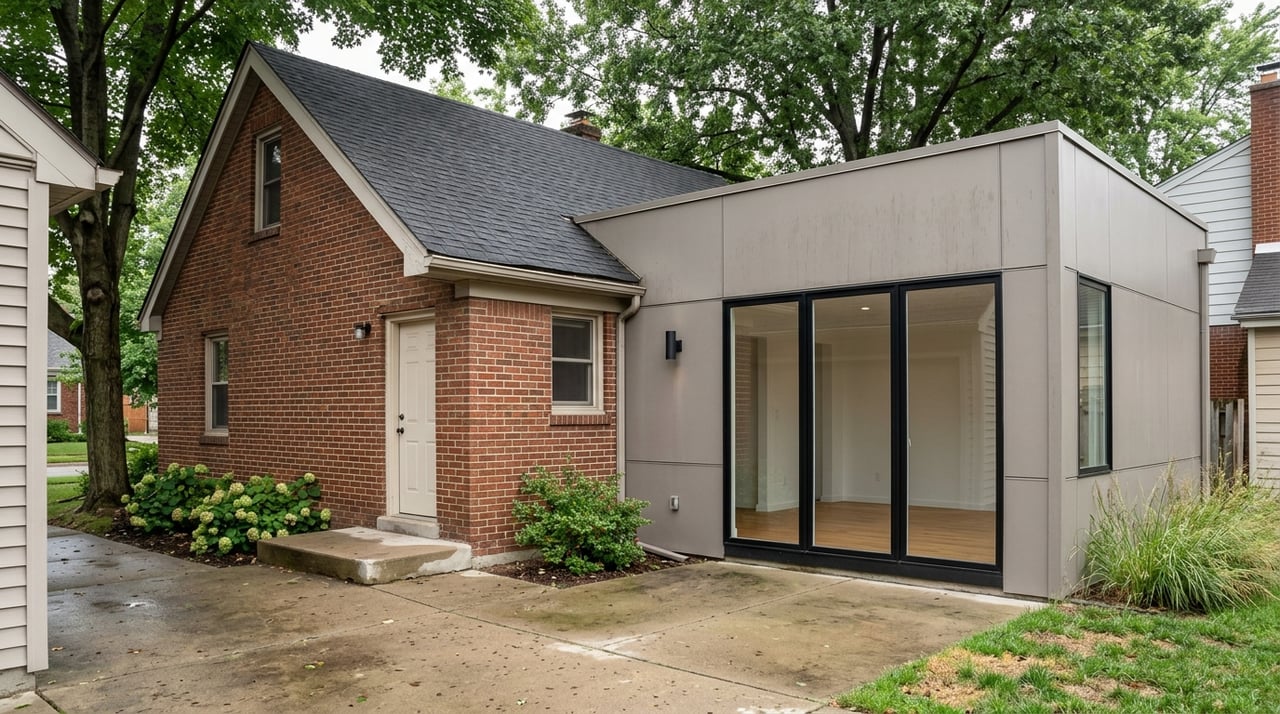
What if one of Detroit’s most talked-about housing markets is also one of its least standardized? In Corktown, you are not just comparing square footage or finishes. You are weighing history, scarcity, renovation rules, and a neighborhood that keeps evolving around Michigan Central. If you want to understand why one block might offer a workers’ cottage and another a loft-style conversion, this guide will help you make sense of the market. Let’s dive in.
Why Corktown Feels Different
Corktown is Detroit’s oldest surviving neighborhood, and that history still shapes how the housing market works today. The area grew from 19th-century immigrant settlement west of downtown, with early detached homes and rowhouses followed by other modest residential forms tied to industrial-era growth.
That pattern matters because Corktown did not develop as a single-product neighborhood. Over time, urban renewal, freeway construction, and redevelopment removed large portions of the area, leaving a smaller residential core that now carries major preservation importance. The remaining residential section was listed on the National Register in 1978, and Detroit established the local historic district in 1984.
Corktown Housing Types
If you are shopping here, it helps to know that Corktown’s housing stock is intentionally mixed. You may see simple historic cottages, early single-family homes, duplexes, rowhouses, and loft-style adaptive reuse in the same broader neighborhood.
Workers’ Cottages and Small Historic Homes
Some of Corktown’s most recognizable homes are workers’ cottages and laborers’ cottages. Detroit’s historic-district guidance describes them as simple one- to two-story dwellings, often wood-frame and modest in scale.
These homes tend to appeal to buyers who care about story, texture, and neighborhood character. They also ask more from you as an owner, especially if repairs or updates affect the exterior.
Rowhouses, Duplexes, and Victorian-Era Homes
Corktown also includes early rowhouses, detached houses, duplexes, and Victorian-era homes. Much of the district’s residential fabric ranges from one story to about 2.5 stories, which helps explain why the streetscape feels varied rather than repetitive.
For buyers, that variety can be a strength. It gives you more than one way to live in Corktown, whether you want a smaller historic footprint or a larger period home with a different layout.
Lofts and Adaptive Reuse
Corktown’s newer housing story includes loft and warehouse conversions as well. Detroit design materials for newer projects reference buildings such as Checker Cab, Grinnell’s Lofts, and 6th Street Lofts as examples of the area’s loft character and adaptive reuse model.
If you want lower-maintenance urban living, this part of the market may feel more approachable than a fully historic house. It can also attract buyers who want Corktown’s location and design energy without taking on as much restoration work.
Why Historic District Rules Matter
Corktown is not just historic in a casual sense. It is a local historic district, and that changes the ownership experience in practical ways.
The Detroit Historic District Commission reviews exterior changes within designated historic districts. The city also warns that unapproved exterior work can become a violation that follows the property and may complicate or even prevent transfers and sales.
What Buyers Should Watch Before Closing
If you are considering a historic property in Corktown, make sure you understand what work has been done and whether approvals were required. This is especially important if the home has newer windows, siding, roofing details, additions, porches, or other visible exterior changes.
A few smart questions to ask are:
- Were any exterior changes made during the current owner’s ownership?
- Did those changes require Historic District Commission review?
- Is there documentation showing approval, if approval was needed?
- Are there open issues that could affect closing or future projects?
This kind of due diligence is not just paperwork. In a preservation-sensitive neighborhood, it can directly affect your budget, timeline, and resale flexibility.
Corktown Prices: Premium Market, Limited Inventory
Current market snapshots show Corktown trading at a premium compared with many nearby central Detroit neighborhoods. Realtor.com’s April 2026 data shows 17 homes for sale, a median listing price of $602,500, a median price per square foot of $308, and median days on market of 65.
Redfin’s March 2026 page reported a median sale price of $622,500, 130 days on market, and 6 sales, while describing the market as not very competitive. The numbers are not identical because the platforms use different methods and reporting windows, but the overall message is consistent: Corktown is a small, high-price market where individual listings can behave very differently.
How Corktown Compares Nearby
If you are deciding between central Detroit neighborhoods, Corktown currently sits in the upper tier on price. That does not automatically make it the right or wrong choice. It simply means you are often paying for a specific mix of location, character, and scarcity.
| Neighborhood | Median Listing Price | Notes |
|---|---|---|
| Corktown | $602,500 | Thin inventory and premium pricing |
| Downtown Detroit | $437,425 | Higher-density urban-core alternative |
| Midtown | About $361,000 | Lower price point than Corktown |
| Woodbridge | $370,250 | Character-driven option at a lower ask |
| North End | $189,900 | Very different entry point |
For buyers, the takeaway is simple. Corktown is usually strongest when your priority is historic character plus close-in access, not the lowest purchase price in central Detroit.
What Is Driving Long-Term Value
A big part of Corktown’s long-term housing story is Michigan Central and the surrounding mobility corridor. Ford describes Michigan Central as a 30-acre walkable innovation hub with 1.2 million square feet of commercial real estate, maker and work spaces, public art, restaurants, and gathering spaces. Ford also states the station reopened in 2024 after a six-year renovation.
Michigan Central says the district now spans about 30 acres and includes roughly 240 companies and a network of about 2,000 innovators. For homeowners and buyers, that signals an area still building out its identity as both a destination and an employment center.
Projects Still Shaping the Market
Several current projects suggest Corktown is still in an active growth phase rather than a finished one.
- NoMad Detroit is expected to open in 2027 with nearly 180 guest rooms inside the Station.
- MDOT says the Detroit Mobility and Innovation Corridor will rebuild and repurpose a 2-mile stretch of Michigan Avenue in Corktown from spring 2026 through winter 2027.
- Detroit’s Greater Corktown housing strategy includes mixed-income housing, preserved and replaced units, homeownership opportunities, and new townhomes and apartments.
That mix of investment matters. It means the neighborhood is gaining new activity and housing while also moving within a framework that emphasizes preservation and a range of housing options.
What This Means for Buyers
If you are buying in Corktown, you are usually making a values-based decision as much as a price decision. You may be choosing a neighborhood where the home itself tells a story, where the streetscape feels distinct, and where location near downtown and Michigan Central adds long-term appeal.
That said, Corktown is not the easiest place to treat like a plug-and-play purchase. Condition, prior exterior work, renovation scope, and the exact housing type all matter more here than they might in a more uniform neighborhood.
Best Fit for Your Goals
Corktown may be a strong fit if you want:
- Historic character and architectural variety
- Close-in access to downtown Detroit
- A neighborhood with visible reinvestment activity
- A home with scarcity value and strong identity
You may want to compare other neighborhoods if your top priority is:
- The lowest entry price in central Detroit
- More standardized housing stock
- Less renovation complexity
- Fewer historic-district restrictions on exterior changes
What This Means for Small Investors
For small investors, Corktown can be appealing, but it asks for careful underwriting. Historic cottages may stand out because of their scarcity and story, yet they can require more due diligence and more disciplined renovation planning than newer product.
Lofts and infill townhomes may feel more predictable from a maintenance standpoint. They can also appeal to renters or owner-occupants who want a lower-fuss property, which matters in a neighborhood where rental inventory itself is relatively thin.
Investor Watchouts in Corktown
Before you run numbers, pay close attention to:
- Exterior work approval requirements in the local historic district
- Potential violations tied to unapproved exterior changes
- Renovation timelines that may need HDC review
- Thin neighborhood rental data that may require nearby rent comparisons
Realtor.com’s nearby rent figures show median rents around $1,850 in Downtown Detroit, $1,750 in Midtown, and $1,550 in North Corktown. For investors, that broader comparison can be more useful than relying on a single small neighborhood sample.
The Bottom Line on Corktown
Corktown’s market is compelling because it brings together pieces that rarely line up so clearly in one place. You have workers’ cottages, rowhouses, duplexes, loft conversions, and newer infill all sitting inside a preservation-sensitive district near one of Detroit’s most closely watched reinvestment corridors.
That combination can support long-term value, but it also makes the neighborhood more nuanced than the average market snapshot suggests. If you are buying, selling, or evaluating a home here, the best decisions usually come from understanding not just the price, but the property’s story, constraints, and position within the larger Corktown arc.
If you are thinking about buying, selling, or valuing a home in Corktown or anywhere across Metro Detroit, Christopher Hubel can help you read the market with both strategy and context.
FAQs
What types of homes are common in Corktown, Detroit?
- Corktown includes workers’ cottages, laborers’ cottages, rowhouses, early single-family homes, duplexes, Victorian-era homes, and loft or warehouse conversions.
Why are Corktown home prices higher than some nearby Detroit neighborhoods?
- Current market data shows Corktown at a higher median listing price than Downtown Detroit, Midtown, Woodbridge, and North End, reflecting its limited inventory, historic character, and close-in location near Michigan Central.
What should Corktown buyers know about historic district rules?
- Because Corktown is a local historic district, exterior changes may require review by the Detroit Historic District Commission, and unapproved work can create issues that affect ownership, transfers, and sales.
Is Corktown a competitive housing market in Detroit?
- Recent market snapshots suggest Corktown is a thin-inventory, premium-priced market, but not necessarily a highly competitive one, with small sales volume and varying days-on-market figures depending on the data source.
What is influencing long-term value in Corktown, Detroit?
- Michigan Central, the surrounding mobility corridor work, and the broader Greater Corktown housing build-out are key factors shaping long-term demand and neighborhood evolution.
Is Corktown a good fit for buyers who want affordability in central Detroit?
- Buyers focused mainly on affordability will usually find lower entry prices in other central Detroit neighborhoods, while Corktown tends to fit buyers who prioritize character, location, and scarcity.