A History Loves Company Original
Drive through Detroit long enough and you’ll find neighborhoods that surprise you — but none of them feel quite as impossible as Palmer Woods.
Curved streets that defy the city grid.
Towering old-growth trees forming a shaded canopy overhead.
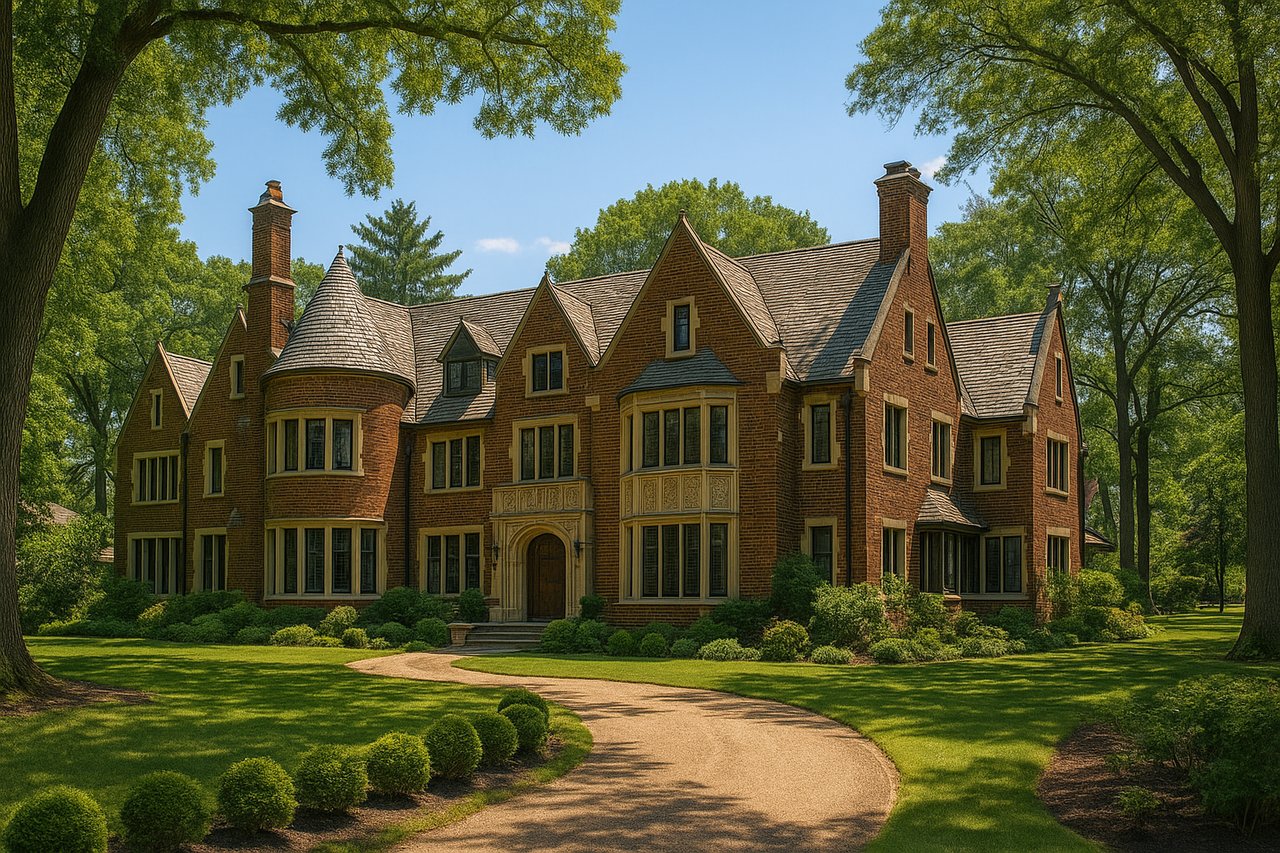
Mansions — not just large homes, but full architectural statements — tucked deep into sweeping lots.
If you didn’t know you were in Detroit, you’d swear you took a wrong turn into a suburban estate enclave or a historic district in the hills of the East Coast.
And that’s because Palmer Woods was never built like the rest of Detroit.
It was designed to be different — privately planned, expertly executed, and intentionally hidden.
Today, we step into one of the most extraordinary neighborhoods in Michigan history.
Welcome to Streets of History — Palmer Woods.
A Neighborhood Built From an Ancient Forest
Long before the first mansion rose here, the land was an untouched, densely wooded forest owned by Sen. Thomas W. Palmer — farmer, timber owner, land investor, philanthropist, and one of the wealthiest men in early Detroit.
When Palmer passed, the land was passed down through family and later developed under the Palmer Park Realty Company, who envisioned something unheard of in Detroit:
A neighborhood where:
-
the streets curved naturally to follow the land
-
the old-growth trees were preserved
-
the lots were expansive, private, and quiet
-
and the homes were designed by the best architects in the Midwest
Palmer Woods wasn’t built for density.
It was built for legacy.
Development began around 1915, and within two decades, Palmer Woods became home to some of the most influential people in Detroit’s rise.
Architecture Without Limits
Between 1915 and 1935, Palmer Woods became an architectural treasure chest — a district where Detroit’s top architects were given near-complete creative freedom.
This resulted in some of the most extraordinary residential designs in the city.
Architects who shaped the neighborhood:
-
Albert Kahn — Detroit’s most legendary architect
-
George D. Mason — designer of some of the city’s landmark institutions
-
Richard H. Marr — celebrated master of Tudor and French Eclectic homes
-
Smith, Hinchman & Grylls — one of America’s oldest and most respected architectural firms
The styles they brought to life:
-
Tudor Revival
-
Georgian Revival
-
Mediterranean & Spanish Colonial
-
French Eclectic
-
Italian Renaissance
-
Storybook/European Manor
These were not catalog designs.
These were one-of-one architectural masterpieces, each hand-drawn and built with craftsmanship few neighborhoods in the Midwest can match.
A Community of Influencers & Innovators
During Detroit’s golden age, Palmer Woods became home to:
-
auto barons
-
ambassadors
-
physicians
-
industrialists
-
musicians & artists
-
political leaders
-
and some of Detroit’s earliest entrepreneurs
This wasn’t accidental — the neighborhood was marketed to the city’s rising upper class, offering privacy, prestige, and unmatched architectural sophistication.
There was no other residential district like it.
And there still isn’t.
Decline, Vulnerability & the Fight to Preserve
Like many Detroit neighborhoods, Palmer Woods experienced challenges beginning in the late 1960s:
-
shifting demographics
-
outmigration
-
disinvestment
-
rising vacancy across the city
But unlike many districts, the homeowners fought back early.
The Palmer Woods Homeowners Association — one of the strongest neighborhood groups in Detroit — organized:
-
security patrols
-
landscaping efforts
-
architectural preservation initiatives
-
community events
-
and close cooperation with the City of Detroit’s planning and police departments
By the 1990s and early 2000s, Palmer Woods had stabilized.
Today, it is one of Detroit’s most desirable, prestigious, and protected historic neighborhoods.
Its homes routinely sell for $600K–$2M+ — a reflection of both its architecture and its enduring strength as a community.
Palmer Woods Today: Luxury, Legacy & Identity
Drive through Palmer Woods today and you see:
-
lush tree canopies
-
carefully preserved historic homes
-
beautifully restored estates
-
active community engagement
-
a neighborhood deeply connected to its past
Palmer Woods isn’t frozen in time — it’s living history, wrapped in greenery and anchored by Detroit pride.
This is what a century of architectural excellence looks like when people choose to protect it.
Watch the Full Streets of History Episode
Today’s episode takes you through:
-
the origins of Palmer Woods
-
the architectural giants behind its homes
-
the old-growth forest it was carved from
-
the neighborhood’s rise & decline
-
what preservation looks like today
-
and why Palmer Woods remains one of the most extraordinary districts in the Midwest
📺 Watch the full episode here:
https://youtu.be/7KQ_38nXIaI
Every street has a past — let’s walk through it.
Explore Detroit’s Historic Districts
Dive deeper into Detroit’s architectural history:
👉 Streets of History Collection