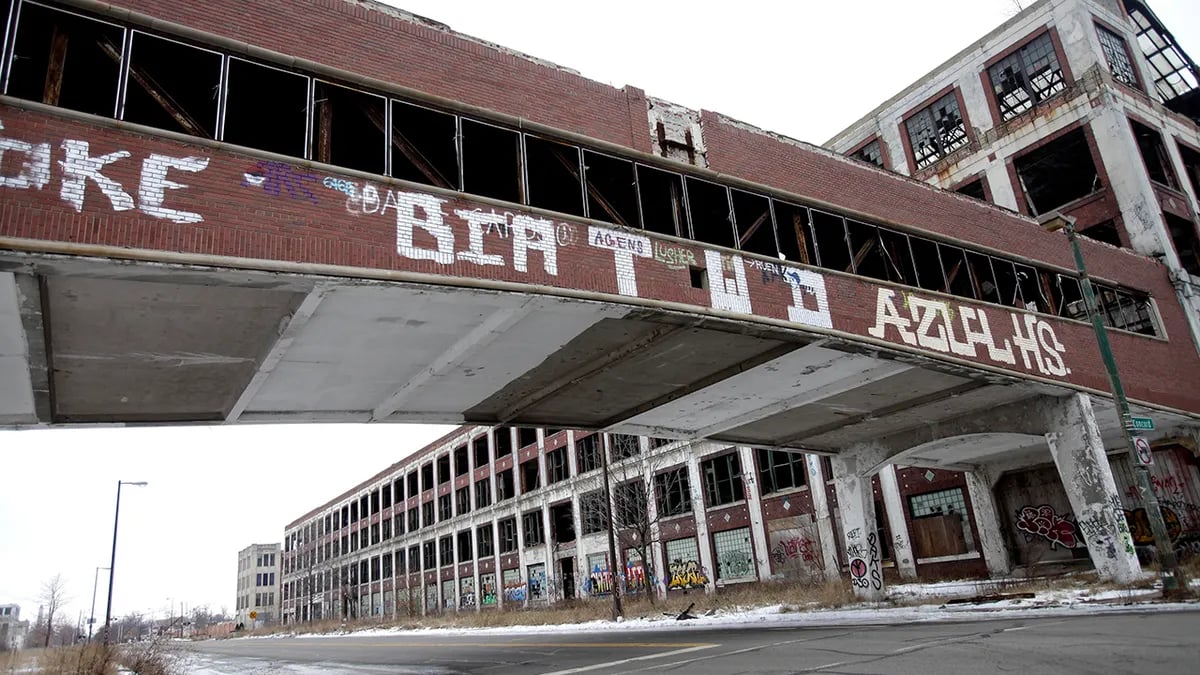
Detroit’s Lost Factory: The Rise and Fall of the Packard Plant
For decades, the Packard Automotive Plant stood as one of the most powerful symbols of Detroit’s industrial dominance.
Stretching across more than 40 acres on the city’s east side, the Packard Plant was once a marvel of engineering, innovation, and American manufacturing. At its peak, the complex produced some of the finest automobiles ever built — vehicles that defined luxury, performance, and prestige in the early 20th century.
Today, much of that massive complex is gone.
What remains are fragments of a place that once shaped the lives of thousands of Detroit workers and helped cement the Motor City’s reputation around the world.
In this bonus episode of Stories We Keep, we explore the past, present, and uncertain future of the Packard Plant.
Watch the Episode
The Birth of an Automotive Giant
The Packard Motor Car Company was founded in 1899 by brothers James Ward Packard and William Doud Packard in Warren, Ohio.
From the beginning, Packard positioned itself differently from many other automakers. Rather than competing on price, Packard focused on quality, craftsmanship, and engineering excellence.
Their motto became famous:
“Ask the Man Who Owns One.”
By the early 1900s, demand for Packard automobiles was growing rapidly, and the company needed a factory that could match its ambitions.
Albert Kahn and the First Modern Factory
In 1903, Packard hired a young architect named Albert Kahn to design a new manufacturing complex in Detroit.
Kahn would go on to become one of the most influential industrial architects in history, designing factories across the world — but the Packard Plant was one of his earliest and most revolutionary projects.
The Packard complex introduced several innovations that would change factory design forever:
-
Reinforced concrete construction
-
Large industrial windows for natural light
-
Flexible production floors
-
Open layouts that improved manufacturing efficiency
These design principles would later influence factories for companies like Ford and General Motors.
The Packard Plant quickly expanded into one of the largest industrial complexes in America.
The Golden Age of Packard
During the 1910s and 1920s, Packard became one of the most prestigious automobile manufacturers in the world.
Packard vehicles were known for their luxury, engineering precision, and elegant design.
The brand attracted an elite clientele that included:
-
U.S. Presidents
-
Business magnates
-
Hollywood stars
-
International royalty
At its height, the Packard Plant employed tens of thousands of workers, producing cars, aircraft engines, and mechanical innovations that helped define the American automotive industry.
World War II and the Arsenal of Democracy
Like many Detroit factories, the Packard Plant played a major role during World War II.
The factory shifted production to support the war effort, producing Rolls-Royce Merlin aircraft engines under license. These powerful engines were used in iconic Allied aircraft such as the P-51 Mustang fighter plane.
Detroit became known as the Arsenal of Democracy, and the Packard Plant was a crucial part of that story.
Decline and the End of Packard
After World War II, the American automotive industry began to change.
Competition increased, consumer tastes shifted, and Packard struggled to keep pace with the larger “Big Three” automakers — Ford, General Motors, and Chrysler.
In 1954, Packard merged with Studebaker in an attempt to survive, but the partnership ultimately failed.
By 1956, Packard automobile production had come to an end.
The once-bustling factory complex began a long and painful decline.
From Industrial Powerhouse to Global Ruin
In the decades that followed, the Packard Plant became one of the most famous abandoned industrial sites in the world.
The massive complex slowly deteriorated.
Buildings collapsed.
Metal was stripped for scrap.
Nature began reclaiming the site.
Photographers, urban explorers, historians, and filmmakers from around the world traveled to Detroit to see the Packard Plant.
It became an unexpected symbol of both Detroit’s decline and its resilience.
Demolition and What Remains Today
In recent years, large portions of the Packard Plant complex have finally been demolished.
After decades of abandonment, many of the remaining structures had become unsafe and structurally unstable.
Today, only a small number of buildings remain standing, with demolition continuing to reshape the landscape of the historic site.
For many Detroiters, watching the plant disappear is bittersweet.
The ruins may be fading, but the history they represent remains deeply embedded in the city’s identity.
The Stories We Keep
Places like the Packard Plant remind us that history isn’t just about buildings.
It’s about the people who worked there.
The families who depended on those jobs.
The neighborhoods that grew around those factories.
And the memories that continue to live on long after the buildings themselves are gone.
Share Your Packard Plant Memories
Did you or someone in your family work at the Packard Plant?
Do you remember driving past it when the buildings were still standing?
We’d love to hear your stories.
Share your memories in the comments or join the conversation with the History Loves Company community.
Watch the Full Episode
You can watch the full Stories We Keep episode exploring the Packard Plant here: