A History Loves Company Original
Detroit was once one of the wealthiest cities in the world.
Before freeways.
Before decline.
Before abandonment became part of the national narrative.
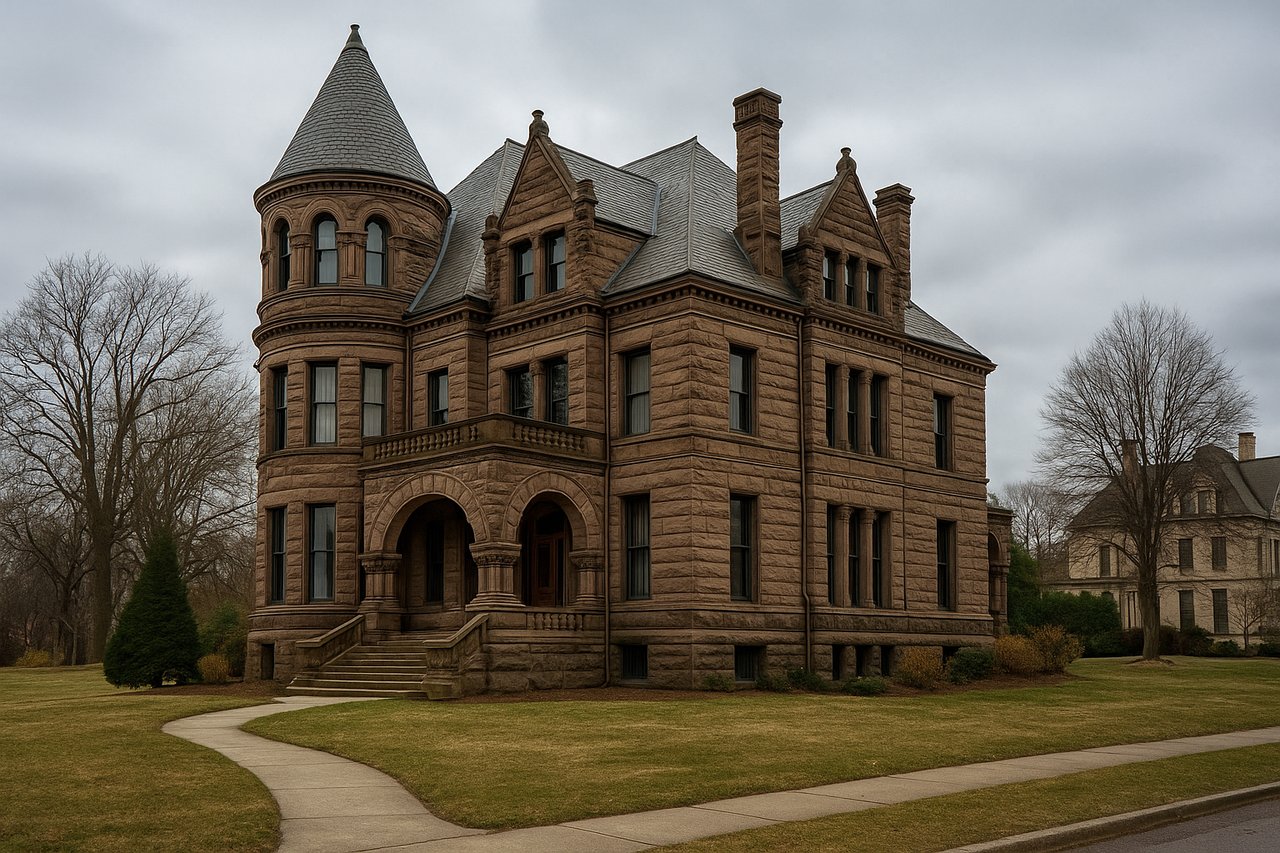
At the turn of the 20th century, Detroit’s elite built estates that rivaled European manors and East Coast palaces. These were not large homes. They were urban estates — complete with carriage houses, formal gardens, private drives, and interiors designed to impress the most powerful industrialists of the age.
Most of them are gone now.
Demolished.
Subdivided.
Lost to time, policy, and progress.
This is the story of Detroit’s lost mansions — the Gilded Age estates that shaped the city’s identity and then vanished from its landscape forever.
Detroit at the Height of the Gilded Age
Between roughly 1890 and 1930, Detroit exploded with wealth. The automotive industry, finance, manufacturing, and shipping turned the city into a magnet for ambition.
With that wealth came architecture.
Detroit’s upper class did not build modestly. They built with permanence in mind. Their homes were designed by the same architects shaping America’s great cities, using imported materials, European craftsmanship, and layouts intended for a lifetime of entertaining and influence.
Entire neighborhoods once contained homes that would today be considered irreplaceable national landmarks.
Jefferson Avenue: Detroit’s Original Mansion Row
Before Boston Boulevard, before Palmer Woods, before Grosse Pointe became the ultimate address, Jefferson Avenue was Detroit’s most prestigious corridor.
Stretching along the Detroit River, Jefferson was lined with enormous estates belonging to:
• industrialists
• shipping magnates
• financiers
• politicians
• and early automotive pioneers
These homes featured sweeping river views, formal gardens, and grand interiors designed to showcase Detroit’s rising power.
Nearly all of them are gone.
Urban expansion, industrial development, zoning changes, and neglect erased one of the city’s most extraordinary residential corridors.
The Woodward Avenue Estates
Woodward Avenue is remembered today as a commercial and cultural spine, but in the late 19th and early 20th centuries, it was also home to some of Detroit’s grandest private estates.
Massive mansions once stood where apartment buildings, parking lots, and institutional buildings now exist.
These homes were not simply residences — they were statements. Towers, ballrooms, libraries, and conservatories defined properties that anchored Detroit’s social elite.
As Woodward transitioned from residential boulevard to commercial artery, the mansions disappeared one by one.
Brush Park’s Fallen Giants
Brush Park is often celebrated for what survived — but even there, the losses were staggering.
Once known as the “Little Paris of the Midwest,” Brush Park contained dozens of grand mansions built for Detroit’s wealthiest families. Many were masterpieces of Victorian, Romanesque, and early Beaux-Arts design.
By the mid-20th century, neglect and disinvestment set in. Some homes were subdivided. Others were abandoned. Many were demolished.
What remains today is only a fraction of what once existed.
Why These Mansions Were Lost
The destruction of Detroit’s Gilded Age estates was not caused by a single event. It was the result of overlapping forces:
• suburbanization and white flight
• freeway construction cutting through historic neighborhoods
• rising maintenance costs
• zoning changes favoring density or commercial use
• lack of historic preservation laws in the early 20th century
• decades of population loss and disinvestment
In many cases, these homes were seen as obsolete rather than irreplaceable.
By the time preservation efforts gained traction, it was already too late.
What We Lost Beyond the Buildings
When Detroit lost these mansions, it didn’t just lose architecture.
It lost:
• craftsmanship that cannot be replicated today
• original materials sourced from around the world
• neighborhood-scale urban estates
• physical proof of Detroit’s global influence
• cultural continuity
These homes told the story of a city that once believed in permanence. Their disappearance left gaps not only in the streetscape, but in Detroit’s collective memory.
Streets of History: Walking What Remains
In today’s Streets of History episode, we walk the sites where these mansions once stood.
We look at:
• historic photographs
• original locations
• what exists there now
• why certain neighborhoods survived while others didn’t
• how Detroit’s development patterns changed permanently
This is not a story about nostalgia alone.
It’s about understanding how cities evolve — and what they choose to leave behind.
Watch the Full Streets of History Episode
The full video exploration of Detroit’s lost mansions is available now on YouTube.
https://youtube.com/@historylovescompany
Every street has a past.
Some of the most important ones no longer have buildings to prove it.
Explore More of Detroit’s History
Dive deeper into Detroit’s neighborhoods, architecture, and untold stories.