Do You Remember Your First Time on Belle Isle?
Before it was a park, it was a promise.
There are places that exist on a map.
And then there are places that exist inside people.
Belle Isle has always been the second kind.
Before the Crowds… Before the Cars… Before the Memories
Long before it became Detroit’s most beloved park, Belle Isle was simply an island in the Detroit River—quiet, wooded, and largely untouched.
In the early 1700s, it was used by French settlers and Indigenous communities who understood something we sometimes forget:
Location is everything.
This island sat at the heart of movement—between nations, between trade routes, between futures.
By 1845, it was officially named “Belle Isle,” meaning beautiful island.
But it wasn’t until the late 1800s that the vision truly began.
The Vision: A Park for the People
As Detroit grew into an industrial powerhouse, something became clear:
The city needed space to breathe.
So Belle Isle was transformed into a public park—guided in part by the philosophy of Frederick Law Olmsted, the same mind behind Central Park.
And the idea was simple, but powerful:
This place would belong to everyone.
Not the wealthy.
Not the connected.
Not the few.
Everyone.
What Belle Isle Became
Over time, Belle Isle turned into something bigger than anyone could have planned.
It became tradition.
- The Belle Isle Aquarium — one of the oldest aquariums in the country
- The Anna Scripps Whitcomb Conservatory — a glass dome filled with life year-round
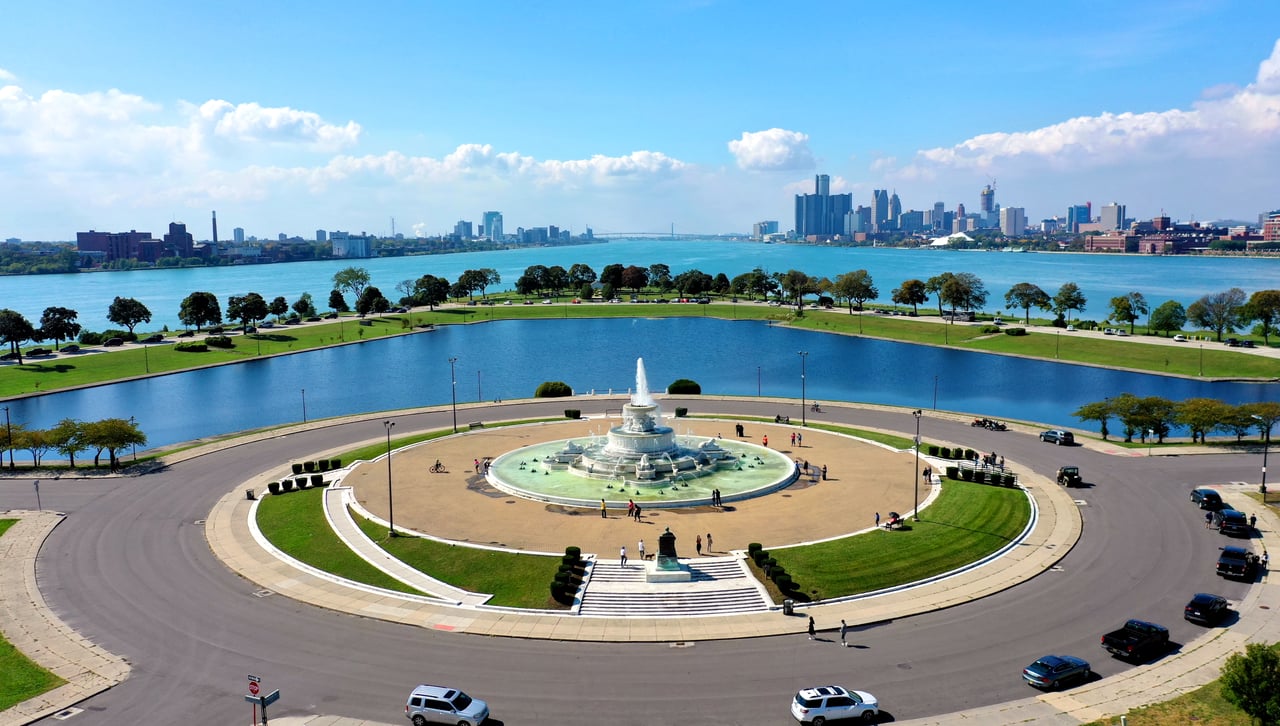
- The James Scott Memorial Fountain — the centerpiece of countless summer days
But more than that…
It became:
First bike rides.
Family cookouts.
Fireworks over the river.
Quiet drives at sunset.
Moments that didn’t feel historic at the time—but became history anyway.
A Shift in Stewardship
In 2014, Belle Isle transitioned into a state park under the Michigan Department of Natural Resources.
For some, it brought stability and investment.
For others, it raised questions:
Who really controls Belle Isle?
And more importantly…
Who is it for?
The Proposal That Changed the Conversation
Now, a new proposal has entered the conversation—one that has people across Detroit paying attention.
A concept has been introduced that would transform parts of Belle Isle into a privately developed economic zone.
Housing.
Retail.
Entertainment.
A vision that could bring tens of thousands of residents—and billions in investment.
On paper, it sounds like growth.
But if you’ve studied history…
You know this story doesn’t start here.
We’ve Seen This Before
There was another island once.
Bois Blanc Island — better known as Boblo.
It was a place for people.
An escape.
An experience.
A shared memory.
And today?
It’s a private enclave.
Gated.
Limited.
No longer what it once was.
The Question We Have to Ask
This isn’t about being against progress.
This is about understanding patterns.
Because once a public space changes…
it rarely goes back.
So the real question isn’t:
“What could this become?”
It’s:
“What do we risk losing?”
Why This Matters Right Now
Belle Isle is still public.
Still accessible.
Still shared.
But moments like this—when proposals are introduced quietly, when ideas are floated before decisions are made—
These are the moments that define the future.
Not after.
Not later.
Now.
This Isn’t Just About Detroit
What’s happening with Belle Isle is part of something bigger.
Across the country—and across the world—public spaces are being reimagined, redeveloped, and in some cases…
Removed from the public entirely.
Once they’re gone, they don’t come back the same.
The Stories We Keep
At History Loves Company, we say it all the time:
The real history lives in the people.
And Belle Isle is full of it.
So before anything changes…
Tell your story.
- Do you remember your first time on Belle Isle?
- What did it mean to you growing up?
- What do you want it to be for the next generation?
Because history isn’t just what was built.
It’s what we choose to protect.
Final Thought
Belle Isle was never meant to be exclusive.
It was meant to be shared.
And whether it stays that way…
is no longer just a matter of history.
It’s a matter of choice.
If this matters to you, share this post.
Start the conversation.
Make sure your voice is part of the story.
Because once something like this is gone…
we don’t just lose a place.
We lose a piece of ourselves.