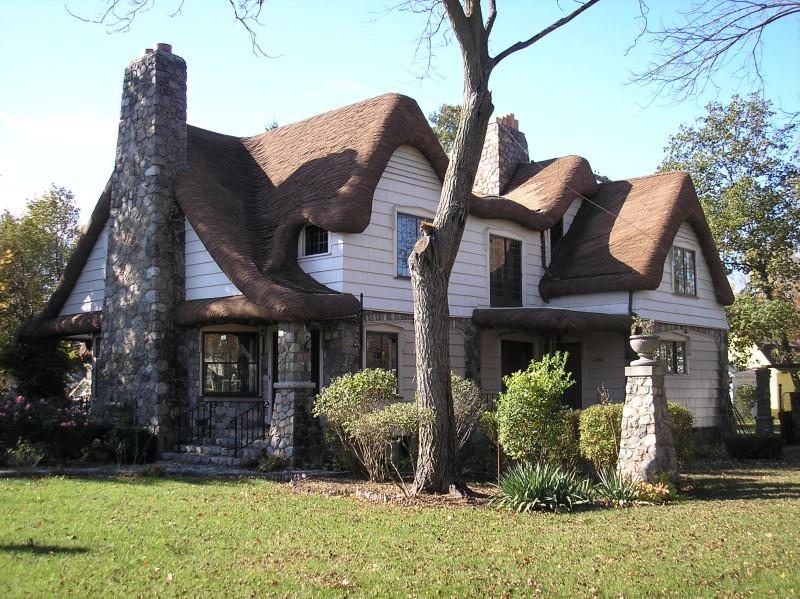
Inside the Astonishing Home of Inventor W.J. Moore
Homes of Michigan – Season 3, Episode 2
In the quiet town of Caro, Michigan, one historic home quietly tells a story of invention, ambition, and technological vision decades ahead of its time.
The W.J. Moore House is not simply another historic residence. It was designed by a man who believed the home itself could function like a machine — controlled, efficient, and engineered for modern living.
In Season 3, Episode 2 of Homes of Michigan, we step inside the remarkable home of William J. Moore, exploring the innovations built directly into the house and the mind behind them.
📺 Watch the full episode here:
New episodes of Homes of Michigan premiere every Friday at 6 PM EST.
Who Was W.J. Moore?
William J. Moore was an inventor, engineer, and entrepreneur who lived in Caro, Michigan during the early 20th century.
While Caro was best known for its sugar beet industry and the Michigan Sugar Company, Moore was focused on a different kind of progress — technological innovation.
Moore held numerous patents and worked on systems that pushed the boundaries of mechanical automation and electrical control during a time when most homes still relied on simple manual systems.
Rather than keeping those inventions confined to laboratories or workshops, Moore did something extraordinary.
He built them directly into his home.
A House Designed Like a Machine
Long before the phrase “smart home” existed, the W.J. Moore House incorporated technologies that anticipated the modern concept of automated living.
Inside the home, Moore engineered a variety of systems intended to simplify everyday life and centralize control of the house itself.
Among the most fascinating features documented in the home were:
• A centralized control panel in the foyer used to manage systems throughout the house
• More than twenty telephones installed throughout the residence for internal communication
• Early burglar alarm systems, activated through hidden mechanisms
• Mechanical systems designed to control lighting and security
At a time when most American homes still had a single telephone and minimal electrical infrastructure, Moore envisioned a residence operating through interconnected systems.
Today, we might call it a precursor to the smart home.
But in the early 1900s, it was revolutionary.
The Architecture of the Home
The home itself reflects the architectural ambition of the era.
Like many grand Midwestern homes built during the early 20th century, the W.J. Moore House was designed with a commanding presence.
Key architectural features include:
• A stately exterior with classic early-20th-century proportions
• Large windows bringing natural light deep into the interior
• Detailed woodwork and trim typical of high-end homes of the period
• A grand staircase and central foyer layout designed around Moore’s control systems
Rather than simply building a beautiful house, Moore designed a living laboratory, integrating engineering and architecture in a way rarely seen in residential construction at the time.
Caro and the Age of Industrial Innovation
To understand the significance of the W.J. Moore House, it helps to understand the environment in which it was built.
During the late 1800s and early 1900s, Michigan was exploding with industrial development.
Cities like Detroit were becoming the center of the automobile industry, while smaller towns like Caro were thriving through agricultural processing and manufacturing.
Inventors and entrepreneurs across the state were experimenting with new technologies.
Moore represented a particular type of early American innovator — someone fascinated by the possibilities of machinery, electrical systems, and automation.
Instead of simply inventing products for industry, he imagined a future where those systems would shape the home itself.
Inside the House Today
Stepping inside the W.J. Moore House today feels like entering a time capsule.
The structure still carries the physical evidence of Moore’s experiments and ideas.
As we explore the home in this episode, viewers will see:
• The layout built around the central control area
• Architectural features preserved from the early 1900s
• The scale and craftsmanship of the home
• Clues to the technological systems Moore once installed
Some features have been lost to time, while others remain partially intact — but the vision behind the house is still visible in its design.
It’s a powerful reminder of how ambitious early innovators could be.
A House That Was Decades Ahead of Its Time
What makes the W.J. Moore House so fascinating is not just its architecture — it’s the concept behind it.
Moore believed the home could operate as a coordinated system.
Today we take that idea for granted.
Modern homes include:
• smart lighting
• integrated security systems
• networked communication devices
• centralized control panels
But Moore was exploring those ideas more than a century ago.
In many ways, the W.J. Moore House represents an early vision of what connected living could look like.
The W.J. Moore House Today
Today the W.J. Moore House stands as one of the most intriguing historic homes in Tuscola County, Michigan.
While many historic houses are remembered for architectural style or prominent residents, this home stands apart because of the ideas embedded within it.
It is a rare example of a residence shaped by the imagination of an inventor.
And it raises a fascinating question:
How many other innovations were quietly tested in places like this before becoming part of everyday life?
Watch the Full Episode
In Season 3, Episode 2 of Homes of Michigan, we step inside the W.J. Moore House to explore the architecture, inventions, and vision of the man who built it.
🎥 Watch the full video here:
https://youtu.be/OdBLhp-OB8g
📺 Homes of Michigan premieres every Friday at 6 PM EST.