A History Loves Company Original
Michigan’s architectural story is rich, layered, and deeply personal. But not every historic home that shaped this state still stands today.
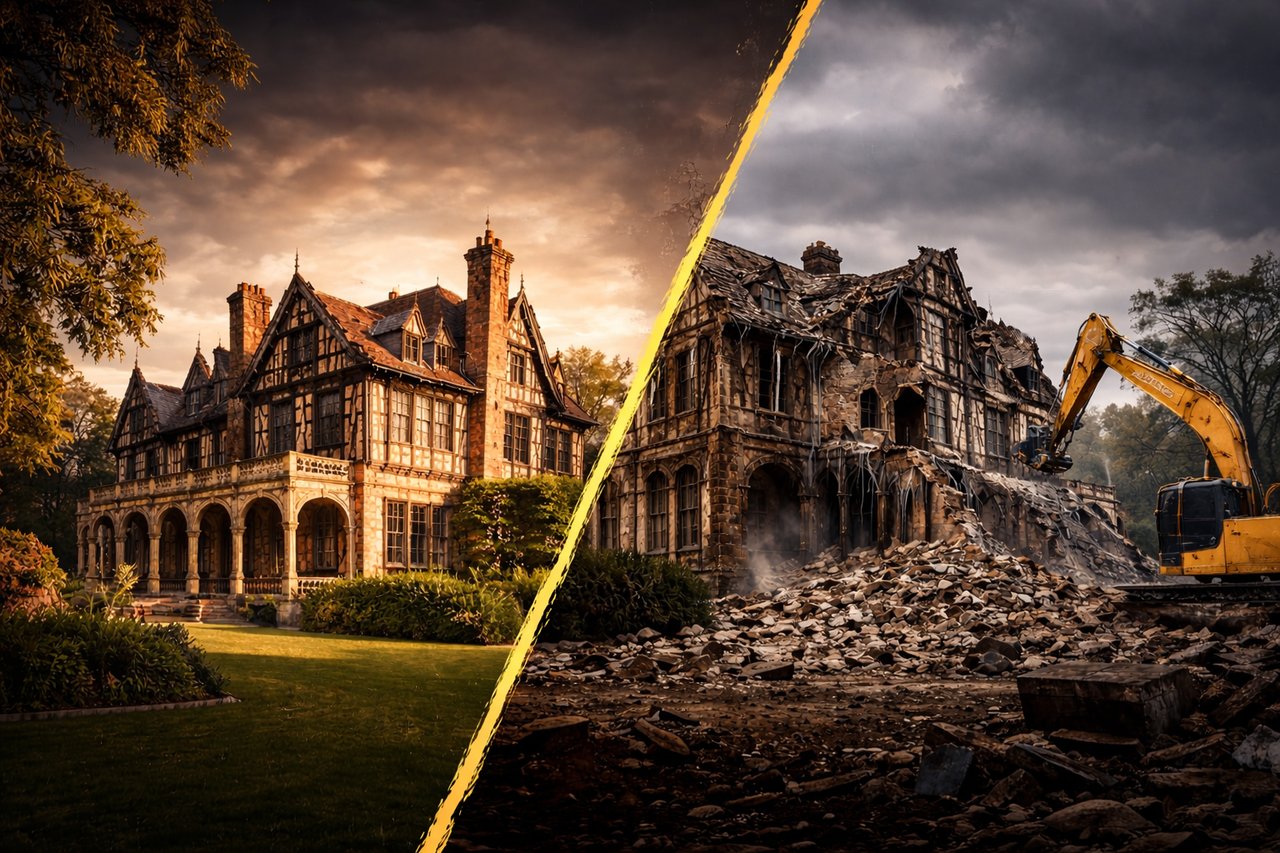
For every preserved estate or museum house, there are others that were demolished — sometimes quietly, sometimes controversially — erased by redevelopment, neglect, or decisions made before preservation laws had real strength.
And yet, some homes survived only because people fought for them.
This episode of Homes of Michigan explores both sides of that reality:
the homes we lost — and the ones communities refused to let disappear.
Why Historic Homes Disappear in Michigan
Historic homes across Michigan have been lost for many overlapping reasons:
-
Urban renewal and infrastructure projects
-
Economic decline and long-term vacancy
-
Rising maintenance and restoration costs
-
Absence of local historic district protections
-
State or national recognition without legal enforcement
-
Structural deterioration and safety concerns
Historic designation alone does not guarantee protection. Without local ordinances, funding, or active stewardship, even significant homes remain vulnerable.
Michigan Homes We Lost
Alexander Chêne House — Detroit
Built in 1855, the Alexander Chêne House stood along East Jefferson Avenue as one of Detroit’s oldest surviving residences. The Federal-style home, later altered with Colonial Revival details, was listed on the National Register of Historic Places in 1978.
Despite its national recognition, the home lacked enforceable local protection and was demolished in April 1991, removing a rare mid-19th-century structure from Detroit’s landscape.
Paul Harvey Deming House (“Cherryhurst”) — Grosse Pointe Farms
Constructed in 1907, the Paul Harvey Deming House was a prominent Tudor Revival mansion and recognized as a Michigan State Historic Site.
However, state designation did not provide legal protection against demolition. Without inclusion in a local historic district, the house was demolished in 1997, illustrating the limits of honorary recognition without regulatory backing.
House at 1514 North Michigan Street — Saginaw
This Queen Anne–style residence, built in 1880, was added to the National Register of Historic Places in 1982.
After years of vacancy and deterioration, the home was demolished in 2018, despite its historic status. Its loss highlights the vulnerability of historic homes without sustained investment or adaptive reuse plans.
Sheldon Inn — Canton Township
Built between 1825 and 1826, the Sheldon Inn was one of Michigan’s earliest Greek Revival structures, originally serving travelers along the Chicago Road.
Despite preservation efforts and historic recognition, the building suffered from extensive deterioration and structural instability. In January 2021, the Sheldon Inn was demolished due to safety concerns, marking the loss of a foundational early Michigan structure.
Homes and Places We Fought to Save
Not every story ends in demolition.
Crocker House Museum — Mount Clemens
Built in 1869, the Crocker House faced demolition in the 1970s. Instead, the Macomb County Historical Society intervened, relocating the structure in 1975 and restoring it as a museum.
Today, the Crocker House stands as a rare success story — proof that intervention, funding, and public advocacy can preserve historic homes even when demolition seems inevitable.
Across Michigan, similar efforts have saved homes through:
-
emergency stabilization
-
nonprofit acquisition
-
relocation
-
adaptive reuse
-
community fundraising
-
public pressure
Preservation happens when people choose to act.
Why These Homes Matter
Historic homes are more than architectural artifacts.
They represent:
-
lived experience and daily life
-
craftsmanship that cannot be replicated
-
social and economic history
-
neighborhood identity
-
tangible connections to Michigan’s past
When a home is lost, its story becomes abstract.
When a home is preserved, history remains physical.
Homes of Michigan: Remembering What Was — Protecting What Remains
In this week’s Homes of Michigan episode, we examine:
-
historic homes Michigan has lost
-
why designation alone didn’t save them
-
the limits of preservation without enforcement
-
homes that survived because people stepped in
-
what today’s preservation battles can learn from the past
Understanding loss is part of protecting the future.
Watch the Full Episode
Watch Michigan Homes We Lost — And the Ones We Fought to Save on the History Loves Company YouTube channel:
https://youtube.com/@historylovescompany
Every home has a story.
Some survive because someone refused to let it end.
Explore More Historic Michigan Homes
Discover preserved residences, endangered landmarks, and the stories behind them:
Homes of Michigan Collection