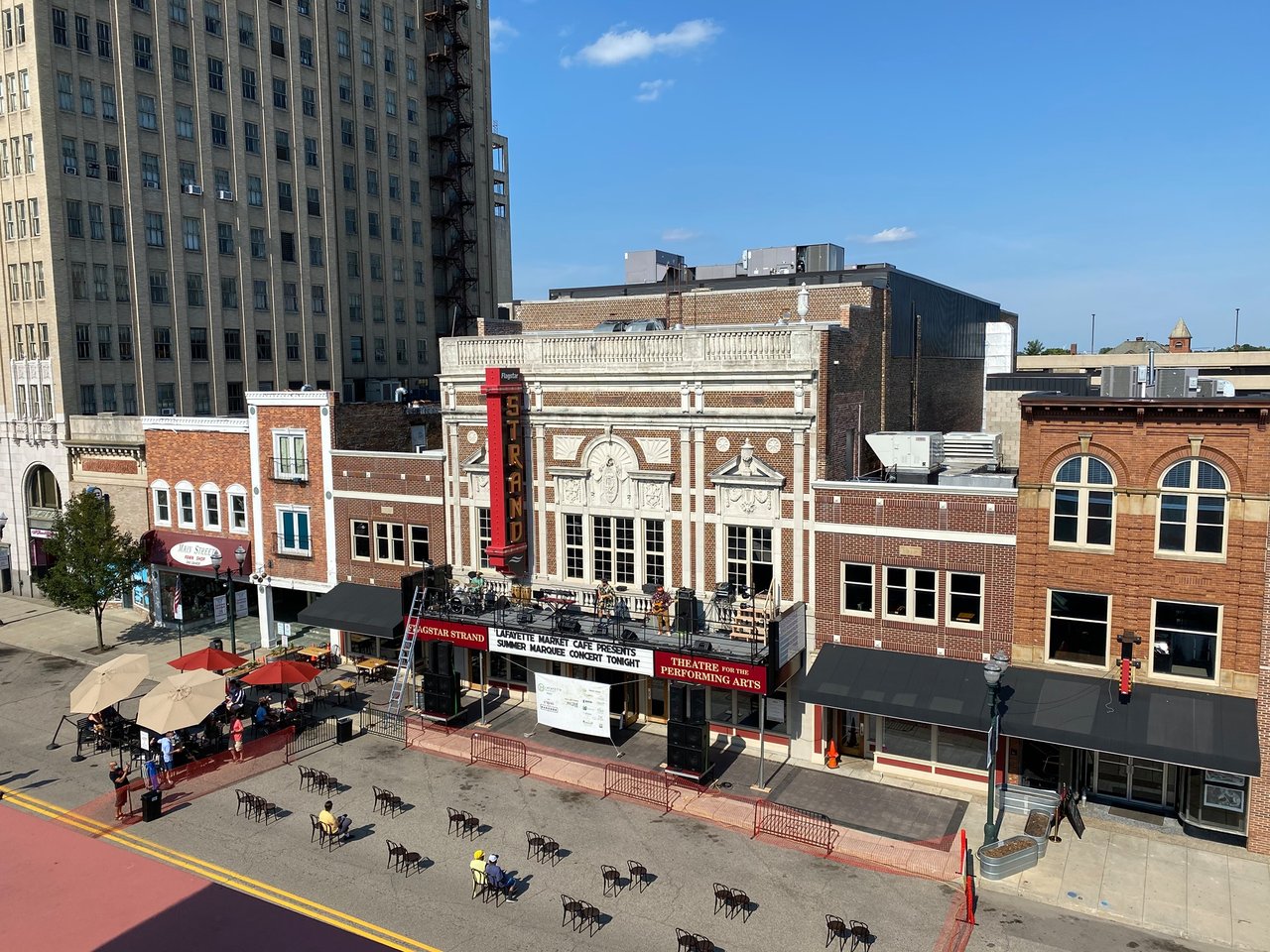
The Strand, The Rialto, The Eagle — And the Theatres That Lit Up Downtown
There was a time when downtown Pontiac didn’t dim at night.
It shimmered.
Marquees glowed along Saginaw Street. Crowds gathered beneath vertical blade signs. Music drifted out of open doors. Ushers in pressed uniforms guided families to velvet seats.
Pontiac did not just have a movie theater.
It had a theatre district.
Tonight’s Pontiac Pulse episode explores the historic theaters that defined Pontiac’s cultural life — from the Strand to the Rialto, from the Eagle to the smaller neighborhood houses that once dotted the city.
This is the story of when Pontiac went to the movies.
The Strand Theatre
If Pontiac had a crown jewel, it was the Strand Theatre.
Opened in the 1920s during the height of the American movie palace era, the Strand was built not just to show films — but to create spectacle.
Grand entrances. Decorative interiors. A sense of ceremony.
The Strand represented aspiration. It told residents that Pontiac was not a small town — it was a city worthy of architectural investment and cultural programming.
Over the decades, the Strand evolved. It hosted silent films, talkies, community events, and eventually endured closures and reopenings.
Today, remarkably, the Strand still stands — one of the last physical connections to Pontiac’s golden age of cinema.
The Rialto Theatre
The Rialto Theatre was another key downtown venue during Pontiac’s theatrical peak.
Like many Rialtos across America, the name carried prestige — borrowed from Venice and synonymous with entertainment districts nationwide.
The Pontiac Rialto operated during a time when movies were still new enough to feel magical.
Downtown crowds moved between venues. Double features filled evenings. Cinema was affordable, communal, and central to urban life.
While the Rialto no longer operates as a theater today, its presence remains part of Pontiac’s layered architectural story.
The Eagle Theatre
The Eagle Theatre served as yet another cornerstone of Pontiac’s early 20th-century entertainment scene.
Smaller than the grand palaces but equally important, the Eagle represented accessibility — neighborhood-level cinema for everyday residents.
The Eagle reminds us that Pontiac’s theater history was not limited to one grand building. It was a network.
A living ecosystem of performance and projection.
More Than Movies: A Downtown Ritual
During the 1920s through the 1940s, theaters were the social center of American cities — and Pontiac was no exception.
Theatres meant:
-
Saturday matinees
-
Newsreels during wartime
-
First dates
-
Community gatherings
-
Escapes during the Great Depression
-
Shared laughter and silence in dark rooms
Theaters anchored downtown foot traffic. Restaurants, shops, and late-night energy grew around them.
When the theater lights were on, downtown was alive.
Decline & Changing Patterns
Like cities across America, Pontiac’s theater district began to fade mid-century.
Television entered living rooms. Suburban multiplexes changed viewing habits. Downtowns across the country lost evening activity.
Some Pontiac theaters were demolished. Others were repurposed. Some simply closed and faded from public consciousness.
But their emotional imprint remains.
The stories did not disappear.
They just moved into memory.
The Strand Today
Against long odds, the Strand Theatre remains one of Pontiac’s enduring entertainment landmarks.
Though it has experienced closures and transitions, it stands as a physical reminder of when moviegoing was ceremonial.
Its survival is not accidental.
It reflects the persistence of community interest and the belief that historic spaces still matter.
The Pontiac Little Art Theatre (PLAT)
In contrast to the grand movie palaces of the past, the Pontiac Little Art Theatre (PLAT) represents a more intimate, community-driven continuation of the tradition.
PLAT keeps cinema alive in downtown Pontiac — not through scale, but through intention.
It proves something important:
Pontiac still goes to the movies.
The buildings may have changed. The format may have shifted. But the ritual continues.
Why This History Matters
The story of Pontiac’s theaters is about more than architecture.
It is about gathering.
About shared experience.
About a downtown that once pulsed with evening life.
The Strand. The Rialto. The Eagle.
These names are not just business titles.
They are chapters in Pontiac’s cultural biography.
Watch the Full Episode
Tonight at 6:00 PM EST, Pontiac Pulse dives deeper into the theaters that once defined downtown Pontiac — and the ones that still stand.
If you remember lining up under the Strand marquee…
If you saw your first movie at the Eagle…
If you have old photos of the Rialto…
Share your story.
Because Pontiac’s real history lives in the people who experienced it.
Pontiac Pulse
Pontiac Pulse is our biweekly series dedicated to the past, present, and future of Pontiac, Michigan.
New episodes premiere at 6PM EST.
Explore more at:
https://www.historylovesco.com