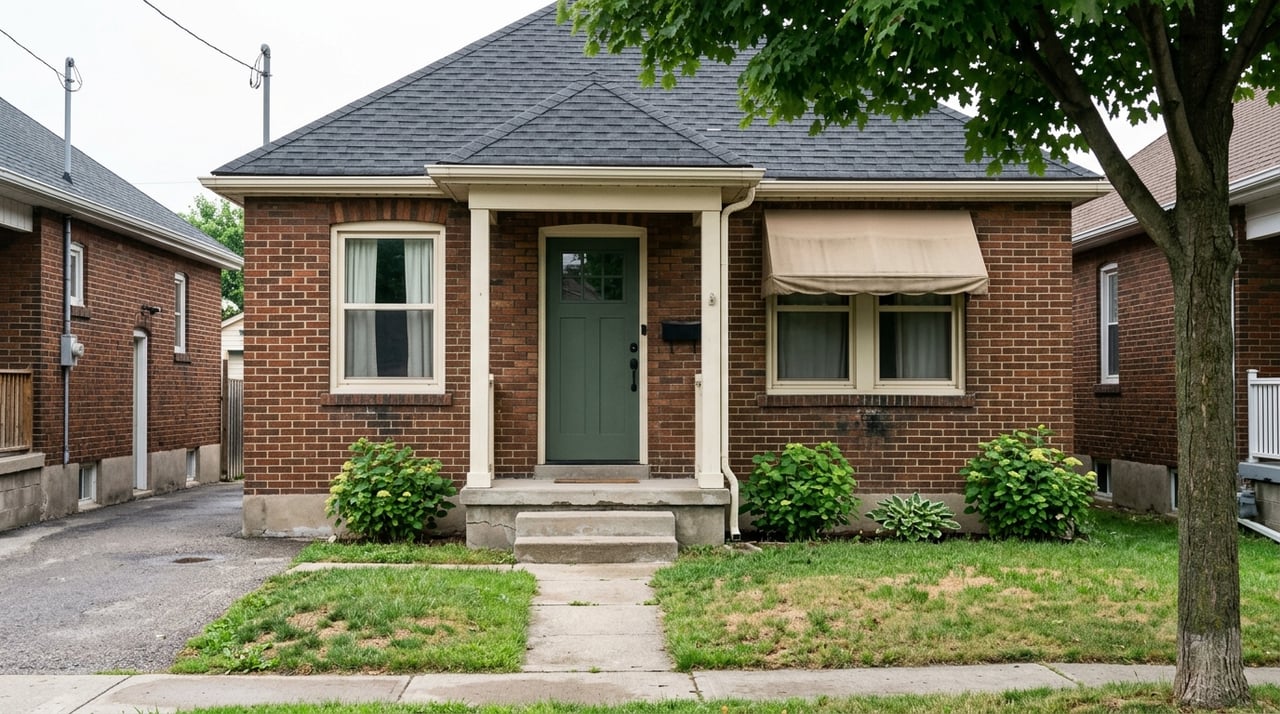
Wondering if this is the right moment to put your Corktown home on the market? That is a fair question, especially in a neighborhood where history, scarcity, and new investment all shape value in different ways. If you are trying to decide whether to list now or wait, the real answer comes down to preparation, pricing, and how your home fits today’s buyer expectations. Let’s dive in.
Corktown Market Conditions Now
Corktown remains one of Detroit’s more distinctive and higher-priced neighborhoods, but current conditions suggest a selective market rather than a fast-moving one. As of late spring 2026, Zillow reported an average Corktown home value of $485,367, up 1.6% year over year, with 10 homes for sale.
At the same time, Realtor.com’s May 2026 neighborhood summary showed 21 homes for sale, a $610,000 median listing price, and 48 median days on market. Redfin’s March 2026 data showed a $623,000 median sale price, down 6.7% year over year, with homes averaging 131 days on market. Those numbers do not point to a weak neighborhood, but they do show that buyers are taking their time.
What These Numbers Mean for Sellers
If you are selling in Corktown, the market is not asking whether your home is special. It is asking whether your home is priced correctly and presented clearly. In a compact neighborhood with limited inventory, buyers will still pay attention, but they are not rushing without reason.
The broader Detroit market adds more context. Realtor.com reported that Detroit had shifted toward buyers in early 2026, with inventory up 14.7% year over year, more homes sitting longer, and more price cuts. Corktown may be more expensive and more distinctive than the citywide average, but it is still affected by that larger trend.
Why Corktown Still Stands Out
Corktown’s value is tied to more than square footage. The neighborhood’s identity is rooted in its historic fabric, and the Detroit Historical Society describes it as Detroit’s oldest existing neighborhood, with early Federal-style homes, rowhouses, and later Victorian townhouses shaping its character.
That history matters because surviving historic homes are relatively scarce. After World War II, 75 acres of homes and businesses were demolished, which helps explain why original houses and cottages can carry strong appeal today. For many buyers, Corktown is not just about location. It is about owning a home with story, character, and a sense of place.
Which Homes May Be Drawing Buyers
Current inventory suggests Corktown has at least two overlapping buyer audiences. One group appears drawn to historic houses and cottages with original detail, while another seems focused on loft, townhome, and turn-key living with features like parking, rooftop terraces, and newer finishes.
That reading fits what is available in the neighborhood today. Perennial Corktown is marketing apartments, townhomes, and 28 loft-style apartments, while Redfin’s current condo listings include units in the high-$400,000s to mid-$500,000s with amenity-driven features. For you as a seller, that means your home should be positioned for the buyer most likely to value it.
Michigan Central Is Lifting Expectations
Michigan Central is now a major neighborhood anchor, and it is helping shape how buyers think about Corktown. Official Michigan Central materials describe a 30-acre district with 1.2 million square feet of commercial and public space, already home to more than 2,000 professionals across 240-plus companies.
That kind of activity supports long-term interest in the neighborhood. Buyers may see Corktown as a place with momentum, walkability, and growing relevance inside the broader Detroit market. If your home is near Michigan Central, Roosevelt Park, or neighborhood retail corridors, that context can strengthen your marketing story.
Still, it is important to stay grounded. Some of Corktown’s future upside is tied to expectation as much as fully realized change. Axios reported in May 2026 that the proposed Michigan Central transit hub remained in the design phase, with no set construction timeline.
New Housing Also Means More Competition
Momentum can help a neighborhood, but new supply can also sharpen competition. On June 1, 2026, the City of Detroit announced 188 new mixed-income units across three developments near Michigan Central, Roosevelt Park, and nearby retail corridors.
For sellers, that is a reminder that buyers will have options. Even if your home is unique, it still enters a market where people compare location, condition, amenities, and convenience. Listing now can make sense, but only if your home is ready to compete with both resale inventory and newer housing choices.
Should You List Now or Wait?
For many Corktown owners, the better question is not whether there is a perfect week to list. It is whether your home is prepared to meet the market right now. National reporting has pointed to mid-April as a strong seasonal window for sellers, but Corktown’s current conditions suggest that preparation matters more than chasing a calendar date.
If your home is clean, documented, market-ready, and priced against recent Corktown comparables, listing now may be a smart move. If your pricing expectations depend more on neighborhood buzz than current buyer behavior, waiting may not solve the problem. In this market, strong execution matters more than optimism.
Prep Matters More Than Big Renovations
If you are thinking about improvements before listing, focus on what helps buyers understand and trust the home. Realtor.com’s Corktown seller guidance notes that small cosmetic updates often do more than major renovations, since larger projects do not always return their full cost.
In practical terms, that may mean prioritizing:
- Clean exterior condition
- Fresh touch-ups and minor cosmetic fixes
- Organized repair and maintenance records
- Strong listing photography
- A clear feature list that highlights original details, parking, outdoor space, and proximity to Michigan Central or Roosevelt Park
In a neighborhood like Corktown, buyers often respond to both emotion and evidence. They want to feel the home’s character, but they also want to understand its condition and value.
Historic District Compliance Is Critical
If your Corktown home is in a local historic district, exterior compliance should be part of your pre-listing checklist. The City of Detroit says exterior changes in local historic districts require Historic District Commission review before a building permit is issued.
That is not a small detail. Unapproved exterior work can stay attached to a property and may complicate or even prevent a sale. Before listing, it is wise to confirm whether your home falls within a local historic district, gather permit history, and address any open exterior issues.
Pricing Strategy Has to Be Disciplined
In a market with rising inventory and longer selling times, pricing is one of your most important decisions. Detroit-wide data showed that homes priced right and presented well were still moving, while overpriced listings were more likely to stall as price cuts became more common.
For Corktown sellers, that means your price should reflect:
- Recent Corktown comparables
- Current neighborhood competition
- Your home’s condition
- The property type and likely buyer pool
- Features buyers are actively valuing in this market
A historic cottage, a renovated townhouse, and a newer condo may all sit in the same neighborhood, but they do not compete in exactly the same way. A strong pricing strategy accounts for those differences rather than relying on broad neighborhood averages alone.
Marketing Has to Match the Home
Because Corktown buyers are often drawn to story as much as specs, your marketing should do more than list bedrooms and bathrooms. If you own a historic property, the listing should communicate its provenance, original details, and place within the neighborhood’s evolving fabric.
If you own a loft, condo, or townhome, the emphasis may shift toward convenience, finish level, parking, outdoor space, and turn-key living. In either case, high-quality photography, a thoughtful feature list, and a clear value story can help your home stand out in a market that is active but selective.
The Bottom Line for Corktown Sellers
Yes, you may be able to list your Corktown home now and do well. But the best results are likely to come when your home is fully prepared, historically compliant if needed, and priced to match current market reality rather than future hopes.
Corktown still benefits from scarcity, history, and Michigan Central’s momentum. Even so, this is not a market where sellers can rely on hype alone. If you want to stand out, your home needs the right strategy, the right presentation, and a story that connects with the buyer most likely to say yes.
If you are thinking about selling and want a clear read on where your home fits in today’s Corktown market, Christopher Hubel can help you evaluate timing, pricing, and the best way to tell your home’s story.
FAQs
Should you list a Corktown home now in 2026?
- Listing now can make sense if your home is market-ready, priced against current Corktown comparables, and any historic district issues have been addressed.
How fast are homes selling in Corktown, Detroit?
- Recent reports show Corktown homes are not moving at a rush, with Realtor.com reporting a median of 48 days on market and Redfin showing a longer average in its March 2026 snapshot.
How important is Michigan Central when selling a Corktown home?
- Michigan Central is an important neighborhood anchor that supports buyer interest, but some future value is still based on expectations rather than fully completed projects.
What should sellers fix before listing a historic Corktown house?
- Sellers should focus on clean exterior condition, small cosmetic improvements, documentation of repairs, strong presentation, and checking for any exterior historic district compliance issues.
How should you price a home in Corktown, Detroit?
- Pricing should be based on recent local comparables, current competition, property condition, and the features buyers are valuing right now rather than on neighborhood buzz alone.