A History Loves Company Original
Pontiac’s history isn’t only written in the buildings and streets above ground. Some of the city’s most fascinating stories live below the surface, hidden in tunnels, sealed corridors, buried waterways, and long-forgotten rooms that most residents have never seen.
Tonight on Pontiac Pulse, we explore the buried infrastructure, forgotten engineering projects, and underground spaces that shaped Pontiac in ways the public rarely hears about. Some of these structures were intentional, some accidental, and some are wrapped in decades of local rumor. But all of them are part of a hidden layer of Pontiac’s past.
Pontiac’s history does not just surround us. It runs beneath our feet.
The Buried Clinton River
Pontiac’s underground story begins with the Clinton River. Long before downtown existed in its current form, the river flowed openly through the center of the city. It powered early mills, influenced land use, and shaped Pontiac’s original layout.
By the mid-1900s, constant flooding caused major problems for businesses and infrastructure. Streets washed out, basements flooded, and downtown development repeatedly stalled.
City leaders made a monumental decision: to bury the river in massive concrete conduits beneath the streets. Today, the Clinton River continues to flow under Pontiac, completely hidden but still active.
The Commercial Tunnels of Downtown
Before retail malls existed, downtown Pontiac was filled with multi-level department stores such as Sears and Montgomery Ward. Large commercial buildings required ways to transport goods discreetly, so tunnels, freight corridors, and basement connectors were built beneath them.
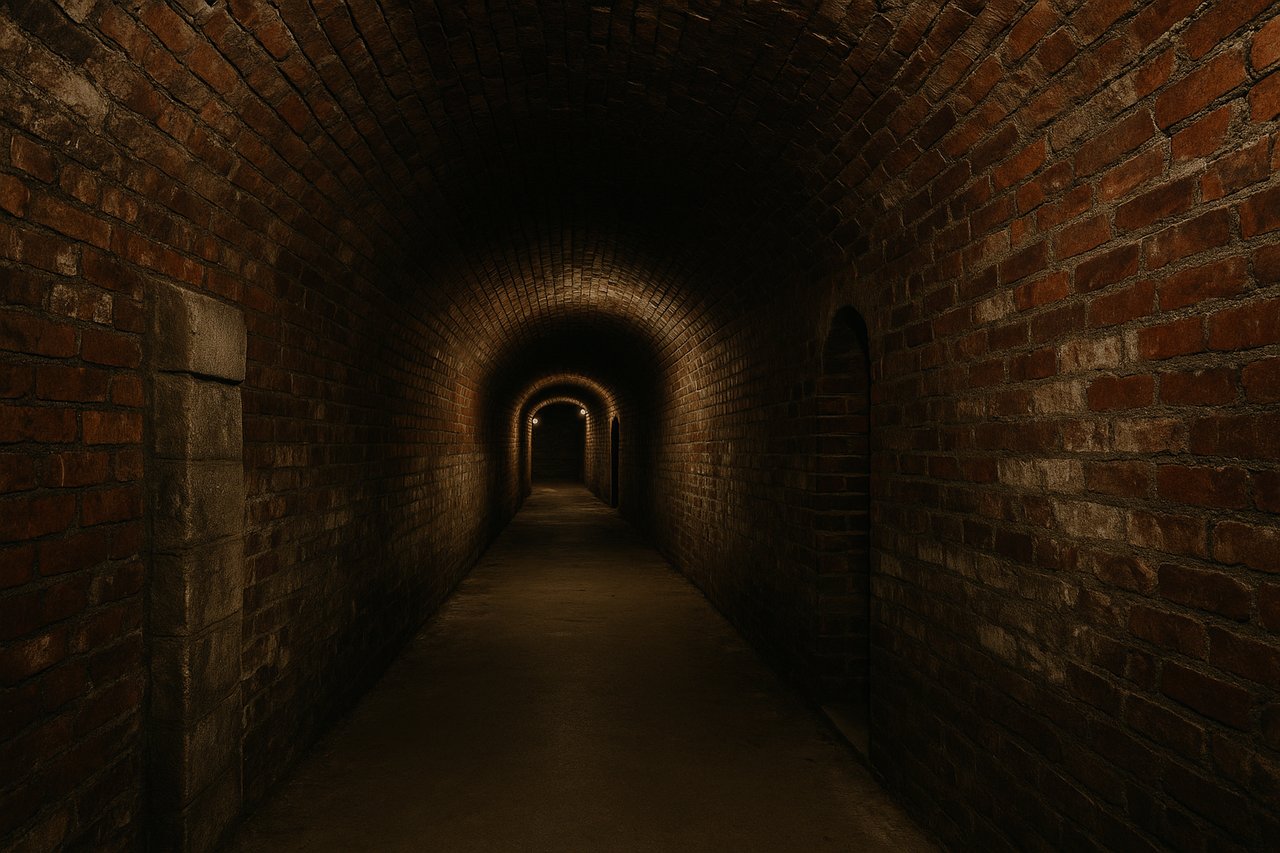
Many of these passageways still exist, sealed off behind renovations or bricked up during later construction. Their original stone and brickwork remains intact in some locations.
The Phoenix Center Underground Grid
In the 1960s and 70s, the construction of the Phoenix Center added an entirely new subterranean level to the city. Beneath the complex is a network of service tunnels and utility corridors built to support Pontiac’s intended civic center.
These tunnels were never meant to be public-facing, but they remain a crucial part of Pontiac’s underground footprint.
Rumors, Legends, and What Is Actually Real
Pontiac’s underground history blurs the line between fact and folklore. Stories of prohibition-era tunnels, secret passageways, and underground bowling alleys have circulated for decades.
The surprising truth is that some of these stories are absolutely real.
First Presbyterian Church: Tunnel and Underground Bowling Alley
This is one of Pontiac’s most surprising underground locations, and one that I have personally walked through.
Below First Presbyterian Church lies a genuine tunnel segment and a historic underground bowling alley. Wooden lanes, narrow construction, and the unmistakable layout of early recreational church facilities still exist today.
These are not myths. They are real pieces of Pontiac’s past.
The Beaudette Mansion: A Confirmed Private Bowling Alley
Another verified underground bowling alley sits beneath the Beaudette Mansion, one of the most architecturally significant homes in the city. The Beaudette family made their fortune producing automobile bodies for Ford and other manufacturers, and their basement includes a private bowling lane preserved to this day.
This home remains one of Pontiac’s most unique historic properties.
Did Tunnels Lead to the Pontiac Little Art Theatre?
Some of Pontiac’s underground structures align closely with the footprint of the Pontiac Little Art Theatre. While no confirmed tunnel connection exists, the architectural and geographic possibilities make the theory compelling.
The theatre itself is one of downtown’s oldest commercial buildings, once serving as a hub for performances, community events, and arts organizations.
Could Pontiac Uncover the Clinton River?
A growing idea in Pontiac is the potential to daylight the buried river and transform downtown into a walkable river district. Similar projects in other U.S. cities have cost from $19 million to over $700 million, depending on scale.
Based on the length of Pontiac’s buried section, a realistic estimate would be between $55 million and $110 million.
The project is expensive, but entirely possible, and would change downtown Pontiac dramatically.
What Remains Today
Pontiac’s underground world is a blend of verifiable structures, lost engineering work, buried history, and unanswered questions. Some mysteries remain unsolved, and some tunnels may never be reopened.
But there is no doubt that Pontiac’s history extends far deeper than most people realize.
Watch the Full Episode
The full breakdown, visuals, on-site walkthroughs, and underground footage are available now on Pontiac Pulse.
https://youtube.com/@historylovescompany