A History Loves Company Original
Boblo Island is one of the most emotionally powerful places in Detroit’s collective memory — not because it still exists as it once did, but because so many people remember what it meant.
For nearly a century, Boblo Island was a place of escape.
A boat ride away from factory floors and city streets.
A space where music, motion, and summer air briefly replaced work and routine.
But Boblo Island is also something else entirely.
It is a Canadian island shaped by American industry, a civil rights landmark, and a case study in how places transition from public joy to private land — and what is gained or lost along the way.
Follow the history of Boblo Island, its boats, and the people whose memories and civil-rights work are part of its legacy.
Where Boblo Island Is — And Why That Matters
Boblo Island is Bois Blanc Island in Ontario, Canada, near the southern end of the Detroit River, where it approaches Lake Erie. It is the island associated with Detroit’s former Bob-Lo amusement park.
Its official name is Bois Blanc Island, a French name meaning “white wood,” dating back to the era of French exploration and settlement in the Great Lakes region.
Despite being Canadian territory, Boblo Island has always been culturally intertwined with Detroit. Its proximity to the city — and its access exclusively by water for much of its history — made it a natural recreational outlet for American visitors.
This cross-border identity is central to Boblo’s story. It was a Canadian island shaped largely by American leisure, American labor, and American cultural memory.
Early History: Bois Blanc Before the Amusement Park
Long before roller coasters and dance pavilions, Bois Blanc Island was shaped by:
- Indigenous presence in the Detroit River region
- French colonial settlement
- agriculture and small-scale farming
- seasonal recreation
By the mid-19th century, the island had already developed a reputation as a picnic and resort destination for residents of Detroit and surrounding communities.
Its isolation from the mainland made it ideal for leisure. Visitors arrived by boat, stayed for the day, and returned without ever encountering industrial Detroit directly.
The Birth of Boblo Island Amusement Park
The Detroit, Belle Isle and Windsor Ferry Company established Bob-Lo Park as an entertainment destination in 1898, according to the Detroit Historical Society.
This integration of transportation and entertainment was critical to Boblo’s success.
The experience began the moment passengers boarded the boats.
The Ferry Boats: Floating Landmarks
Boblo’s ferries were not simple transport vessels. They were attractions in their own right.
The most famous were:
- SS Columbia (built 1902)
- SS Ste. Claire (built 1910)
These steamships featured:
- large dance floors
- live orchestras
- refreshment stands
- open-air decks
For many Detroiters, the boat ride was inseparable from the island itself. Music played before arrival. Dancing began before the park gates came into view.
Boblo was not just a destination.
It was a ritual.
Boblo’s Golden Age
From the early 1900s through the 1950s, Boblo Island experienced its golden age.
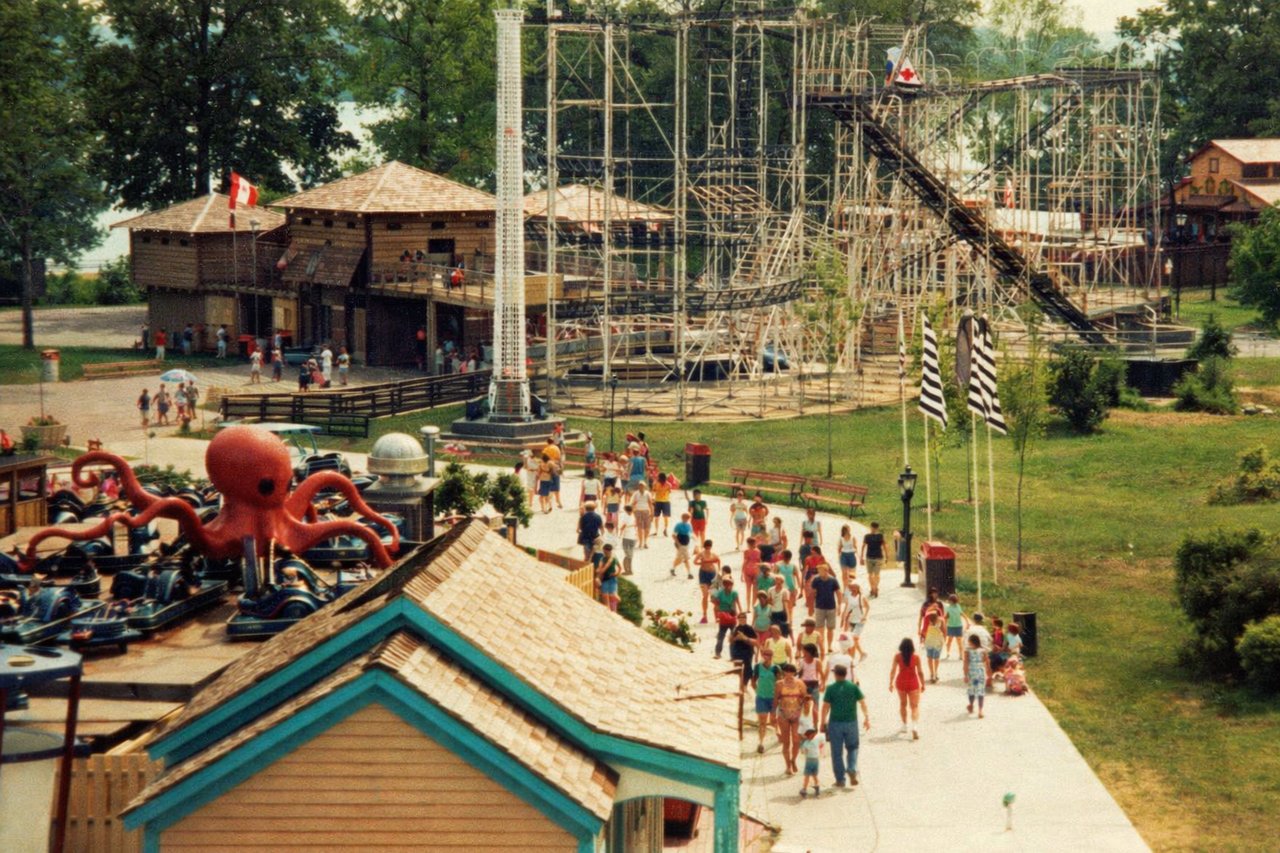
The park expanded continually, offering:
- roller coasters
- a grand dance pavilion
- arcades and midway games
- carnival rides
- beaches and picnic groves
- live performances
National touring bands played the dance hall. Entire families planned summer trips around Boblo. Employers organized outings. Churches and social groups made annual pilgrimages.
Boblo was woven into Detroit’s working-class culture at a scale few places ever achieve.
Boblo Island and Civil Rights History
Boblo Island occupies a critical place in American civil rights history.
In 1945, Sarah Elizabeth Ray, a Black civil rights activist, was denied passage to Boblo Island aboard one of the ferry boats due to her race.
Ray sought help from the NAACP after her removal from the boat in 1945. The challenge reached the United States Supreme Court in 1948, when the Court ruled against the Bob-Lo Excursion Company. The Bentley Historical Library’s account of Sarah E. Ray explains the case and the archival effort preserving her wider community work. The 1945 incident and the 1948 ruling are distinct events.
This moment transformed Boblo Island from a leisure destination into a site of national historical importance.
It stands as a reminder that even places associated with joy were shaped by exclusion — and that progress was forced, not gifted.
Postwar Change and the Beginning of Decline
Following World War II, Boblo Island continued to operate successfully, but underlying pressures were building.
These included:
- rising maintenance costs
- aging infrastructure
- increased competition from automobile-accessible theme parks
- suburbanization and changing leisure habits
- economic decline in Detroit
Unlike modern amusement parks, Boblo required boats, crews, docks, and constant maintenance of aging vessels and facilities.
By the 1970s and 1980s, the model was becoming increasingly difficult to sustain.
Closure of the Amusement Park
On September 30, 1993, Boblo Island Amusement Park officially closed.
For many Detroiters, the closure felt deeply personal. Boblo was not just a park — it was a shared memory across generations.
The park’s closure and the end of the classic steamship service were separate milestones: Columbia and Ste. Claire stopped their Boblo runs in 1991; the park closed after the 1993 season.
What remains: the island and the boats
The former amusement-park island became a residential community. Do not assume old park grounds, buildings, or docks are publicly accessible. Confirm current access with the property or venue operator before planning a visit, and never enter closed structures.
The two famous Boblo boats have separate preservation stories. Michigan's State Historic Preservation Office records that Columbia was towed to Buffalo in 2015 for a long-term restoration effort. That history should not be described as proof of a completed restoration or resumed passenger service.
Ste. Claire update: the vessel's official website reports that its main deck opened as a floating museum on September 3, 2026, while further restoration work continues. Check the Ste. Claire museum's official site for current visiting information. A museum visit is not a revived ferry trip to Boblo Island.
Boblo’s Future: Memory Versus Development
Boblo Island’s future reflects a broader tension seen across historic sites:
- private development versus public memory
- preservation versus reinvention
- nostalgia versus economic reality
As redevelopment continues, Boblo’s identity is shifting from public playground to private enclave.
Yet its story remains alive through:
- oral histories
- documentaries
- boat-preservation efforts
- academic research
- community memory
The former park and the historic boats are different places with different access arrangements. Both remain part of Detroit’s shared memory.
Why Boblo Island Still Matters
Boblo Island matters because it represents:
- cross-border cultural identity
- working-class leisure history
- civil rights progress
- the lifecycle of public space
- how joy, exclusion, and memory coexist
It reminds us that history is not always preserved through buildings alone — sometimes it survives through stories.
Revisiting Boblo With Streets of History
In this Streets of History exploration, we revisit Boblo Island to understand:
- how it functioned
- why it mattered
- what led to its closure
- what remains today
- and what its transformation tells us about cities and memory
Boblo Island may be quieter now — but its history is anything but forgotten.
Boblo Island: frequently asked questions
When did Boblo Island Amusement Park close?
The park closed in 1993. The classic Columbia and Ste. Claire excursion service had ended in 1991.
Was Boblo Island in Michigan or Canada?
The park was on Bois Blanc Island in Ontario, Canada. Its long connection to Detroit came through visitors and river excursions.
Who was Sarah Elizabeth Ray?
Ray was the Black passenger whose exclusion from a Boblo boat in 1945 prompted a civil-rights challenge. The resulting case reached the U.S. Supreme Court in 1948.
Are Columbia and Ste. Claire the same boat?
No. They are separate steamships with different preservation histories. Read the SS Columbia story and the official Ste. Claire information linked above.
Sources and further reading
- Detroit Historical Society: Bob-Lo Island — park origins, geography, closure, and boat-service chronology.
- Bentley Historical Library: The Unsinkable Sarah E. Ray — the 1945 incident, 1948 ruling, and Ray's archival legacy.
- Michigan SHPO: Columbia — vessel history and its 2015 move.
- Boblo Boat Ste. Claire — official museum and restoration information, checked September 29, 2026.
Explore next: Boblo Island history hub · SS Columbia · Detroit History Resource Hub.
Editorial update: corrected the civil-rights chronology and park operator; distinguished the 1991 steamship-service ending from the 1993 park closure; updated the boats' separate preservation stories. See HLC's editorial standards.