A History Loves Company Original
Detroit’s relationship with sports has never been casual.
From neighborhood ballparks embedded in working-class streets to massive domes built for regional audiences, Detroit’s stadiums reflect more than games — they reveal how the city grew, fractured, and rebuilt itself over time.
Some stadiums became sacred ground.
Others vanished without a trace.
All of them tell a story about Detroit.
Bennett Park (1896–1911)
Where Detroit Became a Major League City
Detroit’s professional sports history begins at Bennett Park, located at Michigan and Trumbull avenues.
Opened in 1896, Bennett Park served as the home of the Detroit Tigers during the team’s earliest years. It was modest in scale but monumental in significance — anchoring Detroit as a permanent presence in Major League Baseball.
By 1912, the park was replaced on the same site, signaling Detroit’s growing ambition.
Navin Field / Briggs Stadium / Tiger Stadium (1912–1999)
The Corner That Defined Detroit Baseball
Few stadiums in American sports history were as deeply tied to their city as Tiger Stadium.
Originally opened as Navin Field in 1912, the stadium evolved over decades, later becoming Briggs Stadium before taking on its most famous name. Located at Michigan and Trumbull, it hosted:
-
World Series championships
-
Hall of Fame players
-
Generations of Detroiters
Tiger Stadium was intimate, loud, imperfect, and beloved. It sat within a living neighborhood, making baseball part of daily life.
Despite preservation efforts, the stadium was demolished in 2009. Today, the site lives on as The Corner Ballpark.
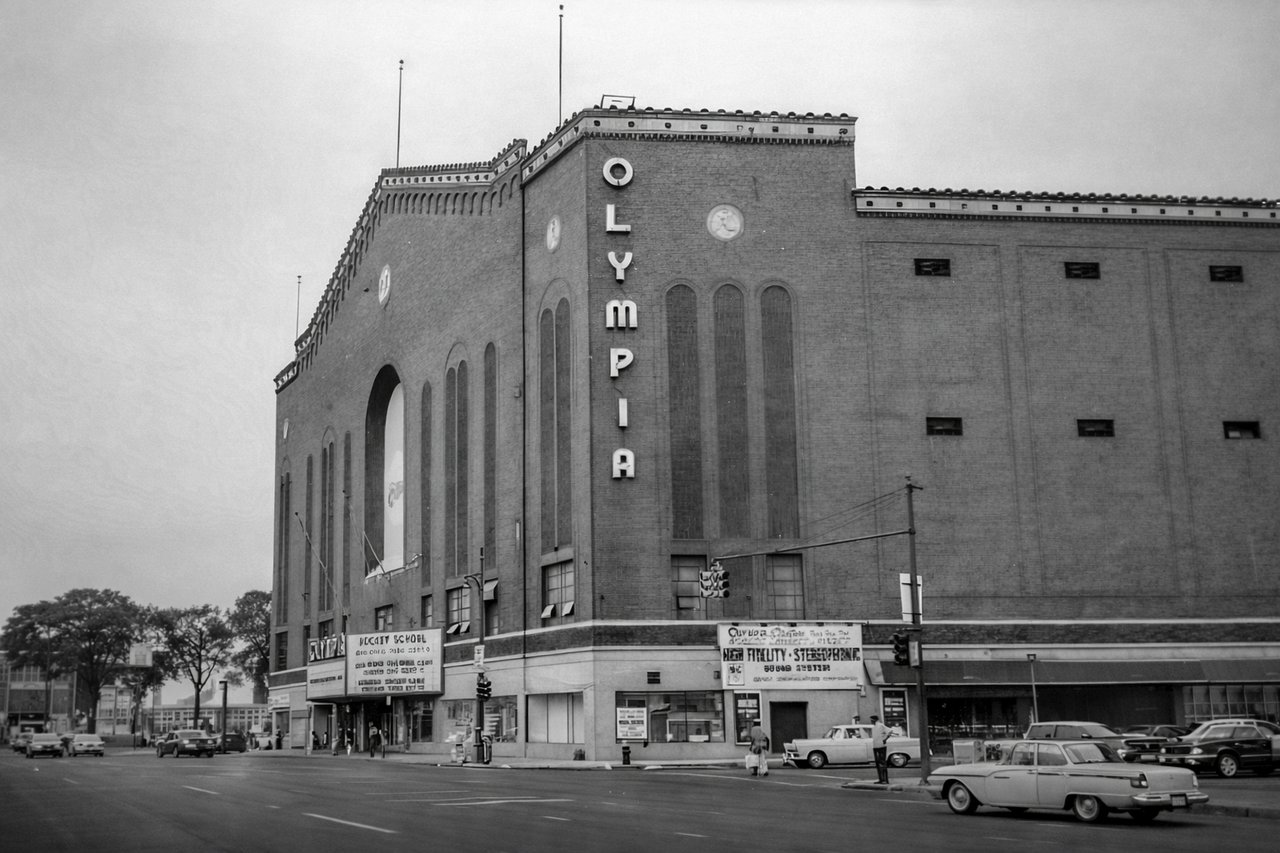
Olympia Stadium (1927–1987)
Hockey’s Original Home in Detroit
Detroit hockey rose to prominence inside Olympia Stadium, opened in 1927 along Grand River Avenue.
Olympia Stadium became synonymous with the Detroit Red Wings’ early dominance and helped cement the city’s identity as Hockeytown long before the nickname was formalized.
The arena was:
-
intimidating
-
working-class
-
loud and physical
Olympia closed in 1979 and was demolished in 1987, leaving behind memories but little physical evidence.
Early Football and Shared Spaces
Before purpose-built football stadiums existed, Detroit football adapted.
In the early years of the Detroit Lions, games were played at Tiger Stadium and other shared venues. This reflected an era when professional sports infrastructure was flexible and experimental, not yet centralized around massive single-use facilities.
Pontiac Silverdome (1975–2017)
The Era of Size and Suburban Shift
The opening of the Pontiac Silverdome in 1975 marked a dramatic change.
Located in Pontiac rather than Detroit, the Silverdome symbolized:
-
suburban expansion
-
automobile-centered planning
-
the rise of mega-stadiums
It hosted:
-
Detroit Lions games
-
Super Bowl XVI
-
WrestleMania III
-
major concerts and events
The Silverdome represented regional scale — and regional separation. It closed in 2001 and was demolished in 2018.
Comerica Park (2000–Present)
Baseball Returns Downtown
When the Tigers moved from Tiger Stadium to Comerica Park, the decision was emotional and controversial.
Comerica Park offered:
-
modern amenities
-
increased revenue
-
a downtown setting
What it sacrificed, some argued, was the intimacy of the old corner. Still, the park became a central anchor in Detroit’s sports and entertainment district.
Ford Field (2002–Present)
A Shift Back to the City Grid
The opening of Ford Field in 2002 marked a philosophical reversal.
Instead of building outward, Detroit invested inward.
Ford Field:
-
reused existing warehouse structures
-
integrated into the street grid
-
reinforced downtown revitalization
It represented a renewed commitment to urban-centered sports infrastructure.
Little Caesars Arena (2017–Present)
Consolidation and the Modern Sports District
Little Caesars Arena brought Detroit’s major teams back together.
Home to the Detroit Red Wings and Detroit Pistons, the arena reflects:
-
mixed-use development
-
corporate-backed revitalization
-
modern sports economics
It also continues to spark debate about public investment, access, and neighborhood impact.
What Detroit’s Stadiums Reveal
Detroit’s stadium history mirrors the city’s broader story:
-
early neighborhood integration
-
industrial growth
-
suburban migration
-
downtown reinvestment
Each stadium reflects the priorities of its time — whether intimacy, scale, convenience, or spectacle.
Why Stadiums Matter
Stadiums are not just places where games are played.
They are:
-
gathering spaces
-
economic engines
-
cultural landmarks
-
emotional anchors
When a stadium disappears, a piece of shared memory often goes with it.
Exploring Detroit’s Stadiums With Streets of History
This Streets of History exploration looks at:
-
where Detroit played
-
why stadiums were built where they were
-
how they disappeared
-
what replaced them
Because sports history is city history.
Explore More Streets of History
Discover more neighborhoods, landmarks, and lost places across Detroit and Michigan.
Visit History Loves Company
https://www.historylovesco.com