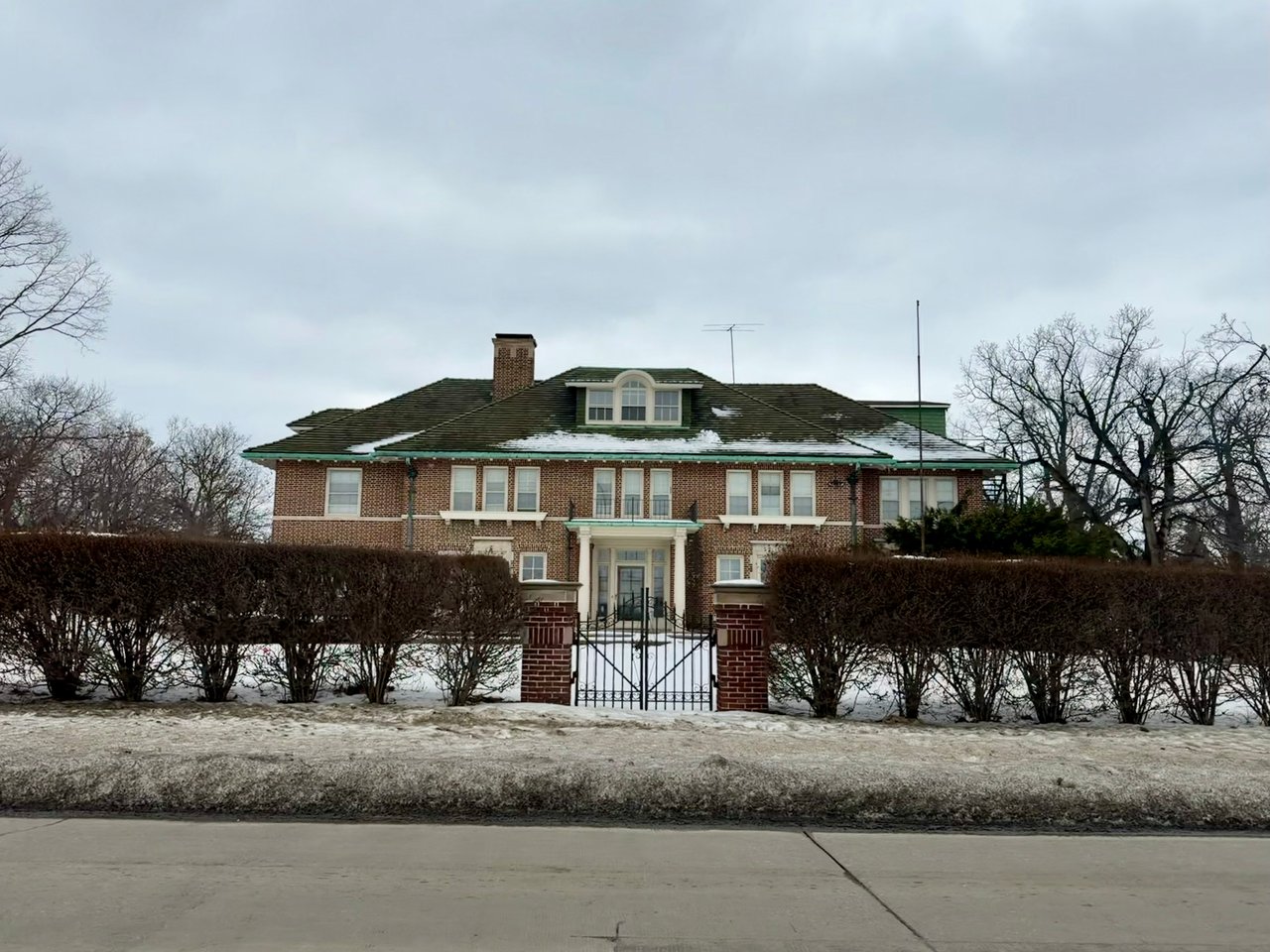
Franklin Boulevard Historic District
Pontiac’s Grand Avenue of Memory
Before freeways, before parking decks, before downtown shifted toward concrete and demolition, there was Franklin Boulevard.
Tree-lined, architecturally ambitious, and deeply residential in identity, the Franklin Boulevard Historic District in Pontiac, Michigan remains one of the city’s most striking historic corridors. It is not simply a street — it is a preserved timeline of Pontiac’s prosperity.
Tonight at 6:00 PM, we explore this district in a new episode of Pontiac Pulse — walking its sidewalks, studying its homes, and asking what this boulevard reveals about Pontiac’s past and future.
The Birth of a Boulevard
Franklin Boulevard emerged in the late 19th and early 20th centuries as Pontiac transitioned from a modest county seat into a growing industrial city.
As manufacturing expanded and local wealth increased, prominent citizens sought homes that reflected their success. Franklin Boulevard became that statement.
Wide setbacks. Mature trees. Large parcels. Architectural variety.
Unlike tighter downtown residential blocks, Franklin was intentionally designed to feel expansive — a residential showpiece near the center of the city.
Many of the homes along Franklin date from roughly 1890 to the 1930s, capturing multiple architectural movements in one continuous streetscape.
Architecture That Tells a Story
Walking Franklin Boulevard feels like moving through a catalog of early American residential design.
You’ll find:
-
Colonial Revival homes with symmetrical façades and classical detailing
-
Tudor Revival residences featuring steeply pitched roofs and decorative half-timbering
-
Craftsman influences emphasizing natural materials and hand-built character
-
Victorian-era holdovers that predate the boulevard’s full maturation
The district reflects Pontiac at its most confident — when architecture was both personal and civic.
These were not speculative houses. They were statements of permanence.
A District That Survived
Many American cities lost corridors like Franklin Boulevard to widening projects, commercial expansion, or demolition during mid-century urban renewal.
Franklin survived.
While Pontiac faced industrial decline, population shifts, and economic contraction throughout the second half of the 20th century, this residential corridor endured. Some homes fell into disrepair at times. Others were carefully maintained. But the architectural fabric remained largely intact.
That continuity is rare.
Today, Franklin Boulevard stands as one of Pontiac’s most intact historic residential environments — a reminder that not all of the city’s grand architecture disappeared.
The District’s Role in Pontiac’s Identity
Franklin Boulevard does something powerful: it challenges assumptions.
To many outsiders, Pontiac is often reduced to headlines or shorthand narratives about decline. Franklin contradicts that narrative immediately.
The boulevard shows:
-
Pontiac’s wealth history
-
The city’s architectural literacy
-
A period when residential craftsmanship mattered deeply
-
A community that once invested heavily in its streetscape
This district forces a re-evaluation of Pontiac’s identity.
It proves the city’s story is layered.
Why Preservation Matters Here
Preservation is not about freezing a place in time. It is about maintaining continuity.
Franklin Boulevard is significant because it still functions as housing. These are not museum pieces. They are lived-in homes.
That living continuity keeps history from becoming abstract.
Maintaining the district requires:
-
Thoughtful restoration
-
Respect for original materials
-
Protection from incompatible development
-
Civic awareness of its value
Franklin Boulevard is not just a historic district on paper — it is an active example of why preservation matters.
Franklin Boulevard in Context
Franklin does not exist in isolation. It connects to a larger Pontiac story.
Nearby you’ll find:
-
Downtown Pontiac’s commercial core
-
The Strand Theatre
-
The Pontiac Little Art Theatre
-
Residential neighborhoods that grew alongside early industry
Franklin Boulevard becomes a lens through which to view the broader evolution of the city.
Watch the Full Episode
This blog accompanies tonight’s Pontiac Pulse episode exploring Franklin Boulevard in depth — walking the district, studying the architecture, and reflecting on what this corridor represents.
🎥 The full video premieres tonight at 6:00 PM EST on YouTube.
After the premiere, the video will be embedded here.
If you have lived on Franklin, visited someone there, or have old photos or memories of the district, we invite you to share them. Pontiac’s history is strongest when told collectively.
Pontiac Pulse
Pontiac Pulse is a biweekly series dedicated exclusively to the history, architecture, and evolution of Pontiac, Michigan.
New episodes premiere at 6PM EST.