Street of History: Episode 4
Brush Park is one of those places where Detroit’s past and future collide on the same block.
Once known as Detroit’s Little Paris, this neighborhood was home to some of the wealthiest families in Michigan. Grand Victorian mansions lined tree-shaded streets, European-inspired architecture flourished, and the area pulsed with culture, elegance, and ambition.
Then the world changed.
Industry shifted. Highways cut the city apart. Families moved out.
And Brush Park — once a shimmering symbol of Detroit’s golden age — fell deep into decline.
But today?
Brush Park is back.
And in this week’s Streets of History episode, we’re exploring how a forgotten neighborhood became one of Detroit’s most inspiring rebirth stories.
🏛️ The Rise of “Little Paris”
Brush Park began as farmland owned by Edmund Askin Brush.
By the late 1800s, Detroit’s booming class of merchants, politicians, and entrepreneurs built ornate mansions here — drawing inspiration from French and Victorian architecture.
Turrets, mansard roofs, stained glass, carved stonework…
Homes that wouldn’t look out of place on the streets of Paris.
Brush Park became a symbol of prosperity — a quiet escape just beyond the noise of a rapidly growing city.
🕰️ Decline, Abandonment & Near Collapse
But as the automobile age reshaped Detroit, Brush Park rapidly emptied.
The Great Depression.
Post-war suburban flight.
Highway construction.
The economic blows of the 1970s and 80s.
Mansions were abandoned, stripped, burned, or left to rot.
Blocks became fields.
An entire neighborhood nearly disappeared.
For decades, Brush Park stood as a reminder of what Detroit had been — and what it had lost.
✨ The Rebirth of Brush Park
Then something extraordinary happened.
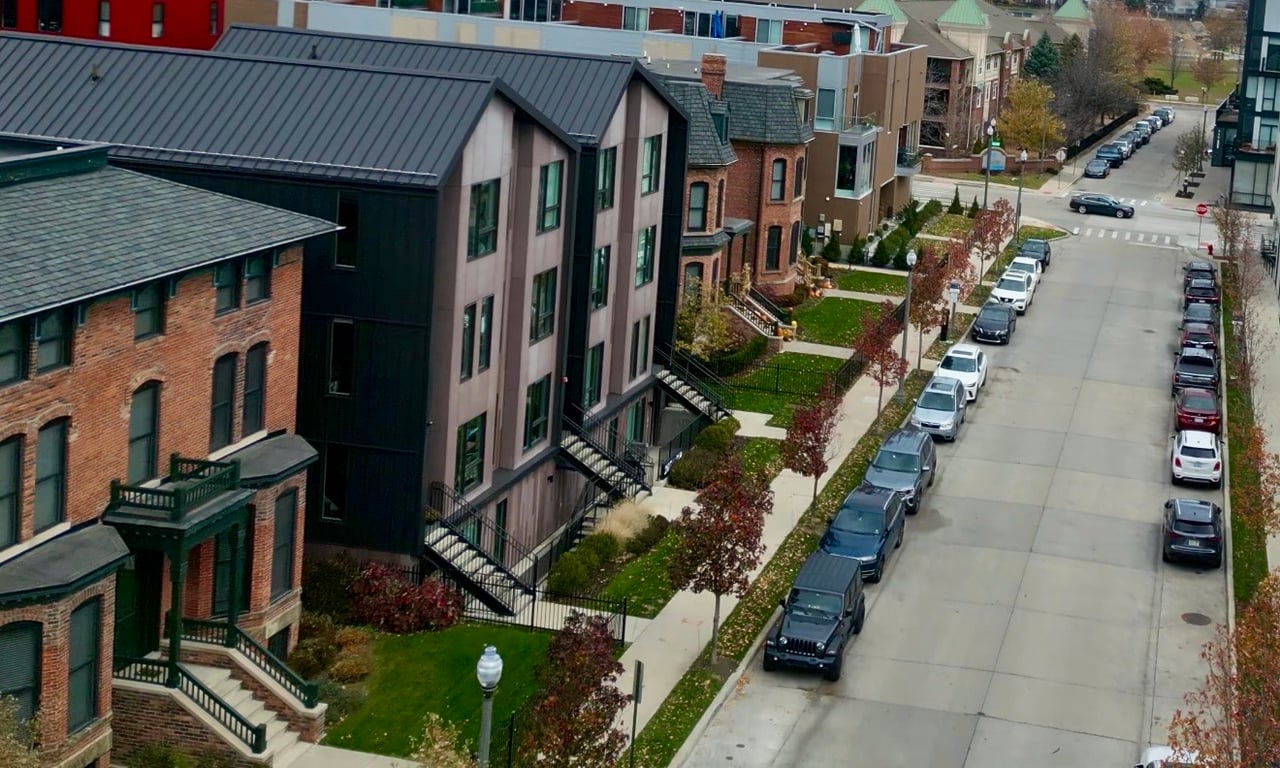
Projects like the City Modern development, historic preservation incentives, new businesses, and community-driven restoration efforts began stitching the neighborhood back together.
And today, Brush Park is one of Detroit’s great comeback stories:
• Victorian mansions restored to their former glory
• Modern townhomes woven into historic blocks
• New residents revitalizing streets that once sat empty
• Parks, cafés, and community spaces bringing energy back to the neighborhood
It’s a rare place where 1870 meets 2024.
Where history isn’t just preserved — it’s lived in.
🏚️ One Home Tells the Whole Story: The Ransom Gillis House
In the episode, we step inside the iconic Ransom Gillis House — once one of the most photographed ruins in Detroit and now a symbol of Brush Park’s rebirth.
From the crumbling brick and broken windows of the 1980s…
to the fully restored masterpiece it is today…
its story mirrors the neighborhood it stands in.
A reminder that no building is ever too far gone — if people believe in the story it can still tell.
❤️ Why Brush Park Matters
Brush Park is more than a place.
It’s proof that history can come back.
That a neighborhood can fall apart — and rise again stronger.
That Detroit’s past still has chapters left to write.
Stories like this are exactly why we created Streets of History — to shine a light on the places that shaped us, challenged us, and continue to inspire us.
🎥 Watch Today’s Episode
Inside Brush Park: Detroit’s Little Paris Reborn
Premieres Tonight at 6 PM EST
on the History Loves Company YouTube Channel.