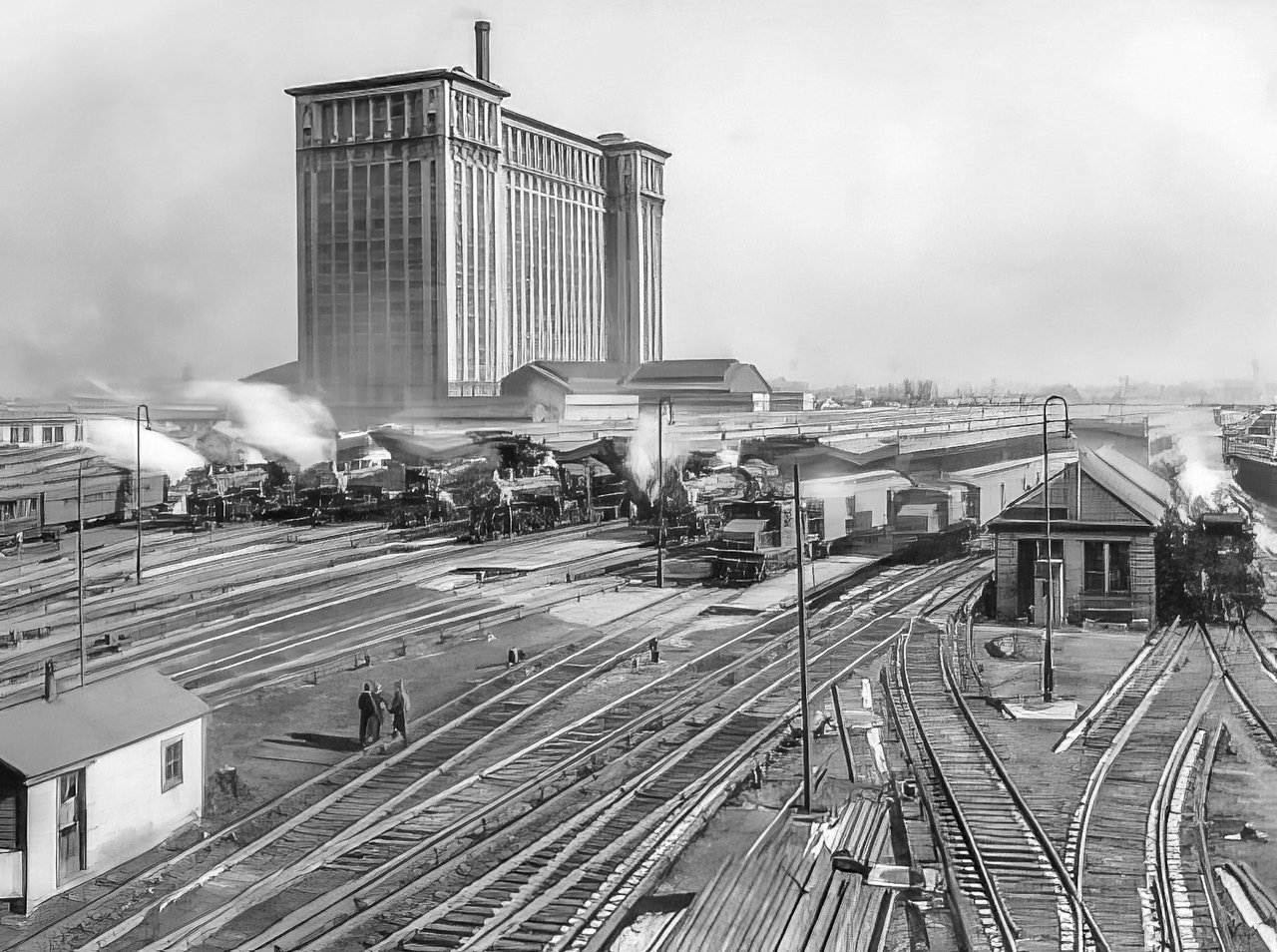
Michigan Central Station
The Detroit Landmark That Went From Gateway to Ruin to Revival
Few buildings in Detroit carry as much symbolism as Michigan Central Station. For more than a century, it has stood at the edge of Corktown like a monument to motion—first as a proud gateway for rail passengers, then as one of America’s most photographed ruins, and now as a restored landmark reopening to the public as the anchor of a new district.
This is the story of Michigan Central Station: why it was built, what it represented, how it fell, and what its restoration signals about Detroit’s present and future.
Why Detroit Built a Station This Big
At the start of the 20th century, Detroit was expanding rapidly. Rail travel was still the dominant long-distance transportation system, and major cities competed to build stations that projected confidence and permanence.
Michigan Central Station was constructed to replace earlier passenger facilities and to serve growing rail traffic into Detroit. A fire that destroyed Detroit’s previous station accelerated the move into the new building before its formal opening ceremony.
The result was not a modest depot—it was a statement.
Opening and Design
Michigan Central Station was designed by the same two firms associated with New York’s Grand Central Terminal: Warren & Wetmore and Reed & Stem.
The building was conceived in two major parts:
-
A three-story depot and concourse for passengers
-
An 18-story office tower rising above it, intended to generate revenue and prestige
The station entered service in late 1913, with formal dedication occurring in early 1914 (sources describe the transition slightly differently depending on whether they reference first use or formal opening).
The Architecture and the Experience of Arrival
Michigan Central Station is generally described as Beaux-Arts in style—grand, symmetrical, and built to feel “civic,” not merely functional.
Travelers entered from Roosevelt Park into a monumental interior designed to overwhelm in the best way. The main waiting room was built at a cathedral-like scale, with soaring arches and premium materials intended to communicate stability and dignity. Historic Detroit documents the drama of the space and notes details like marble columns and the extraordinary dimensions of the waiting room.
Even for people who never boarded a train, the building’s presence shaped how Detroit looked—and how it wanted to be seen.
Decline, Closure, and Abandonment
As the 20th century progressed, intercity rail travel declined nationwide, and Detroit’s passenger rail footprint contracted.
Michigan Central Station remained in service into the late 1980s before closing in January 1988—a date widely cited as the end of regular operations within the building.
After closure, Michigan Central Station became a symbol of Detroit’s broader struggles: deindustrialization, population loss, disinvestment, and the hollowing-out of once-busy public spaces.
Over time, the building’s empty windows and cavernous interior turned it into one of the most recognizable ruins in America.
A Ruin the World Couldn’t Stop Looking At
For decades, Michigan Central Station functioned as a paradox:
-
A decaying structure that looked like it should have been demolished
-
A beloved landmark people refused to let go of
It appeared in films, music videos, photography projects, and countless “Detroit ruin” narratives. For residents, it often carried something heavier: not just decay, but the memory of what Detroit once built when it believed the future was guaranteed.
Ford’s Purchase and the Start of a New Chapter
In 2018, Ford Motor Company acquired Michigan Central Station, initiating a restoration project that would become one of Detroit’s most significant preservation undertakings in modern history.
Ford’s vision was not simply to “save a building.” The station was positioned as the centerpiece of a broader innovation district in Corktown—one that would combine restored historic architecture with new workspaces, public programming, and community engagement.
The Restoration and Public Reopening
After a multi-year restoration, Michigan Central Station reopened to the public in June 2024, with Ford and Michigan Central hosting public open-house programming to mark the moment.
Reporting on the restoration emphasized the scale of the work—thousands of workers, extensive preservation of historic materials, and the goal of returning key spaces to their original character while preparing the building for modern use.
The result is something rare: a landmark that still looks like itself—without being frozen in time.
What Comes Next
Michigan Central Station is now positioned as:
-
A home for innovation teams and partner organizations
-
A public-facing destination with programming
-
A long-term anchor for redevelopment in the Corktown area
Public reporting and announcements also point to future expansion of uses within the building, including a planned hotel concept for upper floors in the coming years.
Why Michigan Central Station Matters
Michigan Central Station matters because it compresses Detroit’s past and present into one structure.
It represents:
-
Detroit’s early 20th-century ambition and civic identity
-
The national decline of passenger rail and downtown public institutions
-
The city’s late-century disinvestment and the global fascination with its ruins
-
A new era where restoration is not nostalgia—but strategy
It is not just a building that was saved.
It is a building that changes the narrative around what Detroit can do with its most complicated landmarks.
Watch the Full Video
Today’s video explores Michigan Central Station as a story of architecture, identity, collapse, and revival—what was lost, what survived, and what this restoration means for Detroit now.
Watch the full Michigan Central Station video (premieres at 6:00 PM EST tonight):
Click HERE