A History Loves Company Original
Seminole Hills did not happen by accident.
Unlike many neighborhoods that grew organically as cities expanded, Seminole Hills was deliberately planned — a residential district shaped by early 20th-century ideas about order, prestige, and permanence. Its curving streets, generous lots, and architectural controls were all part of a vision: to create a neighborhood that would endure.
More than a century later, it has.
This is the history of Seminole Hills — how it was designed, who it was built for, how it survived Pontiac’s hardest decades, and why it remains one of the city’s most significant historic districts.
Where Seminole Hills Is — And How Its Boundaries Work
Seminole Hills is a locally designated historic district within the City of Pontiac, located just northwest of downtown Pontiac.
Importantly, Seminole Hills does not follow simple “major road” boundaries. Its edges are defined by the City of Pontiac Historic District Commission and follow an irregular, parcel-based outline shaped by original plats and development patterns rather than straight lines.
In general orientation terms, Seminole Hills sits:
-
north and northwest of Pontiac’s downtown core
-
directly west of the Franklin Boulevard Historic District
-
across a network of curving residential streets rather than a grid
For official boundaries, the City of Pontiac’s Historic District Commission map is the definitive reference.
This irregular footprint reflects how intentionally the neighborhood was designed.
The Origins of Seminole Hills
Development of Seminole Hills began primarily in the 1910s and continued through the 1920s, during a period when Pontiac was experiencing rapid industrial and population growth.
Automobile manufacturing, rail access, and state institutions had turned Pontiac into a regional powerhouse. With that growth came demand for a residential neighborhood that would reflect stability, success, and long-term investment.
Seminole Hills was created to meet that demand.
From the outset, it was planned as a prestige residential district, intended for executives, professionals, and civic leaders whose fortunes were tied to Pontiac’s rise.
A Neighborhood Designed as a Whole
What distinguishes Seminole Hills is that it was designed, not assembled.
Key planning features included:
-
curving streets that discouraged through traffic
-
irregular lot shapes and large parcels
-
generous setbacks from the street
-
landscaped corridors rather than rigid blocks
-
deed restrictions that guided architectural quality
This approach reflected early suburban planning principles that prioritized privacy, aesthetics, and exclusivity — decades before such ideas became widespread.
The result is a neighborhood that still feels intentional today.
Architecture at a Residential Scale of Confidence
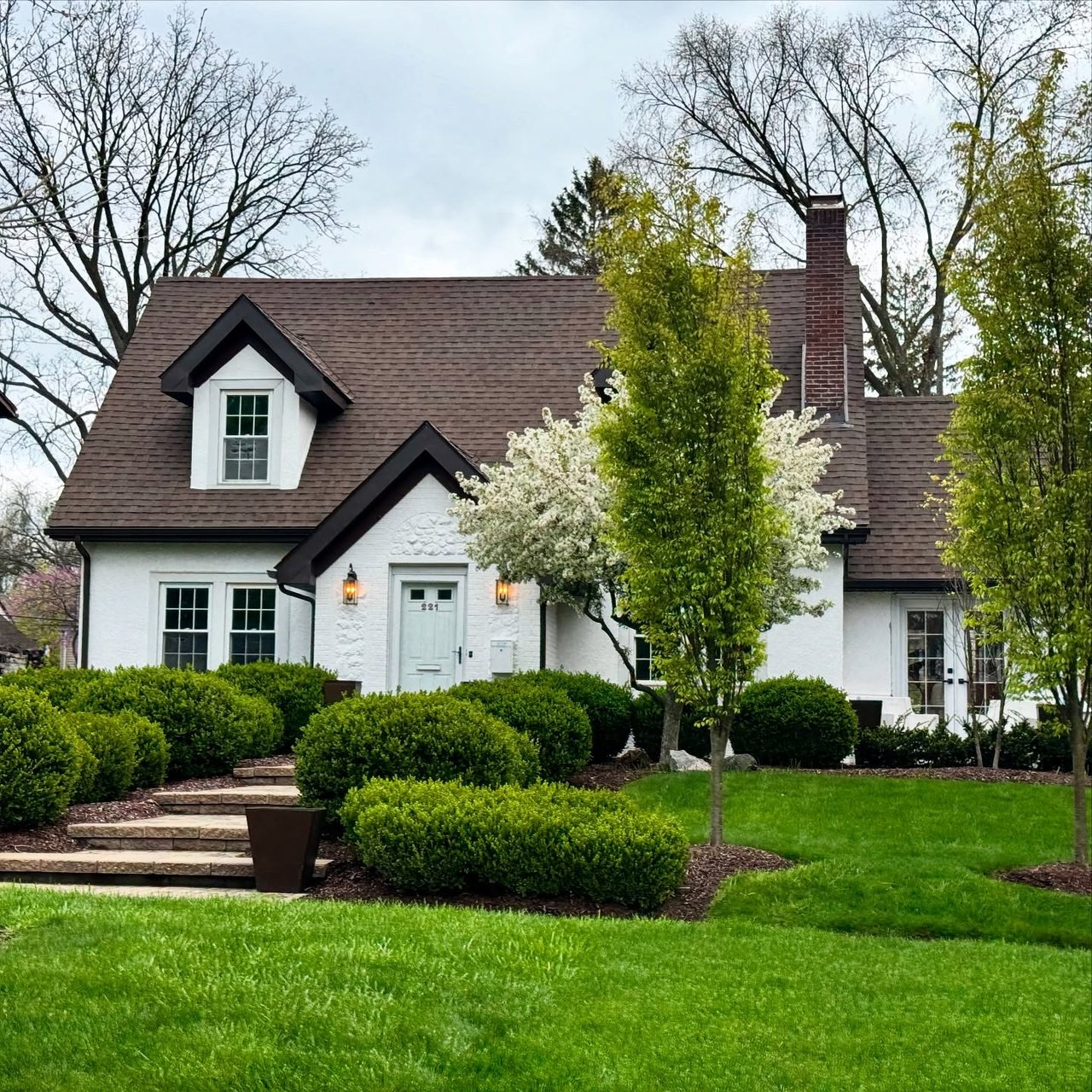
Homes in Seminole Hills were built primarily between approximately 1915 and the late 1930s, reflecting the architectural tastes of the era.
Common styles include:
-
Tudor Revival
-
Colonial Revival
-
Georgian Revival
-
French Eclectic
-
Arts and Crafts influences
Many homes were custom designed, built with high-quality materials and craftsmanship intended to last generations.
Brick and stone construction, slate roofs, leaded glass windows, and detailed woodwork were standard features — not luxuries.
Builders, Architects, and Craftsmanship
Seminole Hills does not owe its character to a single architect.
Instead, it reflects the work of:
-
multiple regional architects
-
skilled local builders
-
craftsmen experienced in revival-style residential construction
This resulted in stylistic variety without visual disorder — a neighborhood where individual homes express personality while still belonging to a unified whole.
Who Lived in Seminole Hills
From its earliest years, Seminole Hills attracted:
-
automotive and industrial executives
-
physicians and attorneys
-
business owners and managers
-
professionals deeply tied to Pontiac’s institutions
Residents were often active in civic life, business leadership, and regional networks.
Seminole Hills was not a display neighborhood. It was a statement of permanence.
The Role of Nearby Institutions
Seminole Hills developed alongside major Pontiac institutions, including:
-
downtown government offices
-
industrial plants
-
major employers
-
Pontiac State Hospital
Its location allowed residents to remain close to work while maintaining a distinct residential environment.
This balance helped anchor the neighborhood socially and economically.
Surviving Pontiac’s Most Difficult Years
Like the city itself, Seminole Hills faced challenges during the mid- to late-20th century.
Population loss, economic decline, and disinvestment affected Pontiac broadly. Yet Seminole Hills endured.
Key reasons include:
-
durable construction
-
architectural desirability
-
continued owner occupancy
-
strong neighborhood identity
-
adaptability of larger homes
While some houses were subdivided or altered, the district’s overall character remained intact.
Historic Recognition and Protection
In 1983, Seminole Hills was formally established as a locally designated historic district by the City of Pontiac.
This designation recognizes:
-
the neighborhood’s planned development
-
architectural integrity
-
significance to Pontiac’s growth
Local historic designation provides a framework for preservation while allowing for thoughtful change.
Seminole Hills Today
Today, Seminole Hills remains one of Pontiac’s most distinctive residential neighborhoods.
Homes range from approximately 2,000 square feet to well over 3,000 square feet, many retaining original details alongside sensitive updates.
The neighborhood continues to attract:
-
preservation-minded homeowners
-
families seeking architectural character
-
buyers drawn to historic scale and design
Seminole Hills still functions as it was intended — as a stable, residential community built to last.
Why Seminole Hills Matters
Seminole Hills represents an important idea in American urban history.
It shows that:
-
neighborhoods can be designed with intention
-
architectural quality supports long-term stability
-
planning shapes social outcomes
-
historic preservation reinforces livability
It is not a museum.
It is a living neighborhood — and that is its success.
Walking Seminole Hills With Pontiac Pulse
In this Pontiac Pulse exploration, we walk the streets of Seminole Hills to examine:
-
how the neighborhood was planned
-
why it feels different from surrounding areas
-
the architectural details that define it
-
how it survived Pontiac’s hardest decades
Seminole Hills tells a larger story about Pontiac itself — ambition, resilience, and continuity.