Before Cranbrook became a world-renowned educational and cultural community…
Before Bloomfield Hills became synonymous with estate-scale living…
There was simply a husband and wife deciding how they wanted to live.
Cranbrook House is not Detroit’s tallest building.
It is not Albert Kahn’s most industrial commission.
It is not loud.
It is deliberate.
And tonight at 6:00 PM EST, we explore why this quiet home may be one of the most meaningful residential commissions in Michigan history.
A Home Before a Campus
Cranbrook House was completed in 1908 for George Gough Booth and Ellen Scripps Booth.
Long before Cranbrook Schools, the Academy of Art, or the Institute of Science existed, this estate was first and foremost a home — designed as a deeply personal environment shaped by partnership.
George Booth was a publisher and civic-minded businessman.
Ellen Booth was an artist and philanthropist.
Together, they envisioned not a showpiece, but a place built around craft, landscape, and intention.
Albert Kahn in Restraint
When most people hear the name Albert Kahn, they think of factories, industrial might, and the infrastructure that helped define Detroit’s automotive dominance.
But Cranbrook House shows something different.
Here, Kahn worked in an English Arts and Crafts style, prioritizing:
-
Human scale
-
Natural materials
-
Textural detail
-
Harmony with landscape
The home’s brickwork, leaded glass windows, carved woodwork, and careful proportions reflect restraint rather than spectacle.
Cranbrook House is not about scale.
It is about intimacy.
Designed to Age With Time
The Booths were heavily influenced by the Arts and Crafts movement, which emphasized craftsmanship over mass production.
You see this in:
-
Handcrafted detailing
-
Warm wood interiors
-
Built-in cabinetry
-
Intentional window placement for light and view
The home was designed not to impress guests for a single evening — but to hold a life over decades.
That distinction matters.
The Landscape as Architecture
The estate’s grounds were shaped over time, eventually becoming the foundation for what is now Cranbrook Educational Community.
The landscape was not an afterthought. It was integral.
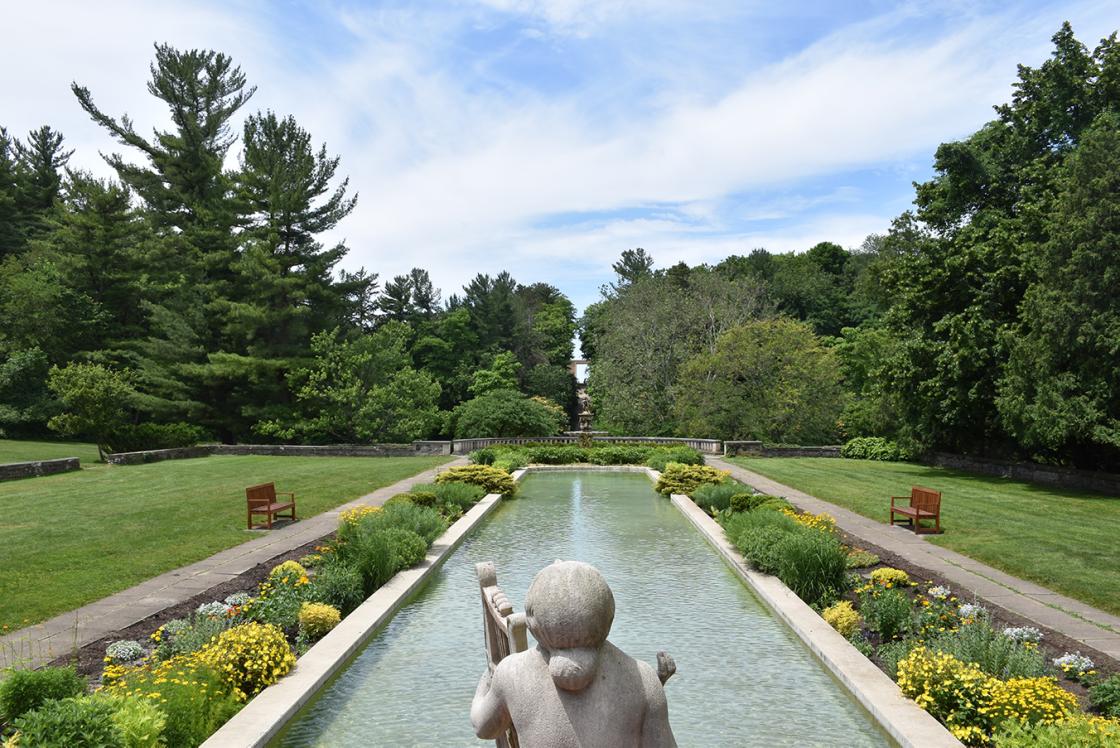
Gardens, walking paths, viewsheds, and topography were part of the architecture itself. The home sits within the land rather than dominating it.
That philosophy — that architecture and environment must coexist — would later define the broader Cranbrook campus.
From Private Estate to Cultural Legacy
Over time, the Booths expanded their vision beyond their home.
They established schools, brought in artists and educators, and laid the groundwork for one of the most significant educational and cultural campuses in the country.
But Cranbrook House remained the origin point.
It is the architectural seed from which the larger Cranbrook story grew.
Why Cranbrook House Still Matters
Cranbrook House matters because it represents:
-
A marriage expressed through architecture
-
Albert Kahn outside the industrial spotlight
-
Early 20th-century craftsmanship at its most intentional
-
The beginning of a cultural institution that shaped Michigan
It is proof that influence does not require volume.
Sometimes the most important buildings are the quiet ones.
Watch the Full Episode
Tonight at 6:00 PM EST, the full Homes of Michigan episode premieres on YouTube.
🎥 Watch here:
https://youtu.be/eb1pe2kZq8o
If you’ve visited Cranbrook, studied there, or walked the grounds, we’d love to hear your memories in the comments.
Homes of Michigan
This story is part of Homes of Michigan, our Friday series exploring historic homes across the state — not just their architecture, but the people and intentions behind them.
🕕 New episodes premiere every Friday at 6:00 PM EST.
Explore more stories at:
https://www.historylovesco.com