STORIES WE KEEP · SEPTEMBER 17, 2026
Highland Park Ford Plant: The Factory That Changed the Workday
The moving assembly line made cars faster to build. Its human story includes higher wages, relentless repetition, and rules that followed workers home.
By Christopher Hubel | September 17, 2026
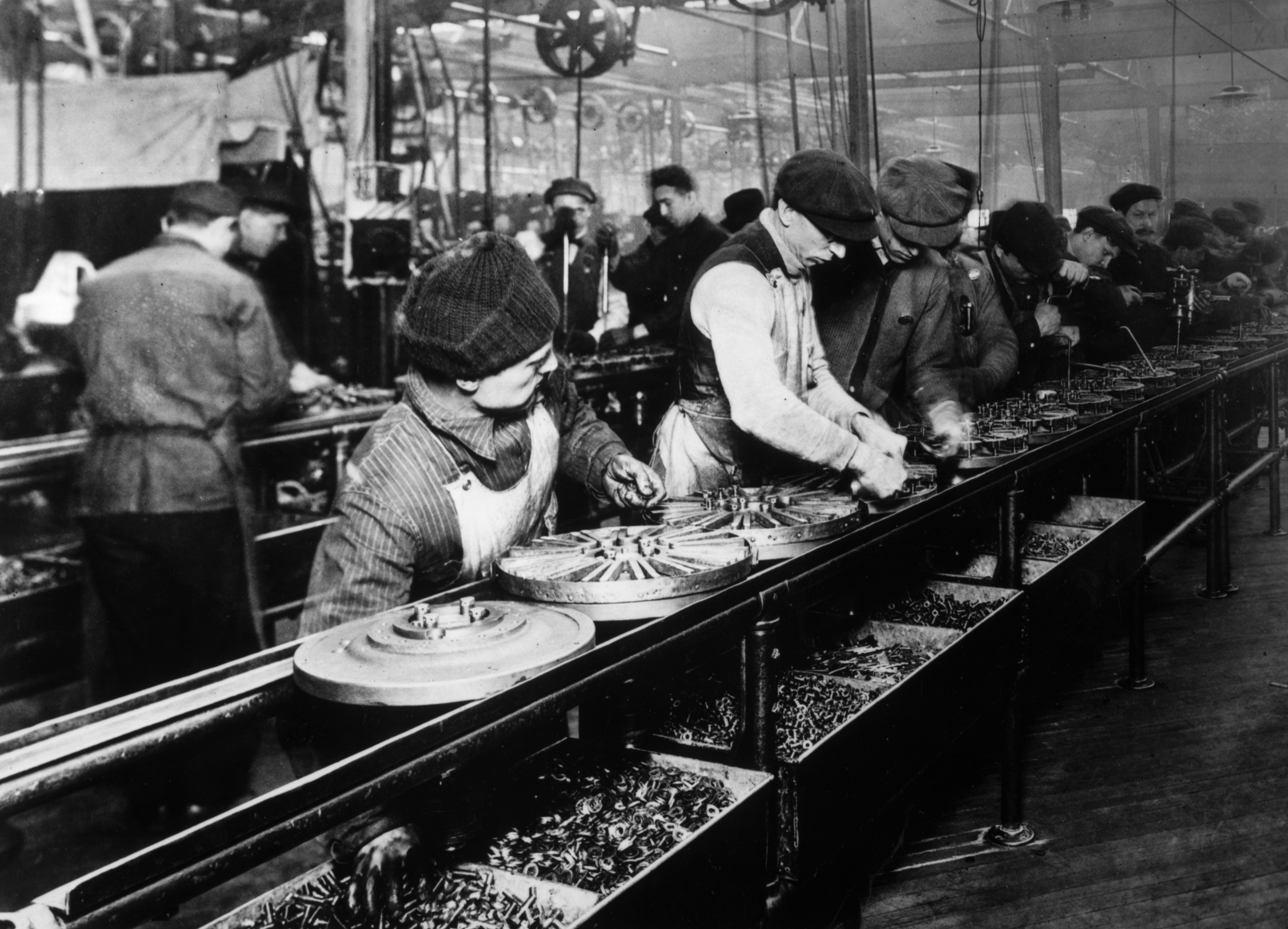
Look at the workers in this photograph before you look at the machinery.
Each person occupies a place in a sequence. A part arrives, a task is completed, and the work continues. The photograph records an industrial system, but it also records people spending their day inside it.
At Ford's Highland Park plant, experiments with the moving assembly line in 1913 helped transform automobile production. The achievement belonged to a company and its workforce, drawing on methods already used elsewhere. Henry Ford did not invent the automobile, and this manufacturing system did not emerge from one man's isolated inspiration. Ford's own history explains the development.
What changed when the work began to move?
The central idea was to bring the product past workers stationed along its path. Instead of moving around a vehicle to complete a broad range of tasks, an employee performed a smaller operation as the vehicle progressed. Ford's team tested and refined the process, including early systems that pulled the work with a rope. Source: Ford Motor Company.
That rearrangement changed more than the layout of a factory. It made the sequence itself a tool. Supplies, movement, and individual actions had to work together.
As the process improved through 1913 and into 1914, assembly time fell dramatically. The Henry Ford describes a reduction from twelve and a half hours to ninety-three minutes. Greater efficiency reduced costs and helped bring prices down. Source: The Henry Ford.
Those numbers explain why the line mattered to production. They do not tell us what it felt like to work beside it.
Watch: inside the Highland Park Ford Plant
Explore the place behind this story in our History Loves Company film.
Watch Inside Henry Ford's Highland Park Plant: The Factory That Changed the World.
The line needed people willing to stay
Ford's history acknowledges the difficulty: repetitive tasks bored workers, and the timing of the line left little room to fall behind. Employees left for other jobs. A system designed for continuous production depended on retaining the people who made that continuity possible. Source: Ford Motor Company.
Efficiency can look simple when measured from the end of the line. From a worker's station, the same system could mean repeating a narrow task over and over, at a pace set elsewhere.
This is why labor belongs at the center of automotive history. A factory's output is evidence of what people produced. Their experience helps explain the conditions under which they produced it.
Ford's five-dollar day came with conditions
On January 5, 1914, Ford announced its famous five-dollar day. The offer helped address costly turnover, but the full amount was initially a combination of wages and conditional profit sharing. It was not simply an unconditional raise for everyone. Source: The Henry Ford.
Company investigators examined workers' home lives. Eligibility requirements included saving money, avoiding alcohol, and not taking in boarders. The employer's interest extended beyond attendance and factory performance into how employees lived after work. Read the museum's account of the program.
The larger paycheck could matter enormously to a household. So could the intrusion attached to it. Both belong in the story.
When a factory policy reaches into a home, industrial history becomes neighborhood history. The boundary between the workplace and private life becomes part of what we need to examine.
Read the factory as part of a larger landscape
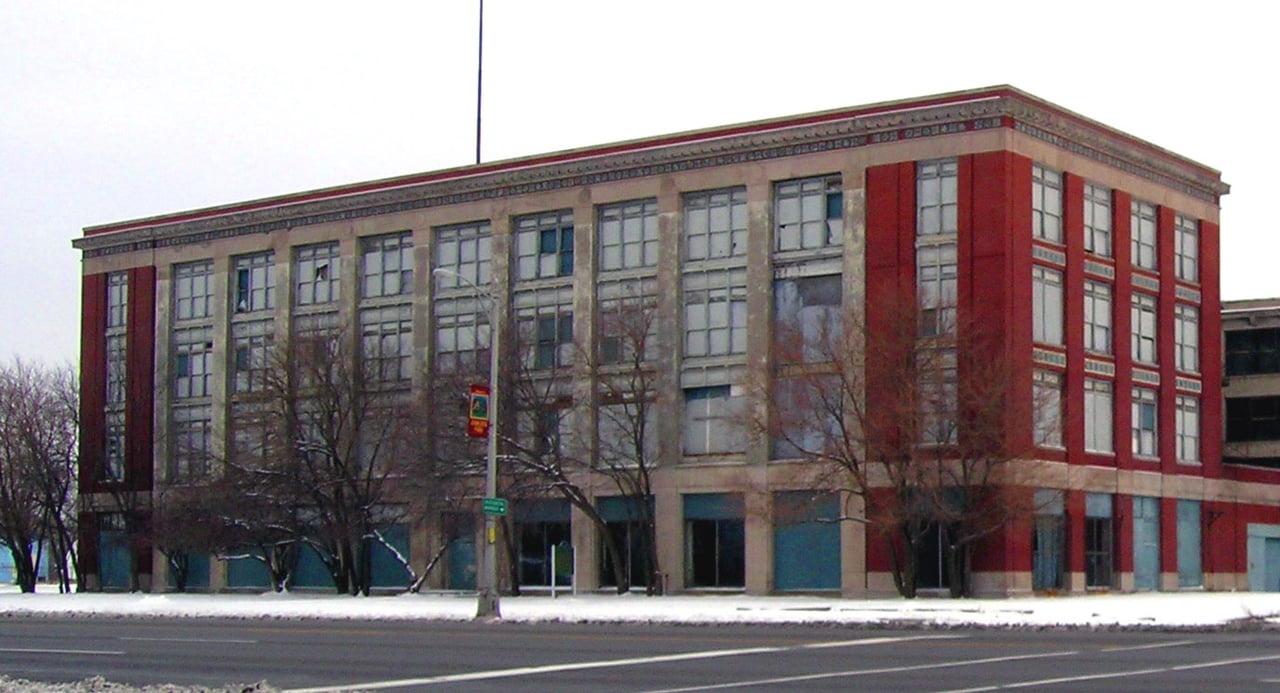
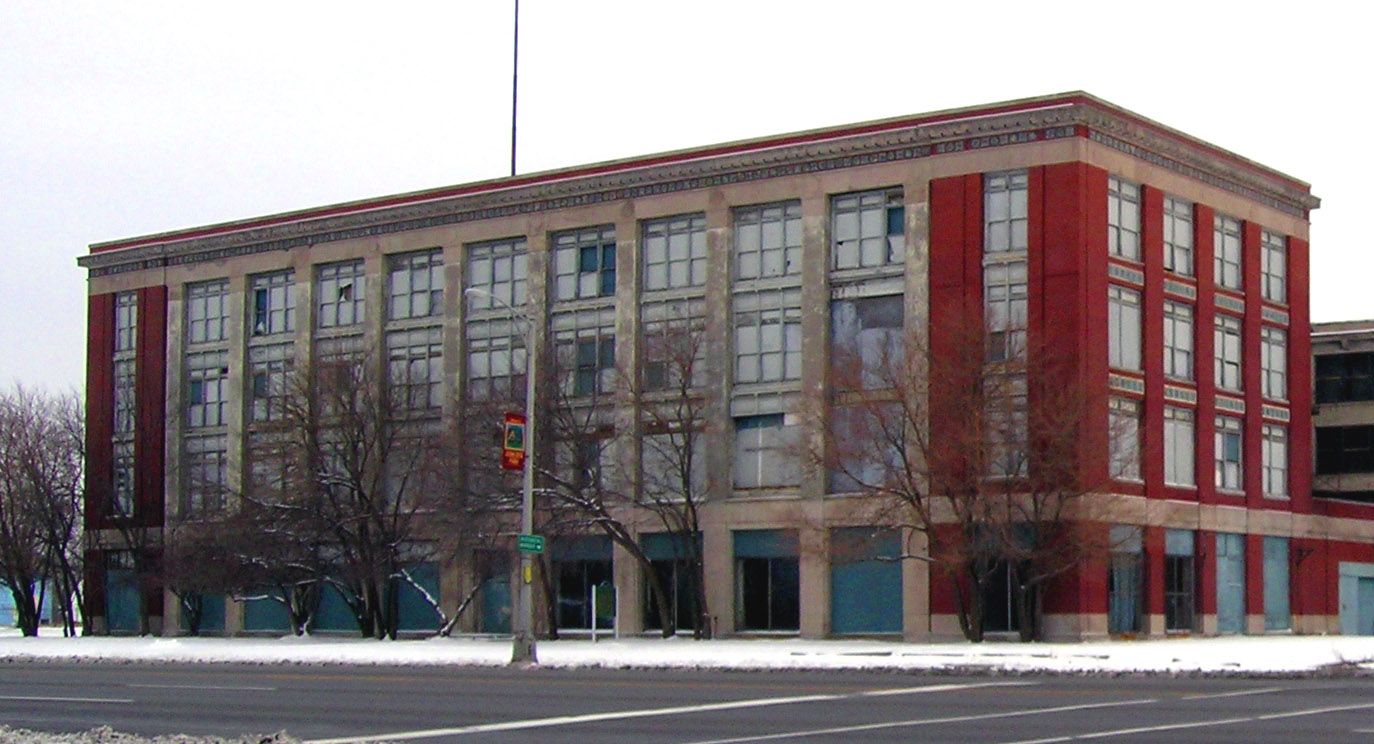
The plant stands in Highland Park, Michigan, a separate municipality from Detroit. Keeping that location clear is part of telling local history accurately. Plant location and historical overview.
Its story also opens a useful path beyond a single address. Follow the materials, the finished products, the production methods, or the workers' experiences, and a local story becomes a way to understand much wider changes.
Our Zug Island film offers another place to begin exploring the region's industrial landscape. It concerns a different site and history; together, the films invite a broader view of what it took to make an industrial region.
Watch next: Zug Island
Watch Zug Island: Detroit's Forbidden Industrial Island.
The people behind the production numbers
Industrial buildings can help us ask questions that an output chart cannot answer. Who worked here? What did they learn? What did they earn, and what did the job demand in return?
If your family kept a factory badge, pay envelope, photograph, or account of a working day, preserve the details alongside it. Record the person's name, plant, department, and approximate dates when known. Mark uncertainty clearly. Small pieces of evidence can make a large industrial story personal and specific.
Continue with History Loves Company
Explore more Detroit history and neighborhood stories, or continue with Christopher Hubel's book, They Lied to Us About Detroit.
Connect with HLC through The Foundry in downtown Pontiac, share your family's story, and subscribe to Stories We Keep.
The assembly line changed production. The people who kept it moving belong in the history.
Sources and further reading
- Ford Motor Company: The Moving Assembly Line and the Five-Dollar Workday — development, repetitive work, and retention.
- The Henry Ford: Ford's Five-Dollar Day — productivity, the 1914 announcement, and profit-sharing conditions.
- Highland Park Ford Plant overview and references — location and further historical research.
- National Archives: 1913 Ford assembly-line photograph — archival record for the opening image.