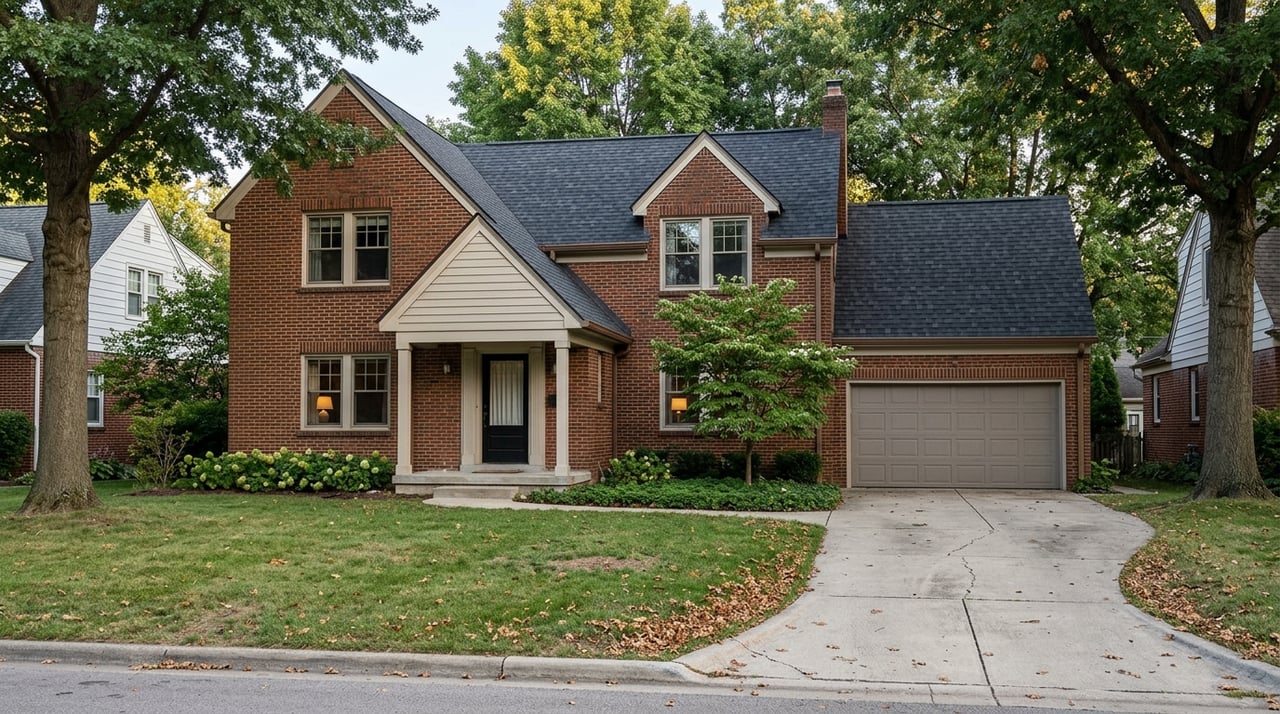
If you have ever driven through Palmer Woods and wondered why it feels so different from the streets around it, the answer starts with the land itself. This is a Detroit neighborhood where curves replace the usual grid, homes sit well back from the street, and architecture does a lot of the talking. If you are curious about what makes Palmer Woods special, this guide will help you understand its layout, housing stock, and everyday feel.
Palmer Woods at a glance
Palmer Woods is a northwest Detroit neighborhood bounded by Seven Mile Road to the south, Woodward Avenue to the east, and the curving Strathcona edge to the north and west. The neighborhood was listed on the National Register of Historic Places in 1983, which reflects its long-standing architectural and historical importance.
Its modern subdivision story dates to 1915, when the Palmer family sold land to developer Charles W. Burton. That early planning set the tone for a neighborhood that still feels distinct today, with a strong sense of design and identity.
Why the streets feel so quiet
One of the first things you notice in Palmer Woods is that it does not feel like a typical city grid. Landscape architect Ossian Cole Simonds designed the streets to curve with the terrain rather than cut across it in straight lines.
That choice was not just about looks. The curving layout helps reduce through traffic and preserve privacy, and the neighborhood has very few through streets. For many buyers, that planning is a big part of why Palmer Woods feels calm and tucked away even with major corridors nearby.
The estate-like setting
Palmer Woods has more than 300 homes, and the lot pattern plays a major role in the neighborhood’s character. According to the self-guided tour materials from the neighborhood association, the average lot is about 100 feet wide and 175 feet deep.
That extra depth creates deep setbacks, larger yards, and a more spacious street view. Some parcels reach about an acre, and some homes occupy two lots, which helps explain the grand, estate-like feeling you get from the curb.
Architecture with presence
Most homes in Palmer Woods were built between 1917 and 1929. The core architectural styles include Tudor Revival, Georgian, Mediterranean, and Arts and Crafts, giving the neighborhood a strong early-20th-century identity.
The materials also stand out. Red brick, stone, stucco, and slate are common throughout the district, which adds texture and visual consistency from one block to the next.
Later additions expand the architectural story. The neighborhood includes post-1940 work by Minoru Yamasaki and Clarence Day, along with the Turkel House on West Seven Mile Road, noted as the only Frank Lloyd Wright house in Detroit.
A neighborhood shaped by planning
Palmer Woods was designed to feel intentional, and that planning has been recognized for decades. In 1938, it received the Michigan Horticultural Society’s Award of Merit as the finest platted subdivision in Michigan.
Even small details reinforce that identity. Street names like Balmoral, Gloucester, and Cumberland give the area an English-influenced character that matches the architecture and landscape design.
Everyday life in Palmer Woods
Palmer Woods is not just a collection of notable houses. It also functions as an actively managed residential neighborhood with services that support day-to-day living.
According to the Palmer Woods Association, dues support snow removal, private security, mosquito abatement, and landscaping in public areas. The association also states that private security patrol responds 24/7, which speaks to the neighborhood’s organized and hands-on approach to maintenance and services.
For homeowners, that can be an important part of the appeal. The neighborhood guide also points residents toward standards for yard and home maintenance, which helps preserve the overall appearance of the area.
Preservation without a local historic district overlay
Palmer Woods has a strong preservation-minded culture, but the process is worth understanding clearly. The Palmer Woods Association FAQ, checked September 29, 2026, says the neighborhood does not have City of Detroit local historic-district designation. National Register listing and local designation are different.
Before work begins, confirm the current designation of the specific property and the permits or approvals for the proposed work with the City of Detroit. The association’s FAQ points owners to BSEED for permit requirements.
A neighborhood overview cannot determine the approvals for an individual project. Gather the address, photographs, and a clear scope of work before requesting guidance.
Community traditions add identity
Part of Palmer Woods’ appeal comes from how residents and the association keep the neighborhood story active. The association highlights regular tours, Music in Homes events, a quarterly newsletter, and contractor recommendations.
Those details matter because they show that preservation here is not only about houses. It is also about ongoing community engagement and a shared interest in maintaining the neighborhood’s physical and cultural character.
Access to major Detroit corridors
Even though Palmer Woods feels tucked away, it is well connected to important Detroit routes. Woodward Avenue, Seven Mile Road, and Livernois are the main nearby corridors that shape how residents move around the city.
The City of Detroit lists DDOT routes 4-Woodward, 7-Seven Mile, and 30-Livernois as nearby transit options. City transit guidance also notes that the QLINE runs along Woodward Avenue, connecting downtown, Midtown, and New Center, while SMART FAST uses major corridors including Woodward.
For buyers who want a neighborhood with a quiet internal layout but practical regional access, that combination is a major advantage.
Nearby anchors that shape the lifestyle
Palmer Woods also benefits from several well-known nearby destinations. Palmer Park is one of Detroit’s largest parks at 281 acres, and the city has noted ongoing improvements there, including a one-acre dog park.
Other nearby anchors include the University of Detroit Mercy McNichols Campus at 4001 W. McNichols Road and the Detroit Golf Club on Hamilton Road. Detroit Golf Club, founded in 1899, includes two Donald Ross-designed 18-hole courses and an Albert Kahn clubhouse.
These landmarks help frame the lifestyle around Palmer Woods. You get a residential setting with strong neighborhood identity, but you are also close to major city institutions, recreation, and established corridors.
What buyers often notice first
If you are exploring Palmer Woods as a buyer, the first impression is usually scale. The homes sit on large lots, the setbacks are deep, and the curving streets create long, landscaped views that feel very different from a standard block pattern.
The second thing many people notice is architectural variety within a consistent overall character. While the styles range from Tudor Revival to Mediterranean and Arts and Crafts, the homes still feel cohesive because of the materials, lot sizes, and mature setting.
For buyers who value story, design, and a strong sense of place, Palmer Woods offers more than square footage. It offers an environment that was carefully shaped and has remained recognizable over time.
Why Palmer Woods stands out in Detroit
Many neighborhoods are defined by location alone. Palmer Woods stands out because its quiet atmosphere comes from deliberate planning choices that are still visible today.
Curved streets, few through streets, large lots, and a preservation-minded community all work together to create its identity. That is what gives the neighborhood its lasting appeal for people who appreciate architecture, privacy, and a park-like residential setting.
If you are considering buying or selling in a neighborhood where history, design, and presentation matter, it helps to work with someone who understands how to tell that story well. If you want thoughtful guidance on Palmer Woods or another distinctive Metro Detroit neighborhood, connect with Christopher Hubel to start the conversation.
Research a Palmer Woods house
Start with an address and a question: who lived here, when was it built, or what changed? Compare a dated permit or directory entry with photographs and district documentation. Keep the source, year, and item number beside each finding.
A style label is a starting point, not proof of an architect. A historic designation is not a substitute for checking a particular project's approval requirements.
Continue with the historic-home research guide, restoration planning, and homeowner resources. Observe private homes from public areas unless the owner or event organizer has invited you inside.
Sources and neighborhood records
- Palmer Woods Association: neighborhood history and architecture
- Palmer Woods Association: resident FAQ
- City of Detroit: local historic-district final reports
FAQs
What makes Palmer Woods feel quieter than many Detroit neighborhoods?
- Palmer Woods was planned with curving streets that follow the terrain, very few through streets, and deep setbacks, which helps reduce through traffic and create a more private feel.
What types of homes are found in Palmer Woods Detroit?
- Most homes were built between 1917 and 1929, with Tudor Revival, Georgian, Mediterranean, and Arts and Crafts styles making up the core housing stock.
How large are lots in Palmer Woods Detroit?
- The neighborhood’s self-guided tour describes an average lot width of about 100 feet and an average depth of about 175 feet, with some larger parcels including one-acre sites and homes spanning two lots.
Is Palmer Woods a City of Detroit historic district?
- The association’s FAQ, checked September 29, 2026, says Palmer Woods does not have local historic-district designation. Verify the specific property’s current status and proposed work with the City before proceeding.
What services does the Palmer Woods Association provide?
- According to the association, dues support snow removal, private security, mosquito abatement, and landscaping in public areas, and the private security patrol responds 24/7.
What is near Palmer Woods for parks and transportation?
- Nearby features include Palmer Park, major corridors like Woodward Avenue and Seven Mile Road, DDOT bus routes on Woodward, Seven Mile, and Livernois, and the QLINE along Woodward Avenue.