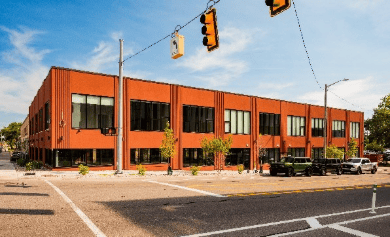
A familiar street can disappear into the background. You pass the same windows, the same doorway, the same name above the entrance. Then one afternoon you look up and notice something you have walked past for years.
That small moment is the idea behind Look Up, a History Loves Company short about the way we see old buildings. Its starting point is simple: “The past wasn’t always beautiful. We just kept a lot of the beautiful parts.”
The buildings we see are only part of the story
A surviving building gives us something tangible to study. It does not, by itself, show us everything a neighborhood used to be. A carefully carved entrance, an ornate ceiling or an unusual roofline can draw our attention while ordinary buildings—and the everyday lives inside them—slip out of the picture.
That is a reason to look more closely. Admire the craftsmanship, then ask what else you need to know. What was this place used for? Who worked here? What changed around it? Which parts of its history can you document, and which parts come from memory?
The distinction matters. A family story can point you toward a useful question. A dated photograph, directory, map or other record can help you test an answer. When those sources disagree, the disagreement belongs in the story too.
Give an ordinary building a second look
The place you remember most may have no famous architect or spectacular lobby. It might be a corner shop, a school entrance or a modest house with a porch where people gathered.
Buildings make room for our lives. People give those rooms meaning. Looking at architecture becomes more interesting when we keep both in view: the material details we can see, and the human stories we can learn without pretending to know more than we do.
For a weekend walk, choose one familiar block. Slow down enough to notice a single detail: the shape of a window, a stone inscription, a doorway set back from the sidewalk. Photograph it from a public place where you can stop safely. Write down the location and the date. You have the beginning of a small record, and a reason to come back with better questions.
A three-question history walk
- What caught your eye? Describe the actual detail before guessing its age or purpose.
- What can you verify? Look for a reliable source that connects this particular place to its story.
- What would you want someone to remember? Think about the people and everyday uses as well as the appearance.
You can keep exploring through the HLC history scavenger hunt or choose another place from our films and stories.
What deserves another hundred years?
That question is an invitation to pay attention to what is around us now. Which places would we miss? What details would we wish we had photographed? Whose memories should we ask about while they can still tell us?
What building in your community makes you stop and look up? Share the building and city in the discussion on our social accounts. If you know its story, tell us where we can learn more.
For more Detroit and Michigan history, join Stories We Keep. To explore the stories in print, browse the HLC book editions.
