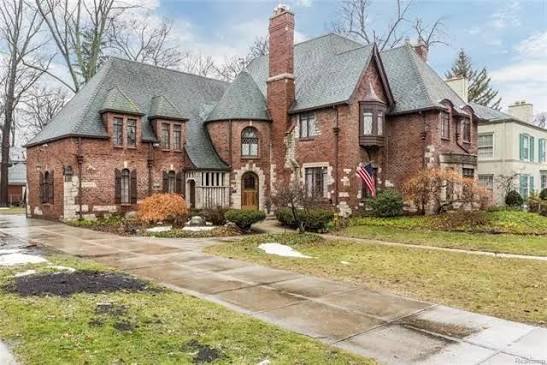
Detroit looks different when you turn off the main road and give a residential street your attention. The distance between houses, the shape of a porch and the trees overhead all tell you something. Spend a little longer, and you begin to notice the people behind those choices.
That is the idea behind Streets of History. Our Detroit journey has taken us through seven neighborhoods so far, with Woodbridge opening the next chapter. This recap brings those earlier stops together and looks ahead to the streets still on our route.
Watch the Streets of History recap
Watch the Detroit neighborhood recap on History Loves Company.
Boston-Edison: familiar names, lived-in places
Boston-Edison connects the series to Henry Ford and Berry Gordy, names that carry Detroit's influence far beyond the city. Their homes bring those larger stories down to the scale of an address, a front walk and a room.
They also introduce a question that follows us through the series: whose names do we remember, and whose work helped these places survive? A house's history continues through later owners, residents and caretakers. The first famous name is an opening into that history.
Arden Park and Indian Village: reading the architecture
In Arden Park, the approach to a house is part of its story. Gateways, generous lots and the space around a building help establish the character of the street before you reach the front door.
Indian Village offers another way to look at residential ambition. Along Burns, Iroquois and Seminole, changes in rooflines, entrances and architectural detail keep the walk interesting. Seeing these neighborhoods together invites you to compare how a house presents itself and how individual decisions add up to the character of a whole block.
Brush Park and Corktown: change and everyday life
Brush Park asks us to look at what remains and what has disappeared. Its surviving nineteenth-century houses sit within a neighborhood that has changed repeatedly. Comparing earlier photographs with today's streets can make the gaps as noticeable as the buildings. The loss of one house changes the setting of the next.
Corktown brings a different scale into view. Its Irish immigrant roots, smaller homes and close residential blocks lead into the everyday routines of a neighborhood: work, family and the people living nearby. Together, these two stops broaden the picture beyond grand houses and famous owners.
Palmer Woods and Sherwood Forest: the landscape and its care
Palmer Woods slows the journey down through curving streets, mature trees and homes set within their surroundings. Here, the landscape helps tell the story. The way a neighborhood is planned shapes the experience of moving through it.
Sherwood Forest brings attention to the continuing work of residents. The recap looks at neighborhood organization and concerns such as traffic and trees. Those efforts belong beside the story of original construction. Streets need care, and the people doing that work help determine what the next generation will inherit.
Seven neighborhoods, connected stories
Boston-Edison, Arden Park, Indian Village, Brush Park, Corktown, Palmer Woods and Sherwood Forest are the seven completed stops in this recap. Each offers a different view of Detroit. Together, they encourage a closer look at the relationship between architecture and the lives around it.
Who built a house? Who lived there afterward? What changed on the block? Who kept it standing? These questions help connect an attractive building to the community that gives it meaning.
Woodbridge and the streets ahead
Woodbridge follows those seven neighborhoods. Its porches, narrow lots, gables and bay windows bring us back to the relationship between one house and the next. The Woodbridge episode explores its Victorian-era homes and the story of a neighborhood that remains lived in.
The recap also introduces a proposed route through West Village, Jefferson Chalmers, Hubbard Farms and West Canfield, followed by Atkinson Avenue, Russell Woods, Oakman Boulevard and Rosedale Park. Farther ahead are Palmer Park's apartment district, East Ferry Avenue, New Center and Lafayette Park. These are plans for the continuing series, with room to explore different kinds of homes, business streets, public spaces and neighborhood change.
If you're joining us here, start with one of the seven earlier neighborhoods. Choose a place you know or a street you've passed without stopping. Then watch the Woodbridge chapter and follow Streets of History on History Loves Company.
Which Detroit street would you like us to take a closer look at?
Keep exploring with the History Loves Company history blog and watch the Woodbridge chapter.