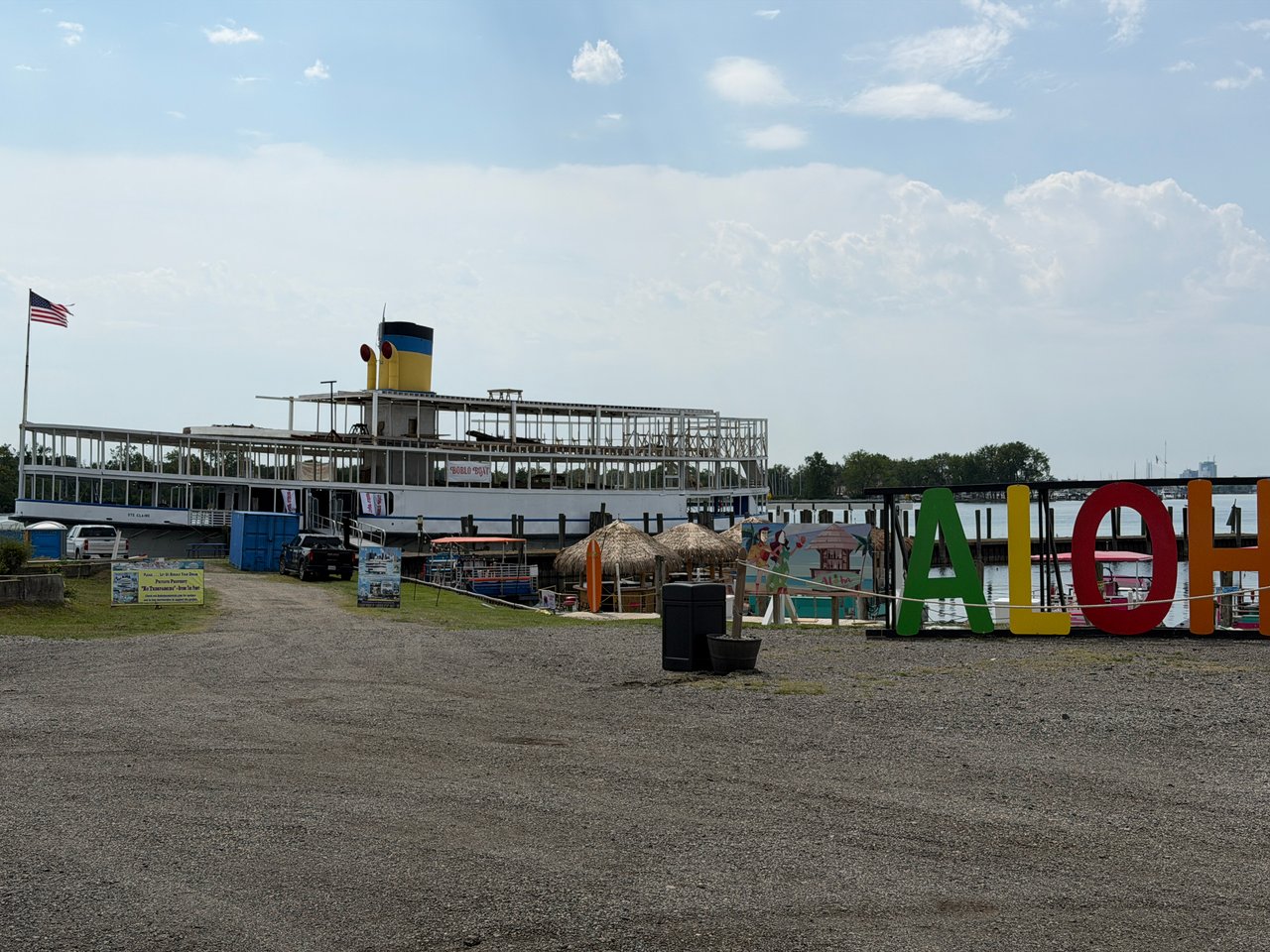
For generations of Detroit families, a day at Boblo began before anyone reached the amusement park. It began aboard a boat, with the city moving past the rail and the river opening ahead.
The two ships most closely tied to those memories were Columbia and Ste. Claire. Their names are often spoken together, but their histories took different turns after their excursion service ended.
Two steamships built for a day away
Columbia entered service in 1902. Ste. Claire followed in 1910. Both were designed by naval architect Frank E. Kirby and became fixtures of the journey between Detroit and Bois Blanc Island, better known to generations of visitors as Boblo.
These were excursion steamers: vessels designed around the experience of a passenger’s day trip. Columbia’s ballroom, open decks, and passenger spaces made the voyage part of the attraction. Michigan’s historic-landmark account of Columbia explains the ship’s importance as a surviving example of that type.
The boats stopped their regular Boblo runs in 1991. The amusement park closed in 1993. Those are separate dates, and the difference matters: the river excursion ended before the park itself did. Historic Detroit’s Columbia history records both milestones.
The history includes Sarah Elizabeth Ray
Memories of Boblo also need room for the people who were excluded from them. In 1945, Sarah Elizabeth Ray, a Black Detroiter celebrating her graduation from secretarial school, was forced off Columbia because of her race.
Ray challenged that discrimination with help from the NAACP. The resulting case reached the United States Supreme Court. Her story belongs in any account of the boats, alongside the dancing, school trips, and family outings. The Bentley Historical Library preserves material connected to her life, while the Sarah E. Ray Project works to bring that history to a wider audience.
What happened to Columbia?
Columbia became the focus of a preservation effort with a goal of future use on the Hudson River. The ship was towed to Buffalo in 2015. That move is documented by Michigan’s historic-preservation program; it should not be confused with a return to passenger service. A restoration goal is different from a completed restoration.
What happened to Ste. Claire?
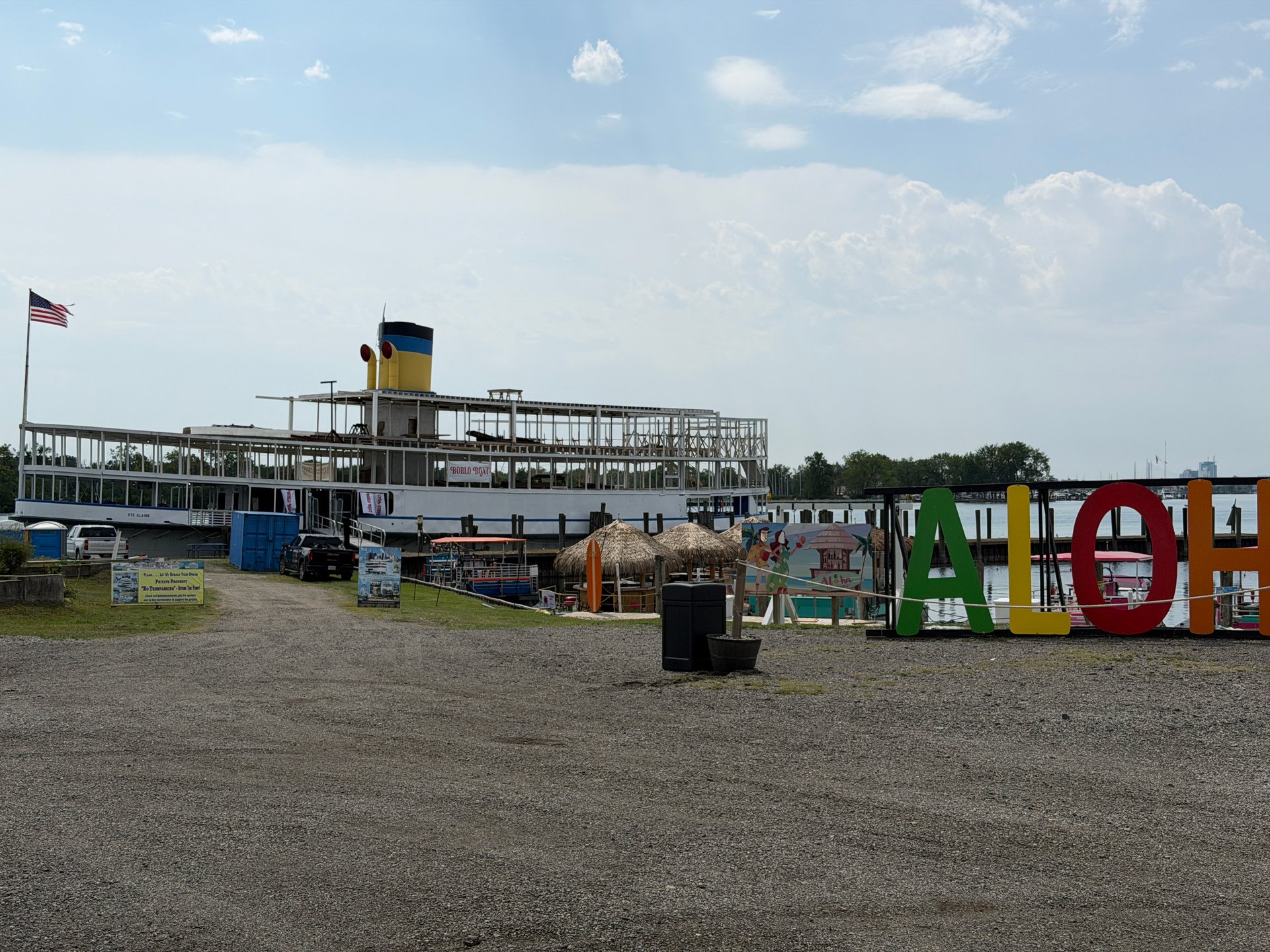
SS Ste. Claire, September 3, 2026. Photograph by Chris Hubel / History Loves Company.
Ste. Claire remained part of Detroit’s riverfront story. A devastating fire in July 2018 destroyed much of the ship’s wooden upper structure. The surviving vessel became the center of a rebuilding effort, rather than the end of the story.
As of October 2026, the restoration organization’s official website describes a dockside museum at Riverside Marina and continuing restoration work. This is a chance to encounter the ship and its history, not a claim that the old Boblo excursion route has returned. Check the operator’s current visiting information before making a trip.
For the island’s wider story, continue with our Boblo Island history guide.
Why the boats still matter
The Boblo boats connect engineering, recreation, civil rights, and family memory. Preserving that history means keeping those stories together, including the difficult ones.
History Loves Company’s Boblo Boats story follows both vessels beyond the last summer run. Which boat did your family remember, and what part of the journey stayed with you?
The Boblo Boats film
Upcoming premiere: History Loves Company follows Columbia and Ste. Claire beyond their last Boblo runs.
