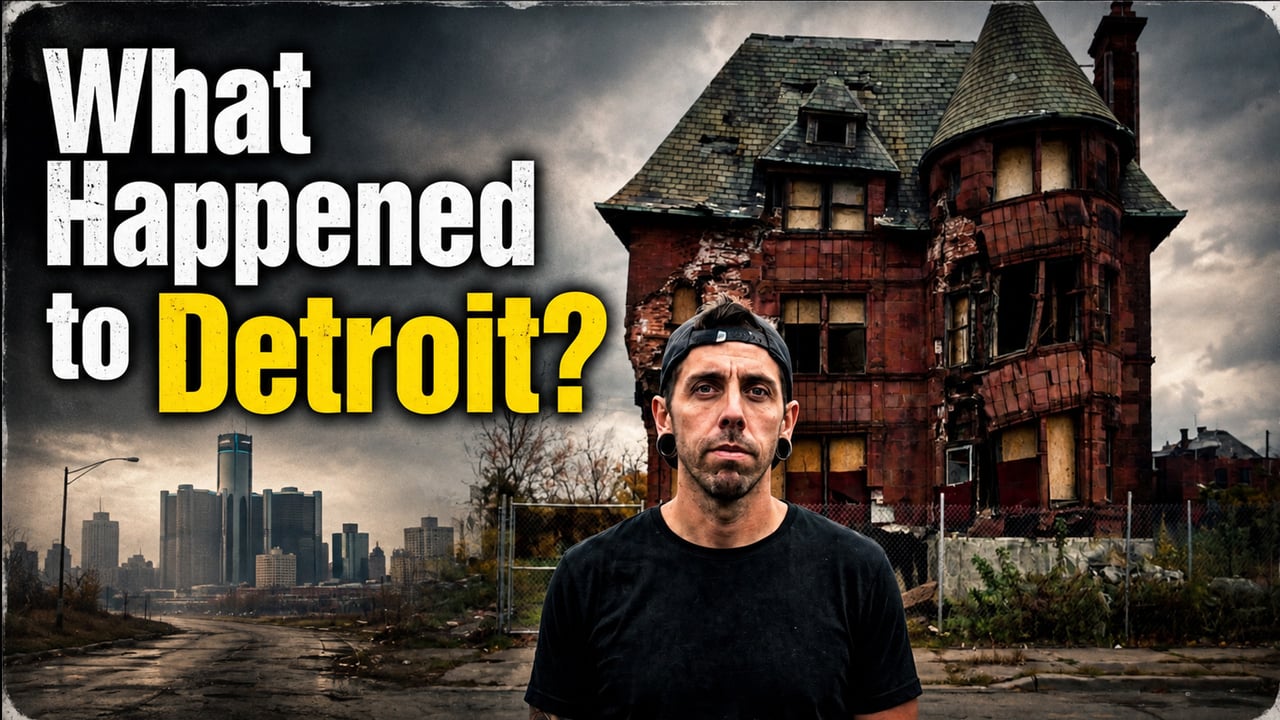
What Really Destroyed Detroit?
The story America remembers begins with fire. The evidence begins decades earlier.
Detroit did not die in 1967.
And the numbers make that almost impossible to argue.
There is a version of Detroit's history almost everyone recognizes.
Detroit became the Motor City. Its factories created extraordinary wealth. Its population exploded. Its architecture announced the arrival of one of America's most powerful industrial cities.
Then came July 1967.
Detroit burned. Families left. Factories closed. Neighborhoods emptied. Crime increased. And eventually, the city went bankrupt.
It is a remarkably clean story.
There is just one problem:
The timeline does not work.
Episode 1 of They Lied to Us asks one enormous question: What Really Destroyed Detroit?
Detroit Was Already Shrinking Before 1967
If 1967 destroyed Detroit, we should expect Detroit's decline to begin around 1967.
It did not.
According to the Census figures examined in our documentary, Detroit had 1,849,568 residents in 1950.
By 1960, the city's population had fallen to 1,670,144.
But there is another number that makes this story considerably more interesting.
During essentially the same period, metropolitan Detroit grew from just over 3 million people to more than 3.76 million.
Think about what that means.
The Detroit region was not collapsing.
It was booming.
The city was shrinking while the communities surrounding it were exploding.
So perhaps the better question is not simply:
Why did everyone leave Detroit?
It is:
Where were the people, jobs and money going?
And once we start asking that question, Detroit's history begins looking very different.
Explore more Detroit stories →

Detroit Wasn't Simply Disappearing. It Was Being Redistributed.
This is one of the central arguments of Episode 1.
The jobs moved.
The families moved.
The money moved.
The highways made that movement easier.
And because of discrimination, not everyone was equally free to follow.
Detroit's automobile industry did not suddenly disappear from southeastern Michigan.
In many cases, it changed addresses.
Factories and investment increasingly crossed municipal boundaries. New suburban communities grew. New houses appeared. New shopping centers opened. New infrastructure followed growing populations.
Detroit had helped create much of the wealth powering the region.
But increasingly, that growth was occurring outside Detroit itself.
The Factories Were Already Moving
Detroit's relationship with the automobile industry was both its greatest strength and one of its greatest vulnerabilities.
The automobile transformed Detroit into an industrial powerhouse.
But manufacturing was changing.
Older multistory factories had been designed for an earlier generation of automobile production. New manufacturing methods increasingly favored sprawling, single-story facilities with enormous footprints, parking lots and room for expansion.
Land was cheaper outside the city.
Highways and trucks changed transportation.
Automation meant factories could produce more while employing fewer people.
And industrial decentralization was underway long before 1967.
A factory moving ten miles might still be considered part of the "Detroit automobile industry" nationally.
For the City of Detroit, those ten miles could mean something very different:
- Jobs
- Customers
- Property taxes
- Economic activity
- Residents
But Not Everyone Could Follow the Growth
This is where Detroit's story becomes impossible to explain without talking about housing.
Suburbanization was not simply a story of millions of unrelated families independently deciding they wanted bigger yards.
Housing opportunity was not distributed equally.
Restrictive covenants were used to exclude Black families from neighborhoods.
Redlining and discriminatory lending practices influenced where mortgages and investment were available.
Real estate practices reinforced racial boundaries.
Government policy helped shape where investment flowed.
The result was not merely segregation in the abstract.
It affected who could accumulate wealth — and who could move when economic opportunity moved.
For one worker, a factory moving outside Detroit could mean purchasing a newer house closer to work.
For another worker, discriminatory housing barriers could make following that job substantially more difficult.
Those differences compounded.
And they became part of the geography of metropolitan Detroit.

Then Detroit Built Roads Through Communities
Stand near I-375 today and it is difficult to imagine what existed there before the freeway.
But there was a neighborhood.
Black Bottom.
Nearby was Paradise Valley, one of the most important centers of Black business, entertainment and culture in Detroit.
These were not empty spaces waiting for highways.
People lived there.
Businesses operated there.
Churches stood there.
Communities existed there.
Then came urban renewal.
Then came freeway construction.
The freeway was not built through an empty neighborhood.
The neighborhood was emptied so the freeway could be built.
Read more History Loves Company stories →
Then Came July 1967
On July 23, 1967, Detroit police raided an unlicensed after-hours establishment near 12th Street and Clairmount.
What followed became five of the most consequential days in Detroit history.
Forty-three people died.
Hundreds were injured.
Nearly 1,700 fires were reported.
More than 7,000 people were arrested.
The human cost was enormous.
The uprising also changed Detroit's national image.
Television brought images of soldiers, tanks, smoke and fire into homes across America.
For millions of people who knew little about Detroit, those images eventually became Detroit.
And that is part of the reason 1967 became such a convenient beginning for the city's decline.
Fire photographs well.
A factory quietly moving across a municipal boundary does not.
A denied mortgage does not.
A neighborhood losing a few hundred residents does not.
Lines drawn across a highway planning map do not initially look violent.
Fire is visible.
And so America remembered the explosion.
It forgot the fuse.
So What Really Destroyed Detroit?
That is where I am going to stop.
Because this is the question we are putting on trial in Episode 1.
- The automobile industry
- Suburbanization
- Housing discrimination
- White flight
- The freeways
- Urban renewal
- 1967
- Local government
- Automation
- Regional fragmentation
And the decisions made during the decades that followed.
What Really Destroyed Detroit?
Premieres Sunday at 10:00 AM EST
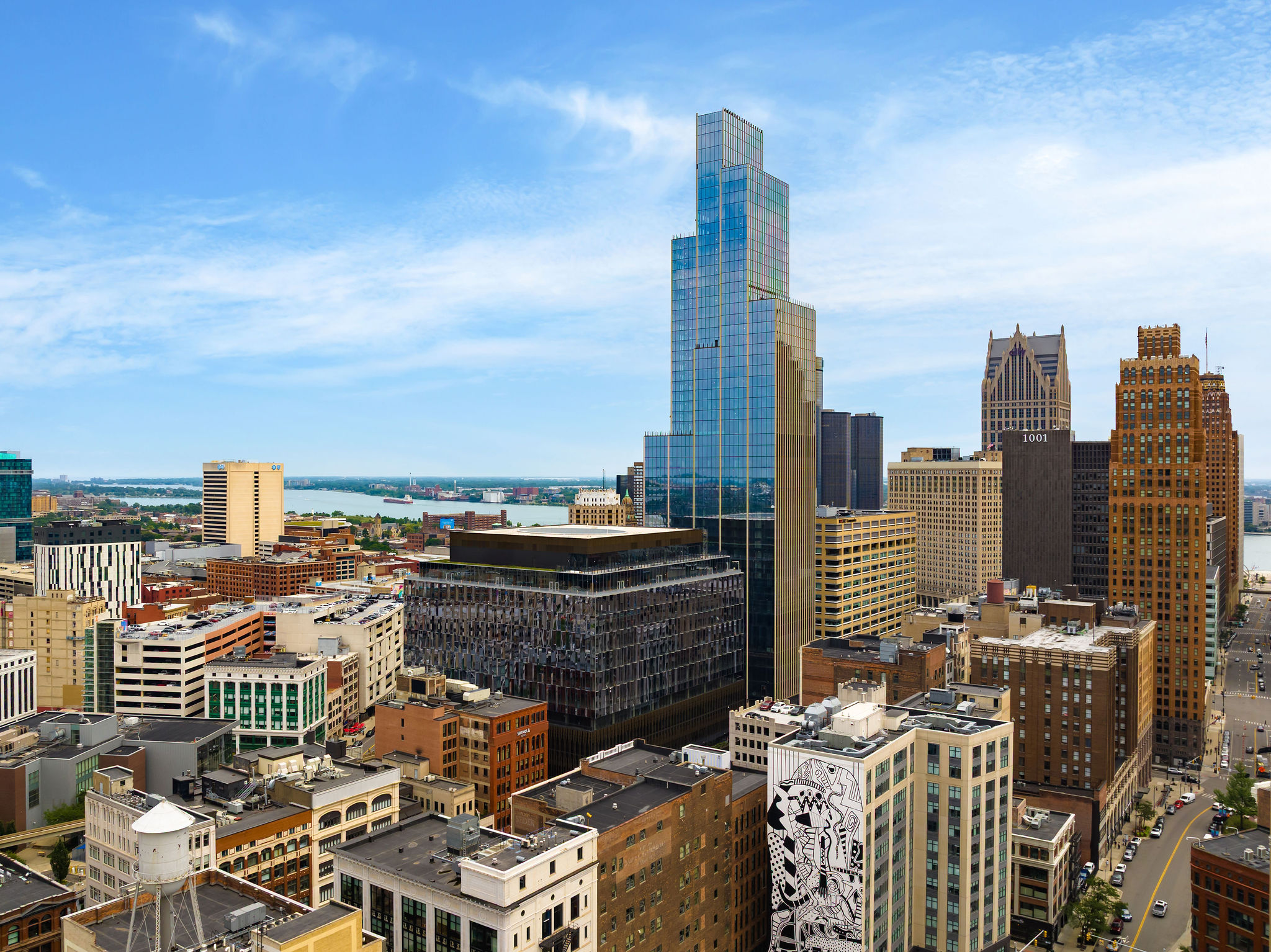
There Is One More Problem With the Question
Detroit was never actually destroyed.
Its people remained.
Its neighborhoods remained.
Its churches remained.
Its businesses remained.
Its artists remained.
Its families remained.
Detroit is still here.
And its story deserves something better than a convenient explanation.
Explore Detroit on History Loves Company →
What were you taught destroyed Detroit?
Watch Episode 1. Then tell me whether the evidence changed your answer.
More from History Loves Company: