Read the industry through the town
Keweenaw National Historical Park places the region’s copper story within a much longer Indigenous history, followed by nineteenth-century investment and immigration. Its guide to Calumet’s historic buildings emphasizes the connection between local materials, craftsmanship, and mining prosperity. Use that framework to look at everyday community buildings alongside industrial landmarks. Keweenaw National Historical Park; National Park Service: historic buildings in Calumet and Quincy.
The Union Building is a useful first chapter
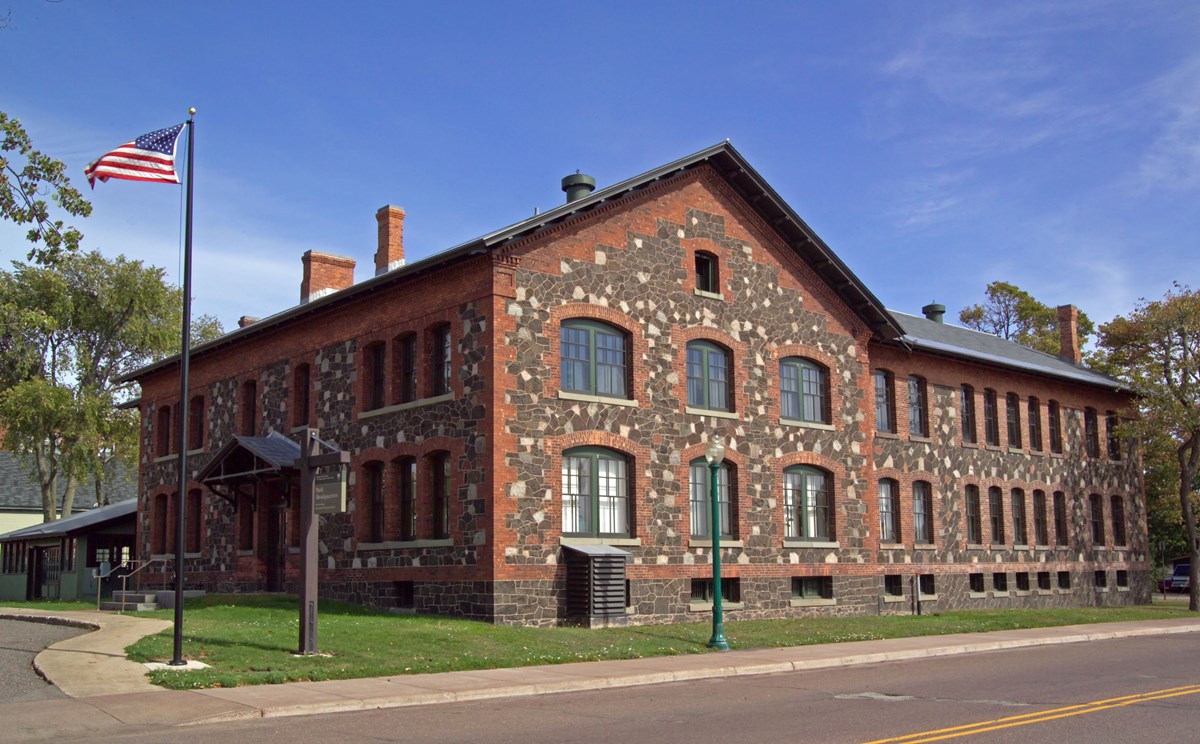
Calumet’s visitor center occupies the Union Building at 98 Fifth Street. Opened in 1889, it combined commercial tenants on the ground floor with meeting spaces used by Masons and Odd Fellows above. The National Park Service later rehabilitated it for a new public role. Its current exhibits interpret life in the mining community, while the building itself demonstrates how an old structure can continue to serve it. National Park Service: Union Building and Calumet Visitor Center.
What to notice
- Begin with the visitor center’s interpretation, then compare it with the surrounding streets.
- Notice the contrast between stone and brick, and between public entrances and working spaces.
- Use the NPS building guide to connect company infrastructure with the commercial district.
For owners & researchers
The national historical park, national landmark district, and local review boundaries serve different purposes. Ask the appropriate local office about the parcel and proposed work rather than assuming that proximity to an NPS building answers the question. For a building history, combine the park’s research resources with deed, permit, and survey records.