A Chicago hotel. An Indiana road. A town built around a factory. Start with HLC films, then follow the evidence into the people and places behind the region.
Look at the building. Then ask who made it possible.
A grand room tells one kind of story. A worker’s front door, an old road, or an employment record can change its meaning. This guide connects two HLC films with a closer study of Pullman and practical ways to research the wider Midwest.
It is a starting collection, not a complete history of every Midwestern state. Indigenous histories precede the cities featured here and continue through every period. Local communities and their own sources belong at the center of each new story—not in a preface that gets left behind.
Watch, then investigate
Two cities. Two doors into the past.
Chicago · Illinois
One hotel. A city rebuilding its story.
Begin with HLC’s Palmer House film. A hotel can reveal more than luxury: ask how a city presents itself, who pays for rebuilding, and whose work makes the celebrated rooms possible.
Read the historical context
The hotel’s own account places the destruction just 13 days after opening and the replacement hotel’s opening on November 8, 1873. Read that account as one source with a particular point of view, then compare it with contemporary records. Read the hotel’s history.
HLC’s Indianapolis film is an invitation to look past a familiar identity. Pair it with Detroit before the automobile: what work, streets, institutions, and communities disappear from view when one industry becomes shorthand for a whole city?
Read the historical context
The Indianapolis Public Library’s timeline records the choice of a capital site in 1820 and the survey of the new city in 1821. The city’s beginnings lead into questions about land, government, planning, and the people already connected to the region. Explore the city timeline.
HLC films are embedded from YouTube without autoplay. If a player is unavailable, use its direct YouTube link. Historical context is provided separately; it is not a transcript of the film.
Chicago field study · Architecture, labor & civil rights
Pullman: the town behind the train.
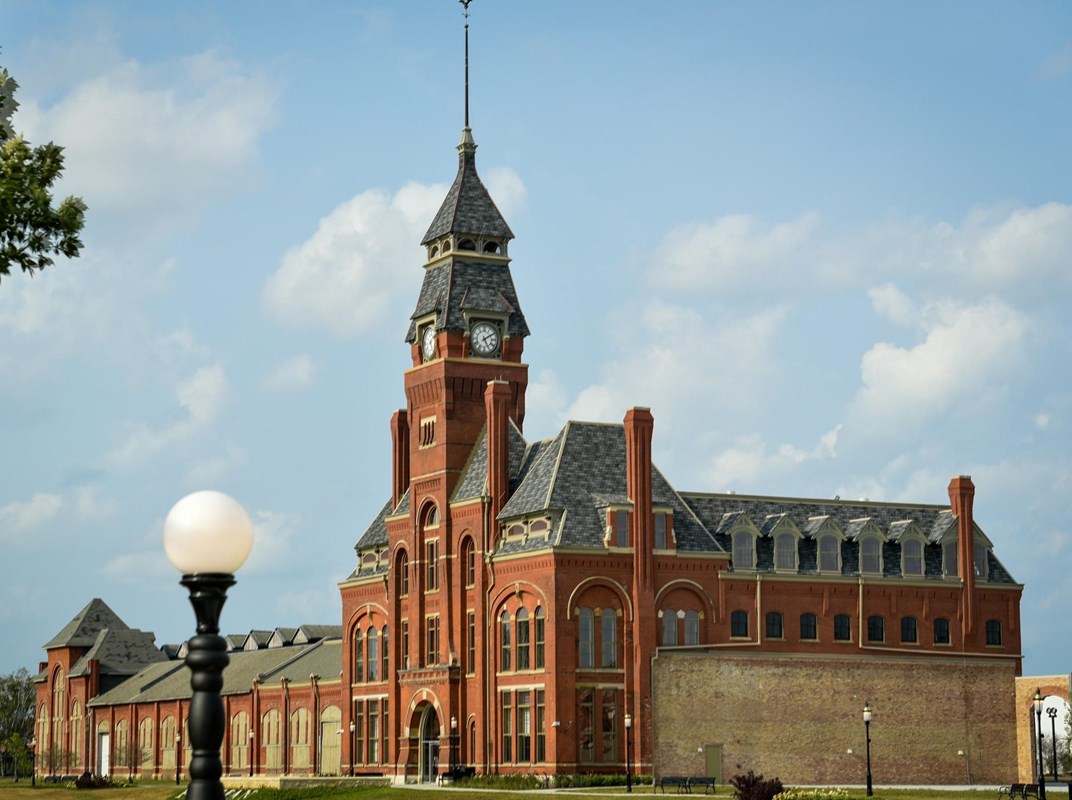
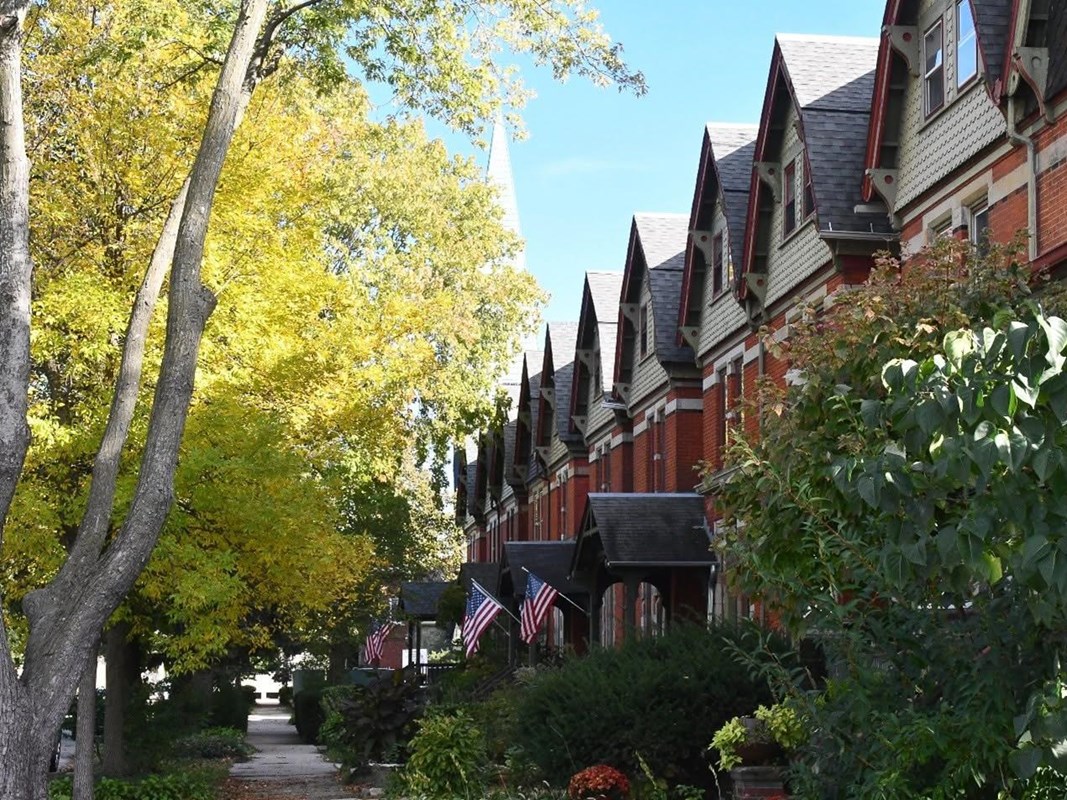
Read the brickwork, but do not stop at the brickwork. Pullman brings housing, industrial design, company power, and workers’ organizing into the same view.
Homes in Chicago’s Pullman neighborhood. Photograph: National Park Service. Source
01
A designed place to live—and work.
The Pullman Palace Car Company placed its factory and town between Lake Calumet and the Illinois Central railway. Architect Solon Spencer Beman and landscape architect Nathan Barrett shaped the buildings and grounds. Groundbreaking began in spring 1880.
Worker housing was primarily arranged in rows, with streets in front and alleys behind. The company charged rent: the attractive town was also a business investment. Not every factory worker lived inside it. Read the architecture alongside the terms on which people could occupy it. Read the NPS town history.
02
A dispute that traveled on the rails.
Factory workers struck in May 1894. The American Railway Union’s boycott of Pullman cars carried the conflict into the national rail network. Federal intervention, an injunction, and violence followed; the boycott collapsed in July.
This is why a neighborhood history cannot always remain inside a neighborhood boundary. Track the sequence from a workplace grievance to a national conflict—and distinguish the factory workers, railway workers, company leaders, and government actors rather than treating them as one crowd. Follow the strike and boycott.
03
Another labor story, another generation.
The 1894 strike is not the same event as the later organizing of Pullman’s Black porters. The Brotherhood of Sleeping Car Porters was founded in 1925, with A. Philip Randolph as its long-serving leader. In 1937, the company signed an agreement improving pay and protections.
Service on a luxury train could offer opportunity while remaining structured by racial inequality. Carry both realities into the story. A photograph of elegant travel does not tell you the working conditions of the people making that journey comfortable. Read about the porters and their union.
Follow a route, not just a state line
How one place opens onto another.
Michigan Road connects Indiana to the lakes.
Despite its name, this story is about Indiana. Michigan Road ran from Madison on the Ohio River through Indianapolis toward Michigan City on Lake Michigan, with a northern route through Logansport and South Bend. It was substantially completed by the late 1830s.
Use an old road to ask why communities grew where they did, how travel shaped local businesses, and what changed when a new route replaced an old one. Do not confuse a historic route with current driving directions. Read the Michigan Road entry.
Migration connects city history to family history.
The National Archives describes the Great Migration as the movement of roughly six million Black people from the South to Northern, Midwestern, and Western states from the 1910s into the 1970s. Detroit and Chicago were among the destinations.
Jobs, freedom, family connections, and escape from racial violence belonged to that movement; discrimination did not disappear upon arrival. Research a particular family, institution, or block before treating the regional pattern as everyone’s personal experience. Start with the research guide.
Keep the sequence clear
A short timeline for this guide.
These selected dates connect the stories above. They are not an exhaustive Midwest chronology, and the longer processes overlap.
1821
A capital is laid out
The survey of Indianapolis makes a street plan a useful starting point for its history. Follow the source →
1871 → 1873
Destruction and a new Palmer House
The Chicago hotel’s account connects its early loss in the Great Fire with the opening of its replacement in 1873. Follow the source →
1880
A planned industrial town takes shape
Groundbreaking at Pullman ties factories, housing, and a designed landscape into a company-run community. Follow the source →
1894
A local dispute becomes a national conflict
The Pullman strike and railway boycott reach far beyond a single workplace. Follow the source →
1910s → 1970s
The Great Migration reshapes communities
Black migration from the South transforms cities including Detroit and Chicago, while discrimination continues in new settings. Follow the source →
1925 → 1937
Porters organize and win a contract
The Brotherhood of Sleeping Car Porters is founded in 1925; a Pullman agreement follows in 1937. Follow the source →
Choose the evidence that can answer your question. A library catalog, a museum interpretation, and a family photograph each do different work.
Research question 01
A family, a block, or a business
Compare names and addresses across city directories, newspapers, and local records. A repeated address is a lead, not proof that every person with the same name is the same person.
The Newberry holds Pullman company records, including material about manufacturing and railway employees. Check catalog descriptions and access conditions; a collection summary does not mean every record is online.
Start with the public library’s timeline, then follow its linked entries and repository credits. Distinguish an explanatory article from the original document it points to.
Use the National Archives research guide to identify relevant federal records. Pair institutional evidence with local newspapers, family material, and accounts from the community being studied.
For each claim, save the creator, title, date, repository, item identifier, and exact page or image. Mark uncertain dates and conflicting accounts. Before reusing a photograph, inspect its item-level rights statement; a collection being online is not permission to republish everything in it.
This guide combines original HLC films and reading prompts with the institutional sources linked throughout. External links are research references, not endorsements or partnerships.
Pullman photographs: National Park Service; visitor-center photograph credited to Daniel Pels. These are modern views of historic places; capture dates are not supplied here. No claim to original U.S. Government works. Photographs link to larger versions.