Adrian · Lenawee County · Southeast Michigan
Adrian, where public life left a lasting mark.
A statue beside a former library, a theater still welcoming audiences, and the records of an abolitionist make a rewarding route through Adrian. Its history comes into focus through places where people learned, organized, performed, and worked to widen the possibilities of everyday life.
The story of the place
Follow the places. Meet the people.
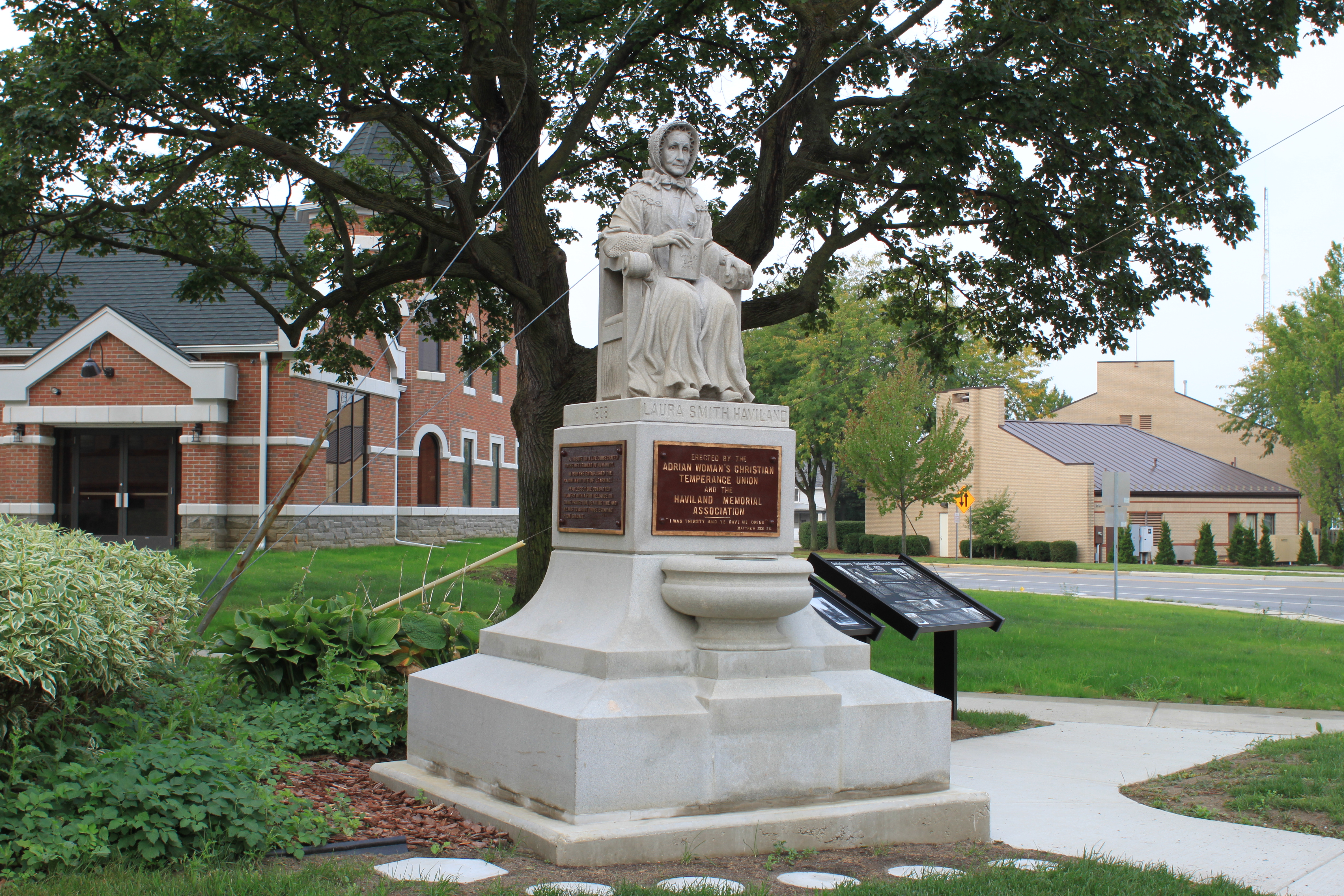
Begin with Laura Smith Haviland.
Laura Smith Haviland linked the struggle against slavery with the work of education. The Michigan Women’s Hall of Fame describes her organizing with Elizabeth Margaret Chandler in the Logan Female Anti-Slavery Society, aiding the Underground Railroad, and founding the Raisin Institute with her husband Charles. The school admitted Black students at a time when educational access was sharply restricted.
Her story reaches beyond a single monument. Historian Tiya Miles identifies Haviland’s 1890s diary at the Lenawee County Historical Museum as a record of friendship with Sojourner Truth and support for women’s suffrage. Read the public commemoration alongside the surviving words of the person it honors.
Sources: Michigan Women’s Hall of Fame: Laura Smith Haviland; Tiya Miles: research on Laura Smith Haviland
A theater survived by finding its audience again.
The Croswell opened in 1866. Its own history records appearances by Frederick Douglass and Susan B. Anthony alongside touring performers. A theater could be a place to encounter a political argument as well as an evening’s entertainment.
After roughly half a century as a movie house, the building faced an uncertain future in the 1960s. Local supporters bought it in 1967 and brought live theater back. Today’s productions continue that practical form of preservation: keeping the auditorium useful, gathering an audience, and giving another generation a reason to enter.
Sources: Croswell Opera House: history and mission
Look for the work behind a growing town.
Adrian’s fire department dates its organization to 1841. Its early equipment was hauled by people and later by horses. A reorganization in 1867 introduced a steam fire department with some paid staff, while volunteers continued responding. Motorized equipment arrived in 1914.
Those changes offer another way to read historic streets. Buildings depended on water, equipment, maintenance, and trained people as well as architects and owners. The city’s account makes that daily civic work visible. It also gives a useful reminder that impressive façades were only one part of the systems that kept a community functioning.
Sources: City of Adrian: fire department history
A former library became a place to investigate.
The Lenawee Historical Society moved its museum into the former Adrian Library at 110 East Church Street in 1979; the renovated museum opened there in December 1980. A building once used for public reading gained another educational purpose.
The society’s holdings include city directories, business ledgers, tax records, photographs, and Sanborn maps. These can turn a walk into an investigation. Begin with a building address, look for the occupants in a directory, and compare the lot with a map. A store name or household can reveal a different story from the one suggested by a building’s present use.
Sources: Lenawee Historical Society: museum and archives
Preservation is still a local practice.
Adrian’s Historic District Commission reviews exterior renovation plans for buildings in the local historic district. Its published resources include rehabilitation standards and design guidance. The continuing work of caring for these streets is therefore part of the city’s present life.
On a walk, compare cornices, entrances, window openings, and the scale of neighboring buildings. Treat the houses and businesses as occupied places. Public sidewalks offer plenty to study; a historic designation does not by itself provide access to an interior.
Places and people
Three places to begin.
Lenawee County Historical Museum
Begin at 110 East Church Street for local collections and the nearby Haviland monument. Arrange detailed archival research ahead of time.
Croswell Opera House
Check the performance calendar at 129 East Maumee Street. Seeing a production is a direct way to experience the building’s continuing purpose.
Historic streets and local records
Pair a downtown walk with the museum’s directories and maps. Use the city’s preservation resources when researching a particular property.
Plan your visit.
The museum currently lists Friday and Saturday hours, 10 a.m.–2 p.m. Theater access follows its event and box-office schedules. Check directly before traveling, especially for research appointments, accessible entry, or a group visit. Visitor information checked October 7, 2026.

