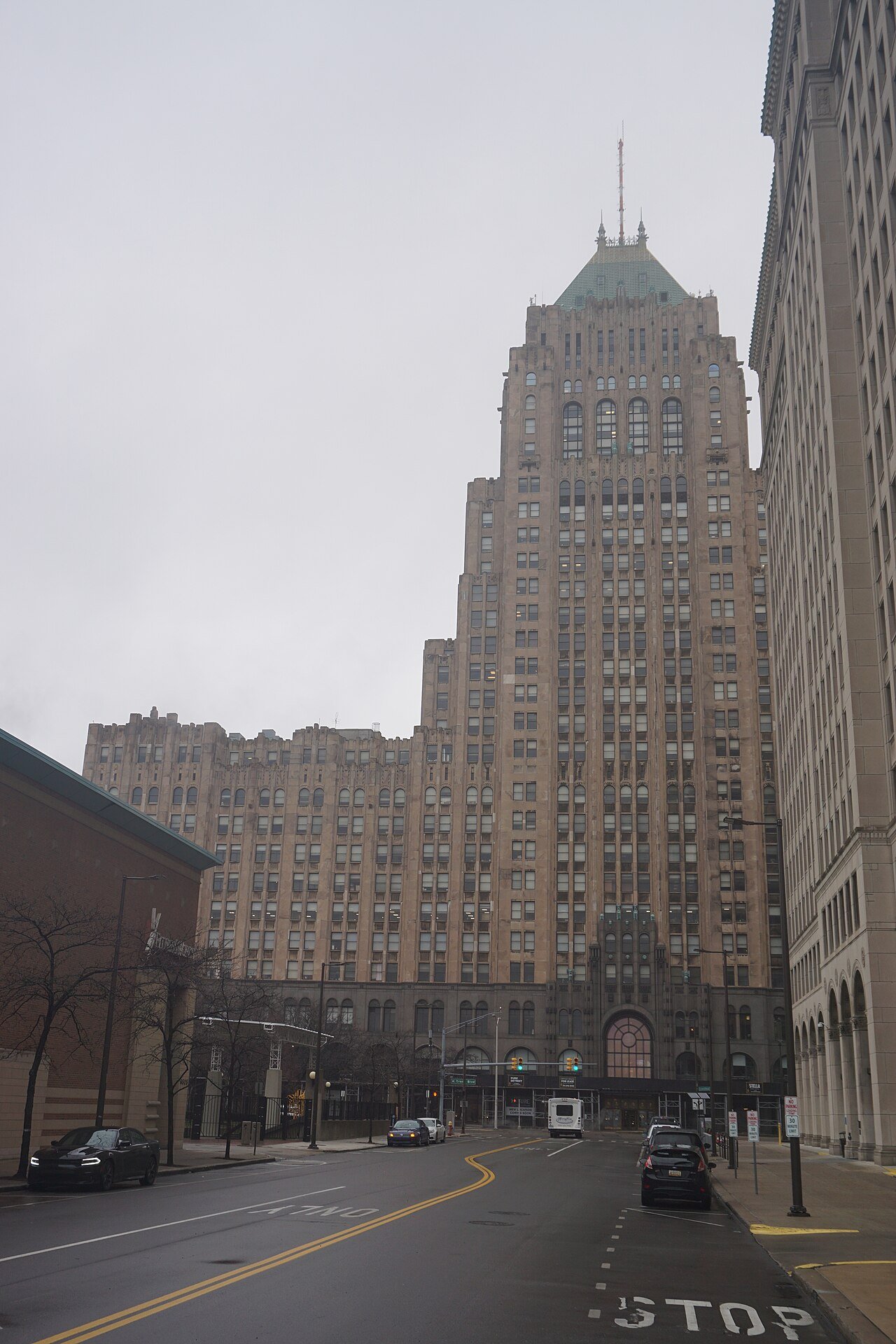
The Fisher Building is one of those places that makes Detroit feel larger than life.

Watch the companion film
This article pairs with the History Loves Company video on the Fisher brothers, Albert Kahn, New Center, and the bigger building plan that never fully happened.
It is not just tall. It is theatrical. Marble, mosaics, bronze, painted ceilings, commerce, theater, and automobile money all rise together into one of the city's most recognizable landmarks.
Historic Detroit calls it "Detroit's largest art object," a phrase that fits because the building was never meant to be ordinary office space. It was built by the Fisher brothers of Fisher Body fame, the family behind one of the great fortunes of Detroit's automobile age.
A building born from auto wealth
The building opened in 1928 at Second Avenue and West Grand Boulevard in New Center. Designed by Albert Kahn, it was meant to be a commercial palace, a place where offices, shops, theater, and architectural spectacle could exist under one roof.
The location matters. The Fisher Building was not downtown. It rose in New Center, near the General Motors Building, in a moment when Detroit's growth was pushing north along Woodward. The Fishers were not only building a headquarters. They were helping define a second center of gravity for the city.
The bigger vision
The Fisher Building was part of a Detroit that believed the future would keep expanding, that industry would keep producing wealth, that architecture could express confidence, and that business could dress itself in beauty.
That is the larger story hiding inside the building's glamour. The Fisher is not only a masterpiece of design. It is a statement about what Detroit thought it was becoming.
Why it still matters
Today, the building has become a preservation story too. Axios reported that Michigan State University became majority owner after a $21 million investment, with the Fisher described again as a historic skyscraper known as "Detroit's largest art object." A landmark like the Fisher does not survive on admiration alone. It survives through maintenance, investment, reuse, and people who still believe it belongs in the city's future.
What to notice
- The Fisher Building connects auto wealth to architecture.
- It shows New Center's importance beyond downtown.
- The interior was meant to impress ordinary visitors, not just executives.
- Its current ownership and preservation future matter because beauty still needs stewardship.
Fisher Building Detroit FAQ
Who built the Fisher Building in Detroit?
The Fisher Building was built by the Fisher brothers, whose Fisher Body fortune came from Detroit's automobile industry. The building was designed by Albert Kahn and opened in New Center in 1928.
Why is the Fisher Building important to Detroit history?
The Fisher Building connects Detroit auto wealth, Art Deco architecture, theater history, and the rise of New Center. It shows how Detroit's industrial money shaped not only factories, but civic landmarks and public spaces.
Was the Fisher Building supposed to be bigger?
Yes. The building that survives today was part of a larger Fisher brothers vision for New Center. The Great Depression changed what could be completed, which is why the existing tower feels like one piece of a larger unrealized plan.
Related Detroit history
- Detroit and Pontiac Masonic Temples: Mystery, Masonry and Memory
- From Comerica Park to Fifth Third Park: Detroit Tigers Ballpark History
- They Lied To Us About Detroit: Episode Guide
Sources and further reading
- Historic Detroit: Fisher Building
- Axios Detroit: Michigan State University buys Detroit's iconic Fisher Building
- NPS NPGallery: Fisher Building record
Keep following the story
Watch more Detroit and Michigan history films with History Loves Company on YouTube, and join Stories We Keep for the Sunday history email.