Few buildings invite curiosity like a Masonic temple.

Watch the companion film
Go from the Detroit Masonic Temple exterior to the Pontiac Masonic Lodge interior in the full HLC video.
Part of that comes from the architecture. Part comes from the symbolism. Part comes from the fact that people have spent generations wondering what happened behind the doors.
Detroit's giant of the story
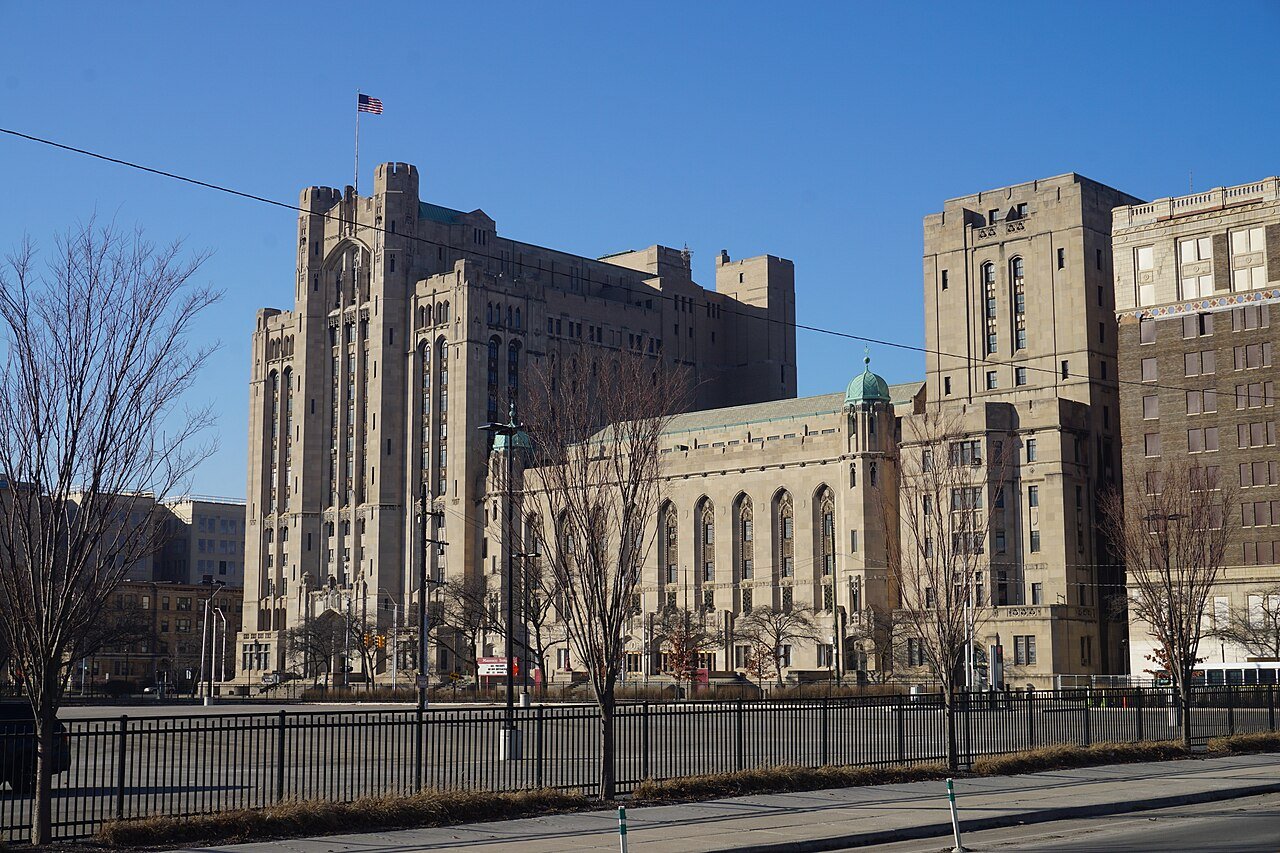
Detroit's Masonic Temple is the giant of the story. The Detroit Historical Society describes it as the largest Masonic Temple in the world, encompassing more than 12 million cubic feet and housing 1,037 rooms. The building includes cathedrals, chapels, dining rooms, offices, ballrooms, a library, a drill hall, and two auditoriums.
The temple opened in 1926 and was designed by George D. Mason's firm to serve Detroit's Masonic fraternity and the city as a civic and cultural venue. Its auditorium became one of Detroit's major stages, hosting ceremonies, graduations, concerts, theater, and major public events.
Pontiac brings the story closer
The Pontiac Masonic Temple gives the story a different scale. It is less monumental than Detroit's, but more intimate, more walkable, and more connected to the everyday civic life of a smaller industrial city.
That contrast matters. Detroit's temple shows what Masonry looked like when a booming metropolis built for grandeur. Pontiac's temple shows how fraternal life was woven into local downtowns, business networks, ceremonies, friendships, and community identity.
Respect the mystery, keep the facts
The mystery is part of the appeal, but the history is better than the rumor. Detroit Historical Society has written directly about the haunted stories surrounding the Detroit Masonic Temple and notes that the famous tale about architect George Mason dying by suicide after financial ruin is not true. Mason died in 1948 at age 91.
That is the HLC angle: respect the mystery, but do not let rumor erase the real people, architecture, craft, and community behind these buildings.
What to notice
- Detroit's temple is monumental and theatrical.
- Pontiac's temple brings the story to a local downtown scale.
- Masonic buildings were civic spaces, not only private clubhouses.
- The symbols draw people in, but the built history deserves equal attention.
Detroit Masonic Temple FAQ
How many rooms are in Detroit's Masonic Temple?
Detroit's Masonic Temple is commonly described as having more than 1,000 rooms. That scale is part of why the building has become one of Detroit's most mysterious and searched historic landmarks.
Why were Masonic temples built so grand?
Masonic temples were built as fraternal, ceremonial, social, and civic spaces. Their architecture often used symbolism, scale, and craft to express permanence, ritual, and public importance.
Why connect Detroit's Masonic Temple with Pontiac's lodge?
Detroit shows the monumental version of the Masonic story, while Pontiac shows how fraternal buildings operated at a more local downtown scale. Together they help explain how these organizations shaped civic life across Southeast Michigan.
Related Detroit and Pontiac history
- Detroit's Fisher Building: The Bigger Vision
- The Rise and Fall of Metro Detroit Shopping Malls
- They Lied To Us About Detroit: Episode Guide
Sources and further reading
- Detroit Historical Society: Masonic Temple
- Detroit Historical Society: Haunted History, The Masonic Temple
- Watch the HLC Masonic video on YouTube
Keep following the story
Continue with more Detroit, Pontiac, and Michigan history films on History Loves Company YouTube, and join Stories We Keep for the weekly archive.
