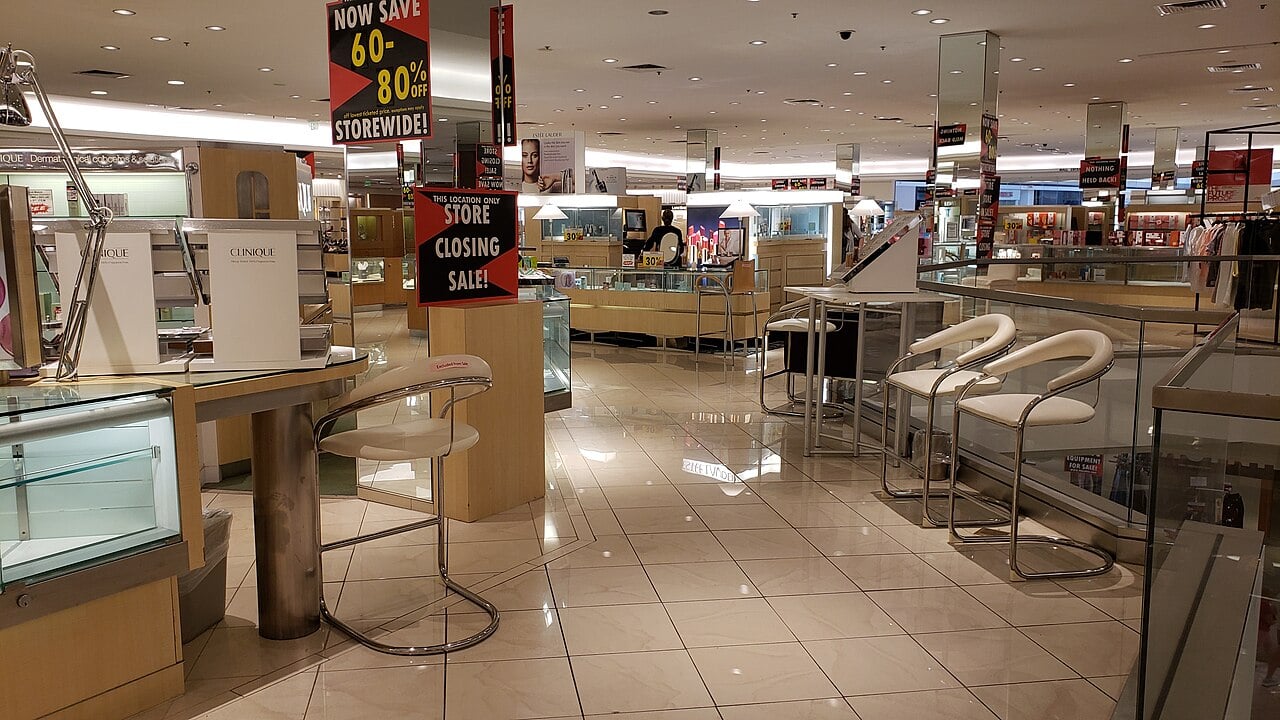
For a generation of Metro Detroiters, the mall was not just a place to shop. It was where you got dropped off, wandered for hours, bought your first CD, ate in the food court, saw the holiday decorations, and felt like the suburbs had built their own indoor downtown.

Watch the companion film
The full video connects Lakeside Mall, Summit Place, Pontiac Mall memory, and the national shift from downtown shopping streets to suburban malls.
That is why the decline of places like Lakeside Mall and Summit Place hits differently. These buildings were commercial real estate, but they were also memory machines.
From downtown streets to indoor downtowns
The story starts with a shift away from traditional downtown shopping streets. As Metro Detroit spread outward after World War II, retail followed the roads, parking lots, subdivisions, and new expectations of convenience. Department stores that once anchored city centers began anchoring enclosed malls.
Downtown was no longer the only place where a family could spend an afternoon.
Lakeside and the new redevelopment language
Lakeside Mall in Sterling Heights became one of the region's great suburban retail landmarks. But the very thing that made malls feel modern eventually made them vulnerable. Shopping habits changed. Online retail grew. Big department stores weakened. Younger shoppers wanted more flexible, walkable, mixed-use places instead of sealed indoor corridors surrounded by asphalt.
Sterling Heights now describes the Lakeside redevelopment as a billion-dollar transformation into Lakeside City Center, with demolition leading toward residences, parks, office space, retail, dining, a hotel, public spaces, and trails. The city's official project page says approximately 30 acres are planned for public space and infrastructure.
Summit Place and Pontiac Mall memory
Pontiac and Waterford lived through a similar emotional arc with Pontiac Mall, later Summit Place Mall. For people who grew up nearby, it was part shopping center, part meeting place, part local mythology.
The stories people still tell, including the famous elephant memory attached to the mall era, show how these places became more than their leases and anchor tenants. Until that story is fully sourced, treat it as local memory, but do not dismiss it. Local memory is often where the next archive begins.
Why it matters now
What replaced the mall era is still being decided. Some mall sites will become housing. Some will become offices or medical space. Some will become town centers. Some will sit empty long enough to become ruins in plain sight.
The larger Detroit story is this: we spent decades draining energy from downtowns into private indoor streets. Now we are trying to recreate pieces of downtown life on top of the mall sites that helped replace it.
What to notice
- The old mall was designed around the automobile.
- The new redevelopment language is about walkability, housing, trails, and public space.
- Nostalgia is strongest when a place was part of ordinary life.
- The story is not only retail decline. It is about how Metro Detroit moved, shopped, gathered, and remembered.
Metro Detroit Mall History FAQ
What happened to Lakeside Mall?
Lakeside Mall in Sterling Heights is being replaced by a much larger redevelopment vision known as Lakeside City Center, shifting the site from an enclosed mall model toward housing, public space, retail, dining, offices, and trails.
Was Summit Place Mall the same as Pontiac Mall?
Yes. The mall many people remember as Summit Place began as Pontiac Mall. That name change is part of why local memories often use both names when talking about the same retail era.
Why did malls replace downtown shopping?
Metro Detroit's mall era followed suburban growth, highway access, parking demand, department-store movement, and changing ideas about convenience. Malls became indoor downtowns for a generation, but the model weakened as shopping habits and development priorities changed.
Related Detroit history
- Why America Really Built the Suburbs
- What Really Killed America's Streetcars? The Detroit Story
- They Lied To Us About Detroit: Episode Guide
Sources and further reading
Keep following the story
Continue through HLC's Detroit and Pontiac archive, and send your own mall memories or photographs through the share your story page.
