STORIES WE KEEP · SEPTEMBER 19, 2026
SS Columbia: The Boblo Boat Connecting Detroit and Buffalo
A Michigan-built steamboat carries memories of summer excursions, a fight for civil rights, and a preservation story that crossed the Great Lakes.
By Christopher Hubel | September 19, 2026

A boat can leave a city without leaving its memory.
The SS Columbia belongs to Detroit's Boblo story, but following the vessel takes us beyond Michigan. It also takes us beyond nostalgia, into questions about who could board, what deserves to be preserved, and how a place keeps a connection to an object that has moved away.
Built in Wyandotte in 1902, the Columbia carried passengers between Detroit and Boblo Island and later traveled to Buffalo as part of a preservation effort. Those chapters form one continuous history. Vessel history and references.
The journey was part of the outing
Columbia and her later running mate, the SS Ste. Claire, carried generations of passengers down the Detroit River to Bois Blanc Island in Ontario, familiar to amusement-park visitors as Boblo. The summer of 1991 was the boats' last season in that service; the park closed in 1993. Source: Columbia's historical overview.
That geography is worth pausing over. A trip associated so closely with Detroit crossed an international boundary. The park was in Canada, while the departure became part of Michigan family memory.
For anyone researching an old photograph, the boat itself is an important clue. Was it Columbia or Ste. Claire? Was the picture taken on the outbound trip, at the dock, or on the return? Details that feel ordinary to one generation can become difficult to recover in the next.
The Columbia also carries Sarah Elizabeth Ray's story
In 1945, Sarah Elizabeth Ray boarded Columbia for an outing with fellow graduates. She was forced to leave because she was Black. The National Trust for Historic Preservation identifies the vessel and incident.
Ray sought help from the NAACP. The resulting case challenged the Bob-Lo Excursion Company's discrimination, and in 1948 the U.S. Supreme Court ruled against the company. The Bentley Historical Library preserves material connected to Ray and explains the case's place in her larger life of activism. Read the Bentley's account of Sarah Elizabeth Ray.
This history belongs beside the photographs of happy passengers. An excursion could represent pleasure and belonging to one person while exposing exclusion to another.
Preserving the boat's story means making room for both experiences, and remembering Ray by name. Her determination changed what the company could do to future passengers.
How the preservation story reached Buffalo
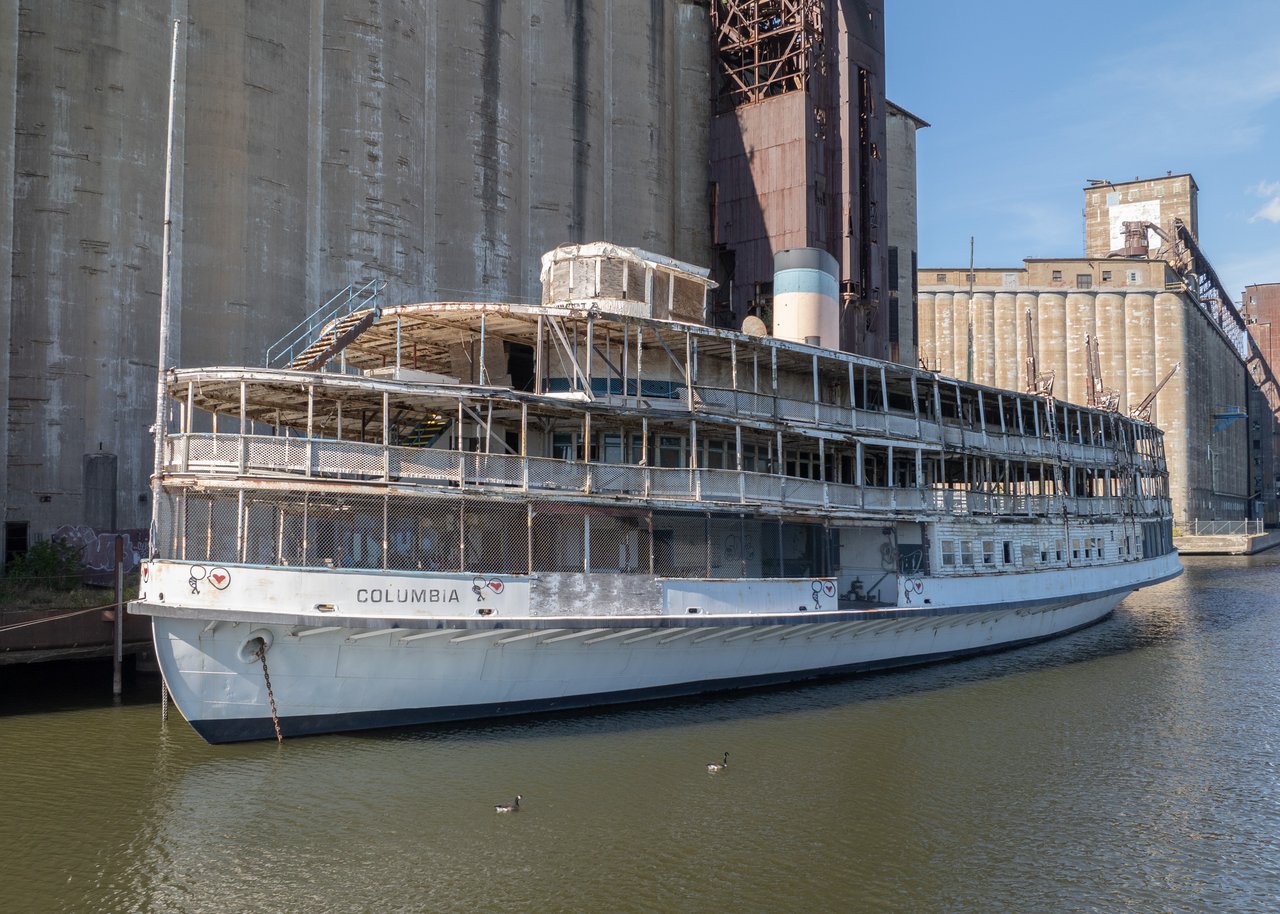
After passenger service ended, Columbia's future became a preservation question. A New York nonprofit acquired the vessel in 2006 with plans for eventual Hudson River excursions. Columbia was towed to Toledo for dry-dock work in 2014 and moved to Buffalo in September 2015. Source: the vessel's preservation chronology.
The move gave a Detroit story another geographic chapter. It did not turn the old Boblo connections into something less real. A vessel's history travels with its structure, its records, and the people who remember it.

Watch: the Boblo story through the Ste. Claire
Columbia and Ste. Claire have separate preservation histories. For a closer look at Columbia's running mate, watch this History Loves Company visit aboard the Ste. Claire.
Watch I Boarded the Boblo Boat on Its FIRST Day Open to the Public.
What does it mean to save a boat?
The word “saved” can conceal a long series of different tasks. Keeping a vessel afloat, repairing it, documenting its history, and preparing it for a future use are related responsibilities. None is a substitute for the others.
The same is true of public memory. Recognizing a boat in a photograph is one kind of connection. Knowing who built it, worked aboard it, rode it, or challenged exclusion from it adds depth to that recognition.
A useful preservation conversation begins by asking what survives, what evidence has been kept, and what the next generation should be able to learn from it.
Another river story: Zug Island
The river also carried industrial traffic and connected workplaces across the region. Our Zug Island film offers a different view of the same wider waterfront history, complementing the excursion story told here.
Watch Zug Island: Detroit's Forbidden Industrial Island.
Keep the names with the memories
If your family has Boblo photographs, ask someone who remembers them to identify the people and the boat. Write the approximate year beside the image. Preserve the original and make a digital copy. If two people remember a detail differently, keep both accounts rather than forcing certainty.
Those small acts help turn nostalgia into a record another person can use.
Share your Boblo memory with History Loves Company, and explore more Detroit history. For a broader HLC account of the city, discover Christopher Hubel's book, They Lied to Us About Detroit.
Connect with our work through The Foundry in downtown Pontiac and subscribe to Stories We Keep. We begin in Michigan and follow the connections outward, one carefully told story at a time.
The boat traveled. The responsibility to remember travels with it.
Sources and further reading
- SS Columbia: history and bibliography — construction, service, and preservation chronology.
- Bentley Historical Library: The Unsinkable Sarah E. Ray — civil rights history and archival preservation.
- National Trust for Historic Preservation: Columbia and Sarah Elizabeth Ray — the vessel's connection to the 1945 incident.