STORIES WE KEEP · SEPTEMBER 18, 2026
Zug Island: The Man-Made Island Behind Detroit's Industrial Story
A canal, a steelmaking site, and a destination the Edmund Fitzgerald never reached connect this Michigan island to the wider Great Lakes.
By Christopher Hubel | September 18, 2026

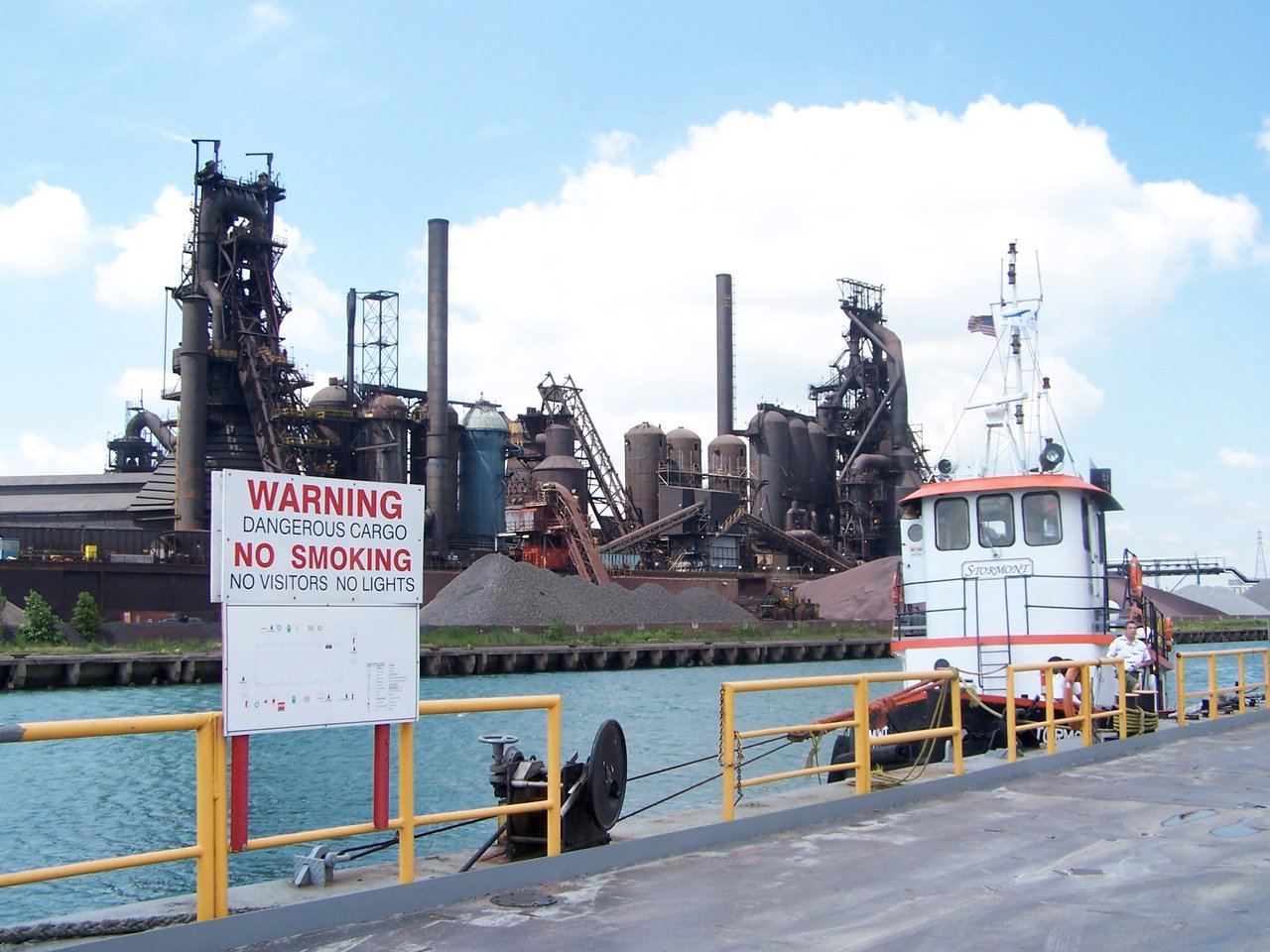
A photograph of Zug Island can make it seem separate from everything around it. Water in front. Industrial structures behind. A place seen from a distance.
Its history points in the opposite direction. To understand this island, follow its connections: the canal that changed its shape, the work performed there, and the vessels that carried materials across the Great Lakes.
Zug Island is an industrial island in River Rouge, Michigan, beside Detroit's southern border. It was once connected to the mainland. Its separation by water was the result of a nineteenth-century engineering project. Source: Detroit Historical Society.
Before the island, there was a peninsula
The Detroit Historical Society traces the name to furniture businessman Samuel Zug. In 1888, he permitted the River Rouge Improvement Company to cut a canal through his property. The new waterway turned the land into an island. In 1891, Zug sold it to George Brady and Charles Noble. Read the Society's history.
That physical change is a useful starting point. An island can look permanent on a map, as though the shoreline has always been that way. Here, the map preserves a decision about how land and water could serve development.
The name records one owner's role in that transformation. It should not be mistaken for the beginning of the landscape's existence.
Why the location mattered
Zug Island sits where the Rouge and Detroit rivers meet. Blast-furnace development began in 1902, making the site part of the region's iron and steel industry. Although often described through its connection to Detroit, the island became part of the incorporated city of River Rouge in 1922. Source: Detroit Historical Society.
Yesterday's Highland Park story followed work along an assembly line. This story takes us toward the larger geography of production. A finished object has a history before it reaches the factory where it is assembled. So do the materials that make it possible.
Watch: Zug Island with History Loves Company
Our film explores the island's history and its place in the region's industrial landscape.
Watch Zug Island: Detroit's Forbidden Industrial Island.
The destination the Edmund Fitzgerald never reached
One of Zug Island's connections reaches to the most widely remembered shipwreck on the Great Lakes. On its final voyage in November 1975, the Edmund Fitzgerald was carrying taconite pellets from Superior, Wisconsin, to Zug Island. Source: Michigan's Upper Peninsula Travel & Recreation Association.
The Great Lakes Shipwreck Historical Society records the cargo as 26,116 long tons. The ship sank on Lake Superior on November 10, taking all 29 crew members with it. Read the Society's account of the final voyage.
Remembering the destination changes how we see the route. The voyage was part of an industrial working system linking ports, ships, and mills. Every cargo depended on people doing their jobs across that distance.
The crew's lives belong at the center of the remembrance. The connection to Zug Island helps explain the work that brought them onto the lake.

The river is also a place people know as home
Industrial history can become a sequence of company names and production milestones. The people living beside the water offer another way to understand the same landscape.
In a 2025 essay for Planet Detroit, environmental researcher John Hartig described meeting an angler near Zug Island who had fished there since childhood with his father. Hartig placed that family tradition alongside the area's contamination and cleanup history. Read Hartig's account of the Rouge River Old Channel.
That perspective matters. A shoreline can be a workplace, an environmental concern, and a place of personal memory. Understanding one of those roles should make us more curious about the others.
A photograph cannot tell us the full condition of the water or the experience of the neighborhood. Those questions require evidence and people willing to share what they know.
Follow the connections, keep the places distinct
Industrial Michigan becomes easier to understand when we connect individual sites without treating them as interchangeable. Zug Island, the Ford Rouge complex, and Highland Park are different places with different histories.
For the companion story about the moving assembly line and the people who worked beside it, watch our Highland Park Ford Plant film.
Watch Inside Henry Ford's Highland Park Plant: The Factory That Changed the World.
A Michigan story with a wider reach
Stories We Keep begins close to home and expands by following real connections. Today, one island takes us to a Wisconsin port and across Lake Superior. The geography grows because the history leads there.
If your family worked on the island, aboard a freighter, or in a nearby industrial plant, the details matter. A job title, a dated photograph, or a remembered journey can help connect a large industrial story to a particular life. Share your story with History Loves Company.
Continue exploring our Detroit history stories and Christopher Hubel's book, They Lied to Us About Detroit. Connect with HLC through The Foundry in downtown Pontiac, and subscribe to Stories We Keep.
Follow the river, and the story reaches farther than the shoreline.
Sources and further reading
- Detroit Historical Society: Zug Island — the canal, ownership, industrial development, and municipal location.
- Michigan's Upper Peninsula: Edmund Fitzgerald — the final voyage's origin, cargo, and destination.
- Great Lakes Shipwreck Historical Society: The Fateful Journey — the voyage and loss of the ship and crew.
- John Hartig, Planet Detroit: Finding fish and family tradition near Zug Island — community memory and environmental context along the Old Channel.

.jpg)
.jpg)