HISTORY LOVES COMPANY · EXPLORE
History is closer than you think.
Take a walk through a familiar neighborhood. Find the story behind your house. Compare an old photograph with the street in front of you. Start anywhere—and see where the story takes you.
Story map · Self-guided tours · Research your home · Then & now · Weekend planner · Research directory
Find a story on the map
The HLC History Atlas brings together 18 story locations in Detroit and Pontiac. Search a place or topic, filter by story type, and choose a marker to find the people, places, sources, and films behind it. The same stories are available in a list if the map doesn’t load.
Open the interactive History Atlas → | Suggest a place or share a memory →
Map markers identify approximate story areas. Check access before visiting and respect private property.
Take history with you
These self-guided routes are free and flexible. Start at any stop, take your time, and look for the traces of the people who lived, worked, and gathered here. Building interiors may have different hours or access rules.
01 · Downtown Detroit: The changing heart of the city
Walk · Approximately 60–90 minutes, plus stops. Start at Campus Martius, look toward the former Hudson’s site on Woodward, continue to Grand Circus Park, and return through Capitol Park. Notice the mix of buildings, open spaces, and sites where something once stood.
- Campus Martius: Compare the public square today with the Library of Congress photograph from 1900–1910.
- Former Hudson’s site, Woodward and Gratiot: Think about how a department store could make downtown a destination. Read the Hudson’s story.
- Grand Circus Park: Look around the park at the theaters and tall buildings that frame it. Explore its history.
- Capitol Park: Finish by considering the layers of civic and commercial history around the square. Explore historic districts.
Open the route in Google Maps →
02 · Corktown: Railroads and a neighborhood
Walk · Approximately 45–75 minutes. Begin at Michigan Central Station, walk along Michigan Avenue, and take in the surrounding streets. Look at the relationship between homes, businesses, rail infrastructure, and later development. Streets are public; individual buildings and homes may not be.
- Michigan Central Station: Look at the station from the public sidewalk and compare it with an archival view from 1993. Verify public access before entering.
- Michigan Avenue: Follow the storefronts through Corktown and consider how a neighborhood changes while remaining a community.
- Bagley and nearby streets: Explore the history of 2150 Bagley and the larger neighborhood.
Explore Corktown in the atlas →
03 · Downtown Pontiac: Storefronts and new chapters
Walk · Approximately 45–60 minutes. Start near the Riker Building at 35 W Huron Street, explore nearby Saginaw and Huron streets, and look above the storefronts for older details. Finish at The Foundry when open. Downtown construction and parking can change; check access before leaving.
- Riker Building: Look for the relationship between the ground floor and the offices above. Explore the building.
- Saginaw Street: Look for changes in materials, signs, and upper-floor windows. Imagine the different businesses that have occupied the same addresses.
- The Foundry: Explore local makers, vintage finds, and history at 35 W Huron Street, Suite 101. Plan your visit.
Continue into Pontiac history →
Research your old house
Start with one address and a question. You don’t need to know the architect or the exact construction date to begin. Build a timeline from records, photographs, and what the building itself can tell you.
- Write down what you know. Record the current and any previous address, parcel number, neighborhood, and approximate dates. Photograph existing details.
- Trace the property. Ask the local assessor and county register of deeds how to locate parcel records, deeds, and historic ownership information. Keep people and ownership claims tied to sources.
- Compare maps. Fire insurance maps and historic atlases may show a footprint or street-name change. Map dates and coverage vary. Start with Michigan land research.
- Find the people. Search city directories, census records, newspapers, and local collections for residents and businesses. Addresses and names can change.
- Check designation records. A historic district nomination may provide context; a listing alone does not establish every claim about a particular house. Ask the local commission about applicable review before work.
- Keep your evidence. Note the repository, item title, date, page or image number, URL, and date consulted. Separate documented facts from family stories and open questions.
Open the complete research guide → | Put your home’s story on film →
Printable house-history worksheet
Print this page or copy these prompts into a notebook:
Property address and earlier addresses: ______________________________
Parcel number and municipality: ____________________________________
Question I want to answer: __________________________________________
Earliest confirmed date and source: __________________________________
Names, dates, and records to follow: __________________________________
Map or photograph and its date: _____________________________________
What is documented? ______________________________________________
What still needs verification? ________________________________________
Then & now: See the layers
Start with a dated archival image, then visit the location or use a current street-level map. A historic photo and a current view may be taken from different angles; use landmarks to orient yourself before comparing. Follow the collection links for full credits, dates, and rights information.
Hudson’s · Detroit

J.L. Hudson Company store, April 16, 1929. Detroit Public Library, Burton Historical Collection, via Wikimedia Commons. Public domain in the United States.
Then: The department store filled a downtown block. Now:Find the former site today. Read the Hudson’s story →
Campus Martius · Detroit
Then:Campus Martius and City Hall, approximately 1900–1910, Detroit Publishing Company collection, Library of Congress. Now:Find Campus Martius today. Look for what remains of the street pattern and what has changed around the square.
Michigan Central Station · Detroit
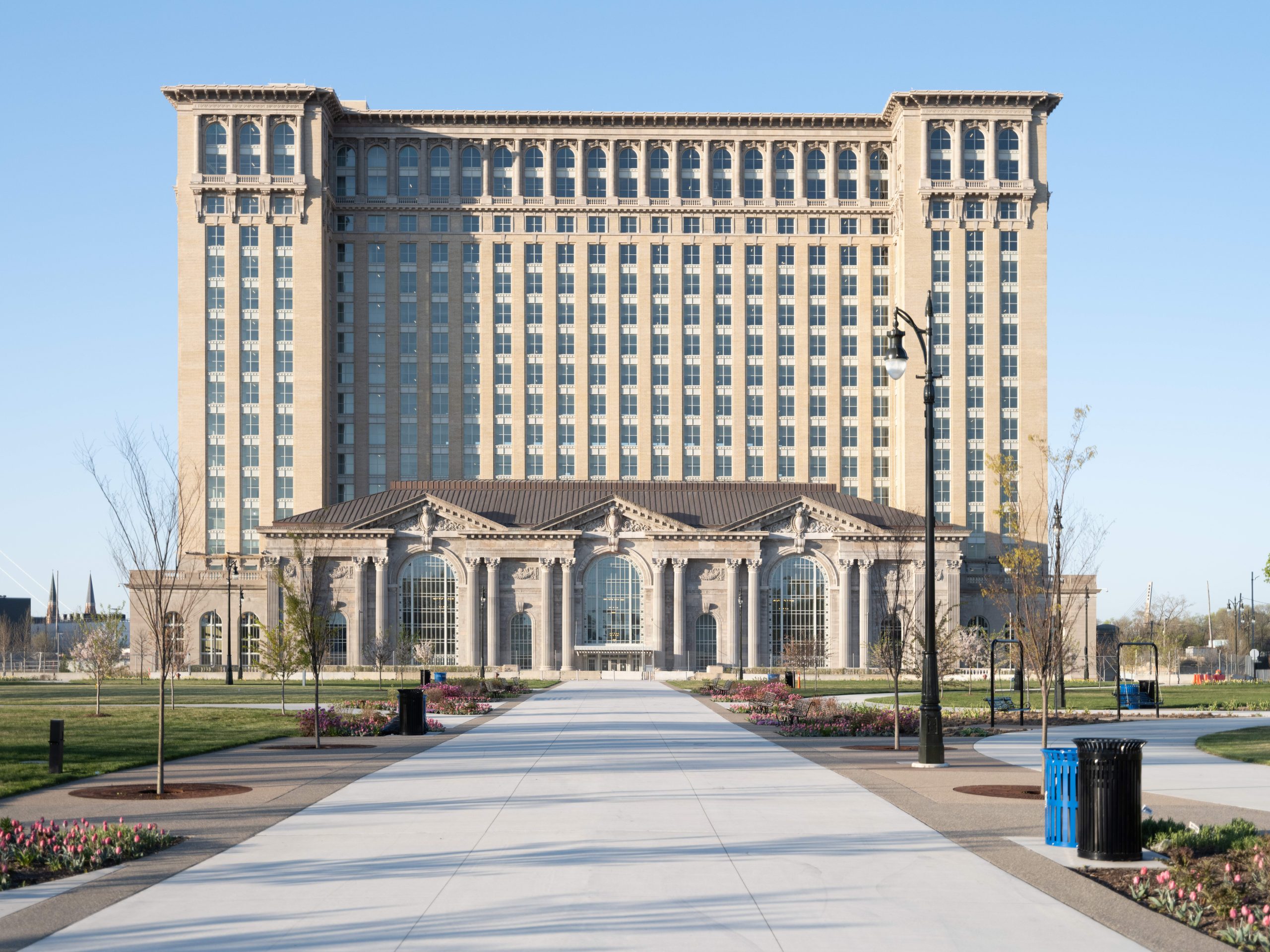
Michigan Central Station · modern view from the HLC site collection.
Then:The former station in 1993, Library of Congress. Now:Find the station today. Compare the building’s condition and surroundings, while recognizing that photographs capture just one moment in its longer story.
Griswold Street · Detroit
Then:Griswold Street looking south, approximately 1900–1910, Detroit Publishing Company collection, Library of Congress. Now:Explore Griswold Street today. Look for changes in building height, transportation, signs, and the use of the street.
Have a photograph or memory to add? Share it with the community archive → Please submit only material you own or have permission to share; HLC reviews contributions before publication.
Plan a history weekend
Choose a starting point, then make the day your own. Confirm hours, admission, parking, and accessibility with each destination; availability can change.
Detroit · Architecture and city stories
Morning: Walk the downtown route above. Afternoon: Visit the Detroit Historical Museum if open, or explore the Cultural Center and its public streets. Keep exploring:Detroit history and films.
Pontiac · Downtown and the Riker Building
Start: Follow the Pontiac storefront walk. Continue: Visit The Foundry when open and browse the local makers and vintage collections. Keep exploring:Pontiac stories and current visitor information.
Belle Isle · The river and a lost zoo
Start: Explore Belle Isle’s public spaces and river views. Before you go: Check current park access and any vehicle requirements. Watch and read:What happened to the Belle Isle Zoo?
Want a surprise destination? Explore the Detroit Adventure Bucket List at The Foundry →
Local history research directory
Each collection is a starting point. Search terms, available records, access rules, and image rights differ by institution; check each item before reuse.
Looking for a local address? Your city library, historical society, assessor, and county register of deeds may have records not found online. Ask what is available, what it costs, and whether an appointment is needed.
Help keep the story going.
Have a correction, photograph, family memory, or place we should explore? Share it with the HLC community archive. Want more history every week? Join Stories We Keep.
History Loves Company · Resources reviewed November 2026. Routes and research links are starting points, not guarantees of access or complete historical records.





