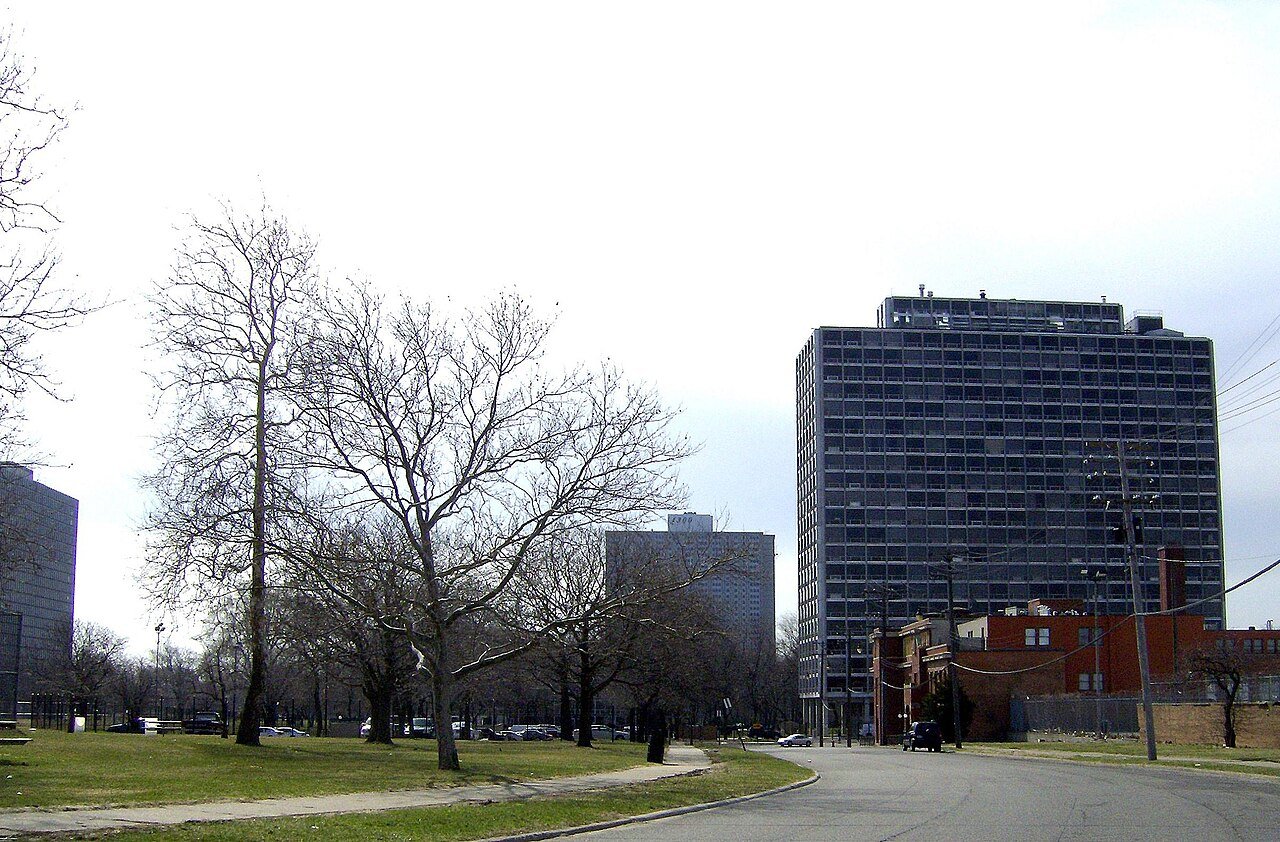
Start here: Black Bottom and Paradise Valley were not empty land. They were neighborhoods, businesses, churches, clubs, homes, rooms for rent, migration stories, music, food, work, worship, and memory.

When Detroit tells the story too quickly, these places become a before-and-after photo: neighborhood gone, freeway built, Lafayette Park rising, downtown redeveloping. But the real story is human. People lived there. People built there. People were displaced from there.
Black Bottom and Paradise Valley were not empty land
This HLC page is part of the Detroit History Topic Library and the They Lied To Us About Detroit archive. It is designed as a starting point for articles, videos, walking routes, and source-based research.
What was Black Bottom?
Black Bottom was a near-east-side Detroit neighborhood that became one of the city's most important Black communities during the twentieth century. It was not originally only Black, and its name predates the Black community most people associate with it today. Over time, because of migration, segregation, housing discrimination, and restricted opportunity elsewhere, it became home to many Black Detroiters.
People often describe Black Bottom through what replaced it. That is understandable, but dangerous. The neighborhood should not be remembered only as land cleared for redevelopment. It should be remembered as a place where people lived full lives under difficult conditions created by racism, disinvestment, overcrowding, and exclusion from other housing markets.
What was Paradise Valley?
Paradise Valley was closely connected to Black Bottom and became known for Black business, nightlife, music, clubs, restaurants, hotels, and entertainment. If Black Bottom is often remembered as the residential neighborhood, Paradise Valley is often remembered as the cultural and commercial heart.
This is where Detroit's music history, Green Book history, Black entrepreneurship, and downtown geography meet. The story belongs with jazz, nightlife, migration, segregation, and the complicated ways Black communities built institutions under pressure.
Hastings Street and cultural memory
Hastings Street is one of the key names in this story. It is remembered through businesses, clubs, gathering places, churches, and everyday life. For many people, Black Bottom and Paradise Valley are not abstract planning terms. They are family stories.
That matters because urban renewal language often makes neighborhoods sound like problems to be solved. HLC should push the other way: whose homes, whose businesses, whose churches, whose memories, and whose wealth were moved or erased?
Urban renewal, Lafayette Park, and I-375
Black Bottom was cleared through redevelopment and urban renewal, and Paradise Valley was heavily damaged by downtown redevelopment and freeway construction. The building of I-375 is now widely tied to the destruction of these historically significant Black communities.
Today, as I-375 is being reconsidered and transformed, the question is not only traffic design. It is memory, repair, land, wealth, and whether a city can honestly face what was taken.
What to look for today
- The I-375 corridor and the land around it
- Lafayette Park and the urban renewal landscape
- Markers, exhibits, and archives connected to Black Bottom and Paradise Valley
- Hastings Street history and former entertainment districts
- Family photos, oral histories, maps, directories, and Sanborn fire insurance maps
Research paths and sources
- Black Bottom Archives
- University of Michigan Detroit Under Fire: Urban Renewal, Black Bottom, Paradise Valley
- HLC guide to public-domain Detroit history photos
Why this belongs at the center of Detroit history
Black Bottom and Paradise Valley connect almost every major Detroit question: migration, housing discrimination, Black business, music, highways, downtown redevelopment, urban renewal, real estate, memory, and the politics of who gets to decide what counts as progress.
A strong HLC video or walking route can help viewers stand near the places and ask better questions. What was here? Who lived here? What was promised? What was destroyed? What do we owe the story now?
Black Bottom and Paradise Valley FAQ
Were Black Bottom and Paradise Valley the same place?
They were closely connected but are usually discussed with different emphasis. Black Bottom is often remembered as the residential neighborhood, while Paradise Valley is often remembered for Black business, nightlife, music, and entertainment.
What happened to Black Bottom?
Much of Black Bottom was demolished through urban renewal and redevelopment. The story is tied to Lafayette Park, downtown redevelopment, and freeway construction, including the I-375 corridor.
Why does this history matter now?
Because Detroit still lives with the consequences of displacement, erased wealth, disrupted communities, and simplified comeback stories. Understanding Black Bottom and Paradise Valley changes how people see downtown Detroit.
Keep exploring Detroit history
Watch with this article
Keep going with History Loves Company on YouTube and the They Lied To Us About Detroit episode archive.
Keep Exploring Detroit History
Black Bottom and Paradise Valley are essential to understanding Detroit music, business, migration, freeways, redevelopment, and lost neighborhood memory.
Detroit transportation
Streetcars, freeways, and movement patterns help explain what happened to neighborhoods.
Buildings we lost
Connect the neighborhood story to demolished landmarks and public memory.
Underground Railroad
Move through another central chapter of Detroit Black history.
Open the full Detroit History Topic Library | Watch the episode archive | Watch HLC on YouTube