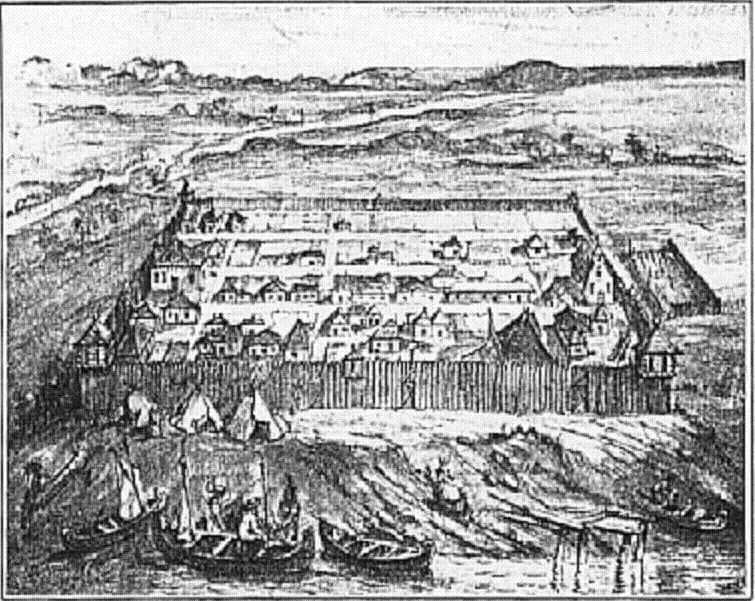
Start here: Indigenous Detroit is not a prologue to the French founding story. It is the deeper ground under the city: the river, the Great Lakes, Native nations, trade routes, seasonal movement, language, memory, land loss, and survival.

This HLC guide is an introduction, not a replacement for Native-led scholarship or Tribal knowledge. The goal is to help Detroit history readers begin in the right place: before the fort, before the ribbon farms, before the auto plants, and before the city learned to tell its own story as if nothing came before 1701.
Indigenous Detroit is not a prologue
If HLC is going to tell Detroit history honestly, the first doorway cannot be Cadillac. It has to be land and water. Detroit begins as a place of movement and relationship: river, strait, lake, shoreline, village, fishing place, trade route, and crossing.
What Indigenous Detroit means
When people search for Indigenous Detroit, they are usually looking for the part of the story that gets rushed past. The Detroit River was not empty space waiting for a European map. It was part of a Great Lakes world shaped by Native peoples over generations.
The region is connected to Anishinaabe homelands and to many Native communities whose histories do not fit neatly inside modern city borders. Detroit sits at a strait between lakes, and that geography mattered. Water connected people. It carried canoes, trade, diplomacy, food, news, conflict, and ceremony.
The river before the city
Detroit's location is the story. The French name eventually pointed to the strait, but Indigenous people already understood this place through water and movement. The river connected Lake St. Clair, Lake Erie, the wider Great Lakes, and the lands around them.
- The river was a corridor, not a backdrop.
- The shoreline mattered for food, movement, gathering, and exchange.
- The Detroit region belonged to a larger Great Lakes world, not an isolated city story.
- Modern neighborhoods, roads, and property lines sit on top of older landscapes.
What changed after European arrival
French, British, and American power changed the landscape through forts, trade, war, treaties, land claims, survey lines, and settlement. Detroit's later city map cannot be separated from this process. The story of Detroit is also a story of displacement, adaptation, and survival.
That does not mean Indigenous history ended. One of the biggest mistakes in local history is treating Native people as belonging only to the distant past. Indigenous presence continues through communities, artists, educators, families, language work, cultural memory, and public history.
Topics HLC should build next
- Detroit before 1701
- Anishinaabe homelands and Great Lakes history
- The Detroit River as Indigenous geography
- Native place names and what they reveal
- Treaties and land loss in Southeast Michigan
- Indigenous Detroit today
How to explore this story respectfully
This subject deserves humility. A good HLC episode or article should avoid treating Indigenous history as decoration. It should name uncertainty when needed, distinguish between Native-led knowledge and settler records, and point readers toward Indigenous voices whenever possible.
For filming, the strongest approach is a careful landscape episode: the river, the strait, the Great Lakes, the map, and the question of what Detroit looked like before the city learned to narrate itself through forts, factories, and freeways.
Indigenous Detroit FAQ
Was Detroit inhabited before the French arrived?
Yes. The Detroit region was part of a much older Indigenous Great Lakes world before French settlement. The river and surrounding lands were already meaningful places of movement, trade, food, and relationship.
Why does Indigenous Detroit matter to the rest of the city's history?
Because land and water come before every later story. French settlement, British and American control, land sales, neighborhoods, industry, highways, and real estate all sit on top of older Indigenous geographies.
Can this become a video?
Yes. The best first video would be a Detroit River landscape episode: before the fort, before the factories, before the freeways, there was the strait and the people who knew how to live with it.
Keep exploring Detroit history
Watch with this article
Keep going with History Loves Company on YouTube and the They Lied To Us About Detroit episode archive.
Keep Exploring Detroit History
Indigenous Detroit is the foundation for the river, trade, land, place names, borders, and the city that came later.
Underground Railroad
Follow another river-and-border story in Detroit history.
Black Bottom
Continue into Detroit Black history, migration, culture, and redevelopment.
Walking tours
Use routes and place-based guides when you want to connect history to the ground.
Open the full Detroit History Topic Library | Watch the episode archive | Watch HLC on YouTube
