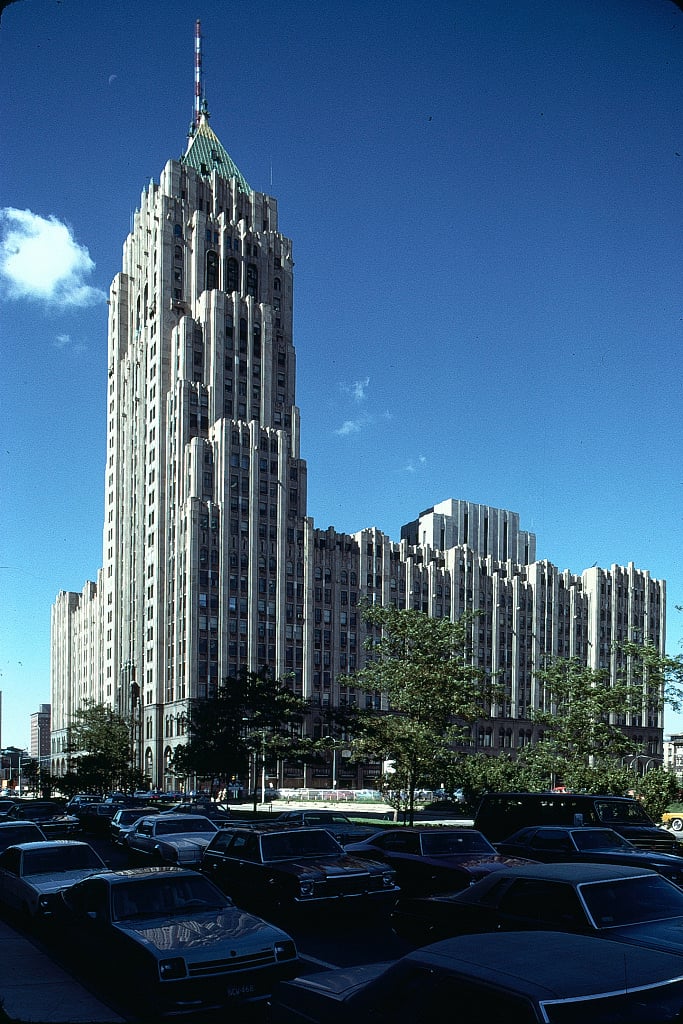
Start here: Detroit architecture is not one style. It is churches, factories, mansions, apartment courts, theaters, civic towers, worker cottages, mid-century suburbs, and buildings that tried to announce the future.
Free HLC resource: This guide is free. Support the work by watching the embedded History Loves Company video, subscribing on YouTube, sharing the page, or joining Stories We Keep.

Styles to know
- Art Deco: vertical lines, ornament, rich materials, and 1920s confidence. Think Fisher and Guardian energy.
- Beaux-Arts: symmetry, classical details, grand civic presence, and monumental entrances.
- Tudor Revival: steep roofs, half timbering, brick, stone, and storybook residential streets.
- Colonial Revival: balanced facades, columns, shutters, and references to early American architecture.
- Romanesque: heavy masonry, rounded arches, and fortress-like weight.
- Industrial: factories, power, daylight windows, rail access, and the architecture of work.
- Mid-century: cleaner lines, car-age planning, ranch houses, offices, and suburban growth.
Where to see it
Use Detroit Historic Districts, Detroit Historic Neighborhoods Guide, Self-Guided Detroit Walking Tours, and Buildings We Lost as your map.
Architecture routes
- Downtown: Guardian Building, Penobscot, Book Tower, Capitol Park, theater district.
- New Center: Fisher Building, Cadillac Place, boulevard-scale planning.
- Brush Park: mansions, survivors, infill, and preservation tension.
- Boston-Edison and Indian Village: residential wealth, craft, and street presence.
- Highland Park: factories, labor history, and industrial scale.
Architecture FAQ
What is Detroit’s most famous architecture style?
Detroit is especially known for Art Deco landmarks, auto-era industrial buildings, historic mansions, and grand early twentieth-century commercial architecture.
What neighborhoods are best for architecture lovers?
Boston-Edison, Indian Village, Brush Park, Palmer Woods, Corktown, West Village, and New Center are strong starting points.
How does architecture connect to real estate?
Style, condition, district rules, craftsmanship, and story all affect how a historic property is valued and marketed.
Explore the Detroit History Hub
This guide is part of the free History Loves Company Detroit History Resource Hub. Keep going by choosing the path that matches what you want to do next.
- Detroit History Resource Hub
- Detroit History Starter Kit
- Self-Guided Detroit Walking Tours
- Historic Things to Do in Detroit
- Public Domain Detroit History Photos
- How to Research the History of Your Detroit Home
Keep Exploring Detroit History
Architecture connects homes, skyscrapers, theaters, factories, churches, and demolished landmarks. These are the best next stops.
Buildings we lost
Understand what Detroit demolished and why those places still matter.
Historic neighborhoods
Place individual buildings inside Detroit neighborhood history.
Back to the Detroit History Resource Hub | Open the full Topic Library | Watch HLC on YouTube
