Detroit Buildings We Lost
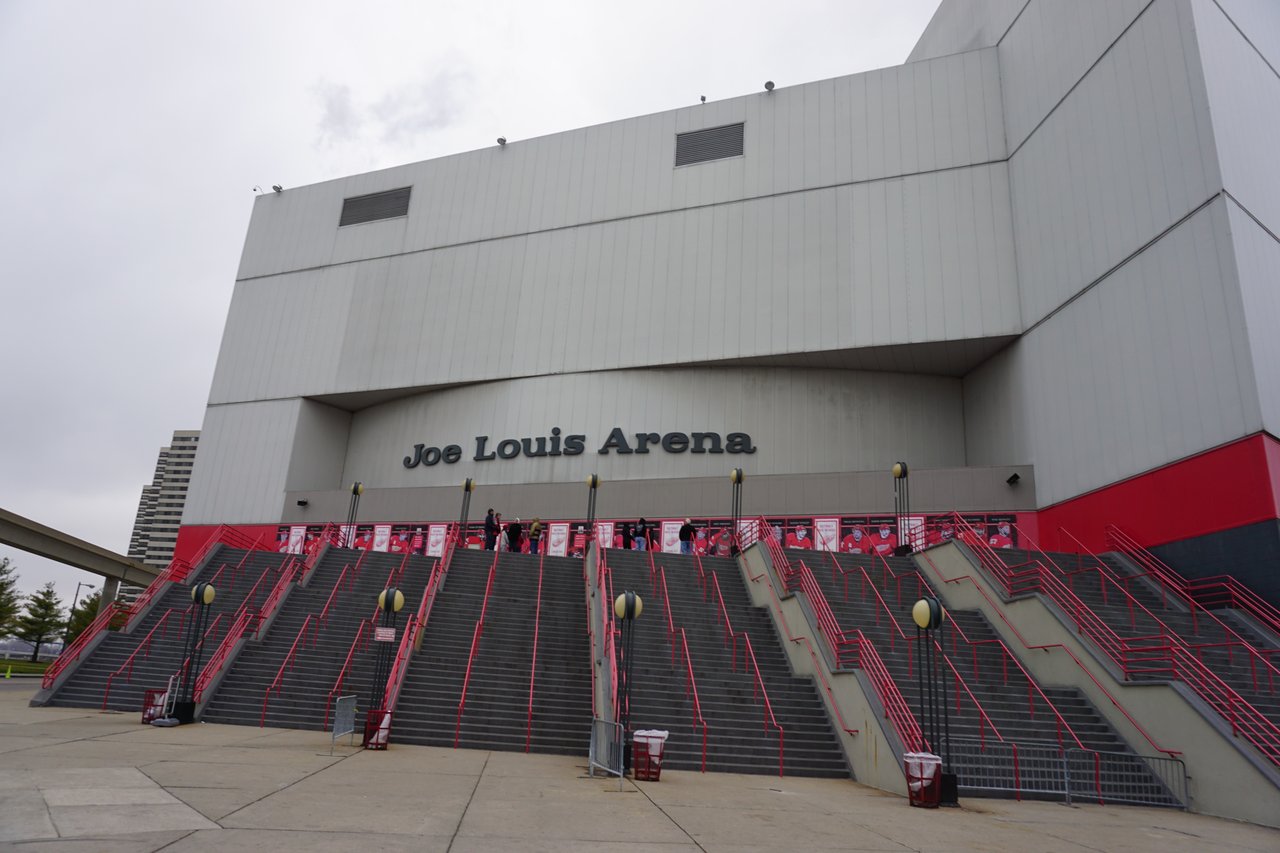
Joe Louis Arena belonged to the riverfront era of Detroit sports. For Red Wings fans, it was the place of banners, playoffs, noise, and ritual. For downtown historians, it is also a story about how the riverfront kept being remade.

Quick facts for searchers and readers
- Best search phrase: Joe Louis Arena Detroit history
- Location: Detroit riverfront near the former Cobo/Huntington Place district
- Opened: 1979
- Why it matters: Joe Louis Arena connects Red Wings memory to the changing use of Detroit's riverfront
Why Joe Louis Arena mattered
Joe Louis Arena arrived in a different Detroit than Olympia Stadium. It was tied to the riverfront, the convention district, downtown parking infrastructure, and the late-20th-century idea that major arenas should anchor larger redevelopment zones.
For hockey fans, the building's importance is emotional and immediate: Stanley Cup years, retired numbers, playoff nights, concourses, escalators, and the view of the river on the way in or out. For city history, the arena shows how Detroit repeatedly used big public buildings to reshape the downtown map.
The loss
When the Red Wings moved to Little Caesars Arena, Joe Louis Arena became another major Detroit building whose meaning changed almost overnight. It had once felt modern compared with Olympia. Then it became the old arena in the way every arena eventually does: loved by memory, expensive to keep, and surrounded by stronger redevelopment pressure.
Its demolition made the riverfront easier to reimagine, but it also erased the physical container for decades of Detroit sports memory. That tension belongs at the center of any honest lost-buildings page. A city can need new uses and still grieve the places where people gathered.
What to look for now
Walk the riverfront and think of Joe Louis Arena as part of a sequence: Cobo, Hart Plaza, the People Mover, the river walk, and newer residential development. The missing arena helps explain how Detroit has repeatedly tried to reconnect downtown to the river.
This topic also pairs well with History Loves Company riverfront footage, because the best way to understand the arena's history is to place it back into the wider downtown-riverfront landscape.
Watch with this page
Pair this article with History Loves Company on YouTube and the They Lied To Us About Detroit episode archive.
Where this fits in Detroit history
Joe Louis Arena is the riverfront sports anchor of the lost-buildings cluster. It connects Red Wings history with downtown redevelopment and gives readers a bridge between Olympia, modern arena districts, and Detroit riverfront history.
- Hudson's Department Store Detroit History - Retail, downtown memory, demolition
- Tiger Stadium Detroit History - Corktown, baseball, reuse
- Olympia Stadium Detroit History - Hockeytown before downtown arenas
- Joe Louis Arena Detroit History - Riverfront, Red Wings, redevelopment
- Detroit Lost Schools and Neighborhood Landmarks - Demolished Cooley High School and neighborhood memory
- Detroit Lost Theaters and Movie Palaces - Movie palaces, adaptive reuse, ruins
Sources and further reading
Updated September 2026. This page is part of the History Loves Company Detroit topic library, built to connect landmark stories, neighborhood memory, and Detroit history videos in one place.
Keep Exploring Detroit History
Joe Louis Arena is a recent-memory lost building: hockey, riverfront change, downtown redevelopment, and public attachment all meet here.
Detroit river and transit context
Connect the riverfront and movement patterns to downtown redevelopment.
Back to Detroit Buildings We Lost | Watch the HLC episode archive | Watch HLC on YouTube