Detroit Buildings We Lost
Detroit lost theaters are not only about ruins. They are about the years when downtown movie palaces turned an evening out into architecture, spectacle, music, light, and social status.

Quick facts for searchers and readers
- Best search phrase: Detroit lost theaters movie palaces
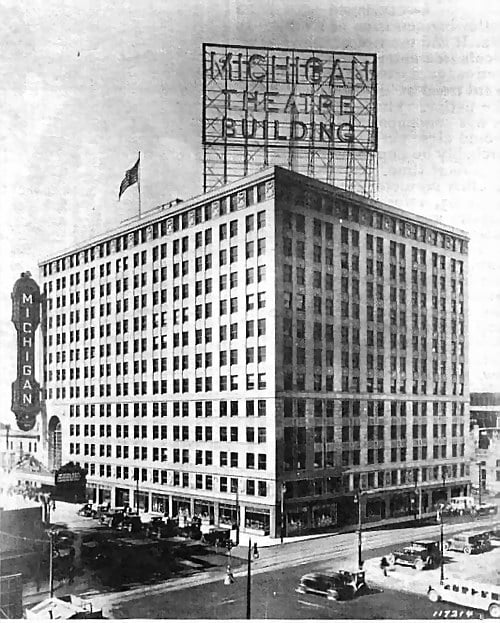
- Anchor example: The Michigan Theatre in the Michigan Building
- Preservation angle: Some theaters were demolished, some survive, and some were radically adapted into other uses
- Why it matters: Theater history connects downtown nightlife, architecture, Black entertainment districts, transit, and commercial corridors
Why theaters matter
Theater buildings made Detroit's entertainment economy visible. Their marquees lit up commercial streets. Their lobbies turned architecture into anticipation. Their auditoriums made movies, vaudeville, concerts, and civic gatherings feel grand.
A theater page also gives History Loves Company a natural way to connect downtown Detroit, Paradise Valley, Grand River, Woodward, and neighborhood commercial strips. The map of theaters is really a map of where people spent time after work and on weekends.
The Michigan Theatre as a teaching example
The Michigan Theatre is famous partly because its altered interior became one of Detroit's most photographed symbols: an ornate movie palace converted into parking space. That image can feel surreal, but it is also a useful lesson in adaptive reuse, decline, and the complicated choices that sometimes keep fragments of a building from disappearing completely.
The theater story should not stop with one dramatic image. Detroit also has surviving theaters, restored theaters, demolished theaters, and neighborhood houses that deserve their own articles. This page is the doorway into that larger theater map.
Future pages this should feed
This cluster can expand into the Michigan Theatre, United Artists Theatre, Madison-Lenox, Broadway Capitol, Senate Theater, Fox Theatre, Paradise Theatre/Orchestra Hall, and neighborhood theater corridors by season. Around Halloween, it can also support haunted-history videos and self-guided evening walks without charging for tours.
The search strategy is simple: make each theater searchable on its own, then connect every page back to Detroit lost buildings, historic things to do, and History Loves Company videos.
Watch with this page
Pair this article with History Loves Company on YouTube and the They Lied To Us About Detroit episode archive.
Where this fits in Detroit history
The theater page is the entertainment-architecture anchor of the lost-buildings cluster. It opens the door to seasonal walking tours, haunted theater episodes, downtown nightlife history, and pages about individual movie palaces.
- Hudson's Department Store Detroit History - Retail, downtown memory, demolition
- Tiger Stadium Detroit History - Corktown, baseball, reuse
- Olympia Stadium Detroit History - Hockeytown before downtown arenas
- Joe Louis Arena Detroit History - Riverfront, Red Wings, redevelopment
- Detroit Lost Schools and Neighborhood Landmarks - Demolished Cooley High School and neighborhood memory
- Detroit Lost Theaters and Movie Palaces - Movie palaces, adaptive reuse, ruins
Sources and further reading
- Michigan Building and Michigan Theatre overview
- Image source: Michigan Theater Building
- Detroit Buildings We Lost guide
Updated September 2026. This page is part of the History Loves Company Detroit topic library, built to connect landmark stories, neighborhood memory, and Detroit history videos in one place.
Keep Exploring Detroit History
Lost theaters connect architecture, nightlife, downtown memory, neighborhood business districts, and the way Detroit entertained itself.
Lost buildings walking tour
Use the route to connect downtown theaters and nearby vanished landmarks.
Public-domain photos
Find archive-image sources for theater fronts, interiors, and streetscapes.
Back to Detroit Buildings We Lost | Watch the HLC episode archive | Watch HLC on YouTube